• Home
  • About
    • Governance & Structure
      • The AER Executive Board
      • The AER General Assembly
      • The AER Political Bureau
      • Statute & strategies
        • AER Election Committee
        • AER Monitoring & Evaluation Group (MEG)
        • AER Procedures
      • The AER Secretariat
    • The History of AER
  • Members
    • Who are AER’s members?
    • Member Directory
    • AER stands with Ukraine
    • Join AER!
  • Mutual Learning
    • About Mutual Learning
    • Working Groups
    • Knowledge Transfer Events
  • Advocacy
    • About Our Advocacy Work
    • The Bureau
    • The 2030 Agenda for Sustainable Development
    • AER Political Priorities 2025-2030
  • Projects
    • About Our Projects
    • Ongoing Projects
    • Look for Partners
    • Completed Projects
  • AER Programmes
    • AER Summer Academy
    • Eurodyssey – Paid traineeships in European regions
    • Intercultural Regions Network
    • AER Youth Regional Network (YRN)
  • Events
    • AER events
    • Other events

Assembly of European Regions

Connecting regions, inspiring Europe since 1985

You are here: Home / Search for "mental health"

Search Results for: mental health

Together4Cohesion comes to its end: A Journey throughout its Road and Prospectives

30 July, 2020 By Birgit Sandu

The campaign #Together4Cohesion is now concluded and we want to go through the long road performed. At the same time, we hope that our actions were meaningful in generating a spark among all actors involved within cohesion policy persuading them to continue showing its benefits. To this end, we want also to share sustainable tools that can support practitioners in this long-lasting exercise, as well as our commitment to continue promoting cohesion policy.  

Since April 2019, AER in cooperation with mc Group and in partnership with six flagship regions [Alba (RO), Catalonia (ES), Csongrad-Csanàd (HU), Timis (RO), Trentino (IT), and Varazdin (HR)] have been coordinating and implementing a widespread communication campaign on the benefits of European cohesion policy co-financed by DG-REGIO (European Commission). The campaign “Together for Cohesion: Let’s rEUnite!” was aimed at raising awareness of cohesion policy and structural funds as major tools to implement social and economic investments fostering balanced growth among European regions through the active involvement of the policy’s main beneficiaries, i.e. citizens and stakeholders.

After sixteen months of campaigning, we have reached the end of this journey across regions, projects, and people. It is time now to look back at the road from the hill and to share the achievements of Together for Cohesion. The path was exciting but yet not without its difficulties. As various activities, the campaign had to face major constraints posed by the outbreak of Covid-19. Despite the challenge, the campaign’s team elaborated on alternative solutions enabling to continue and ultimate the mission.

Visibility Events and Activities

We have actively engaged in promoting debate around the theme of cohesion policy through both international and local events in the six flagship regions. The campaign was officially launched at AER General Assembly in Larnaca  (5th June 2019) with a dedicated Knowledge Sharing Workshop; it was presented at both AER Committee’s Plenaries in Podcetrtek  (25th September 2019) and the 37th session of the Local and Regional Authorities Congress of the Council of Europe in Strasbourg (28th-31st October 2019). We concluded our international engagement with a final webinar on “Communicating European Cohesion Policy” (16th July 2020), where we shared hints and practices acquired during the campaign, as well as launched discussion on the current use of structural funds to counter the Covid-19 effects and the perspective of the next MFF.

Alba and Timis (RO)

In parallel, the campaign engaged citizens, stakeholders, and public authorities at the local level within the six flagship regions. Alba County inaugurated the series of Together for Cohesion’s local events through the Apulum Agraria Fair (20th September 2019), where farmers, producers, and policymakers exchanged about the local products of Alba and discussed the benefits of cohesion policy. Students in the Alba County have been informed about the opportunities that cohesion funds brings about for employment, career guidance and development at the second local event of the region, the Career Management Conference (20th-22nd November 2019). The third event was held by the Timis County Council, a conference on “The Benefits of Cohesion Policy for European Union Citizens” (25th February 2020) gathering representatives of public institutions and non-governmental organizations to discuss the pivotal role of cohesion investments for the development of the region. Additionally, the County held a drawing competition for children focused on “The Europe where I would like to live in”/ “A greener Europe”.  Lastly, both Romanian Counties produced and disseminated a series of videos showing how cohesion funds have supported local activities in various thematic fields.

Csongrád County (HU)

In Csongrád County, the campaign Together for Cohesion served as a basis to launch important institutional exchanges among mayors on experiences, results, and plans regarding cohesion funds through two Professional Forums for Mayors of the Csongrád County  (11th December 2019 and 30th June 2020). Beyond institutional discussions, the County launched reflections among children through the drawing competition and award ceremony in Szeged on climate awareness (23rd June 2020).

Generalitat de Catalunya (ES)

Within the scope of the campaign, the Generalitat de Catalunya triggered debates around crucial themes related to cohesion policy through two webinars. The first webinar, “ICF Eurocredit COVID-19 line” (27th May 2020), explained how this instrument can support companies affected by the crisis. The second webinar gathered representatives from the public administration to reflect on the management of public resources through a gender perspective (22nd June 2020). Lastly, a video showcasing the various benefits that Structural and Investment funds bring about in the region was disseminated via social media in order to reach a wide audience.

Province of Trento (IT)

Visibility actions in Trentino took an innovative shape. The Province launched a series of four TV episodes on cohesion policy providing viewers with a detailed explanation of what cohesion policy is, focusing at both the local level and broader European level. The first three episodes presented a specific Operational Programme, a local project, and an interregional project. The last episode focused on the benefits of cohesion funds for local stakeholders. Finally, space was given to inform citizens and companies about how ERDF and ESF funds have been re-addressed to support the COVID-19 relief through a dedicated article and infographic.

Varaždin County (HR)

The series of local events in Varaždin had a sparking start at the Splendid Ball in Varaždin (31st January 2020), where ambassadors, Parliament, and Civilian Guard members exchanged on the benefits of cohesion policy. On 13th February 2020, the International Conference on “ESI Funds beyond 2020”  involved private and public stakeholders from Croatia, Austria, and Slovenia to debate on the future of cohesion policy during the next European budgetary period. The event was followed by another international conference on “Entrepreneurship Education” (5th March 2020) attended by professionals working in the education and entrepreneurship sectors willing to enhance the connection between these two fields, considering it pivotal for the economic growth of the region. To conclude the local mission, the Varaždin County produced and broadcasted on television a short movie showing the impact and achievements of cohesion policy in the region.

Messengers of Cohesion – the Voices of Citizens, Stakeholders, and Third Parties

Together for Cohesion was based on a bottom-up approach attaching core importance to the involvement of cohesion’s policy main beneficiaries as the main voice of the campaign. To this aim, workshops, trainings, and webinars were organized in Alba, Catalonia, Csongrad, Trentino, and Varazdin to offer entrepreneurs, journalists, project managers, local decision-makers, and other actors engaged with cohesion policy the opportunity to boost effective communication skills.

Entrepreneurs and project managers opened – physically or virtually – the doors of their activities to show how cohesion funds have supported the foundation or expansion of their local business. Journalists visited the Axa Porcelaine in Alba Iulia, a small family business that through cohesion funds grew and expanded its sales to the European market becoming the second-largest manufacturer of porcelain in Romania. Luigi Calabrese, R&D Manager at Kirana Laser Startup in Trentino, testified the fundamental role of European funds when the company was launched, pivotal for its consecutive expansion in the international market, and collaboration with research centers of excellence as the CERN in Geneva.

Moving from support to business to health services, the General Hospital Varaždin has presented the ongoing project aimed at establishing unified day hospital and surgery. The Hospital Vall d’Hebron, in Catalonia, showed how cohesion funds have supported a major digital transformation improving the quality and the access of the services provided by the hospital. We have also heard from local authorities in Timis how the modernization of the County Hospital emergency unit financed by the EU increased the receiving capacity of 25% enabling better flow and comfort for patients and families and improved working conditions for the staff.

Through a virtual visit at the Extreme Light Infrastructure Attosecond Light Pulse Source (ELI-ALPS) in Szeged (Hungary), we testified how cohesion policy promotes the development of research infrastructures needed to study the most elementary and fastest processes through long-term investments in three different countries – Hungary, Romania, and the Czech Republic.

Targeted stakeholders from the six-flagship regions were also interviewed to show the contribution of the EU and cohesion policy to core policy fields as tourism (here and here), youth involvement, gender equality, handicraft, and agriculture.

Lastly, Together4Cohesion opened the floor of its campaign to third parties around Europe involved with cohesion policy and willing embark in our campaign through their success stories. Read all the third parties’ stories here!

Let’s continue to communicate Cohesion Policy beyond Together for Cohesion

Although the campaign is finished, triggering debates on European cohesion policy and raising awareness about its benefits among citizens and stakeholders shall become a long-lasting practice. We have designed a toolkit including an e-learning video and a set of recommendations to support practitioners in effectively performing this task. Both instruments are available in English and the official languages of the flagship regions under the Toolkit section of Together4Cohesion.eu.   

Being European cohesion policy a core field of action for the Assembly of European Regions, we will continue to launch discussions and inform our members on the matter through the creation of a dedicated hub within our website. The latter will serve to collect and prioritize policy briefs, position papers, and good practices concerning the policy.

Hence, as usual, stay tuned!

Follow AER!
Facebooktwitterlinkedinrss

AER delivering universal basic services at the 3rd Local and Regional Government Forum

13 July, 2020 By Gisela Guari Cañada

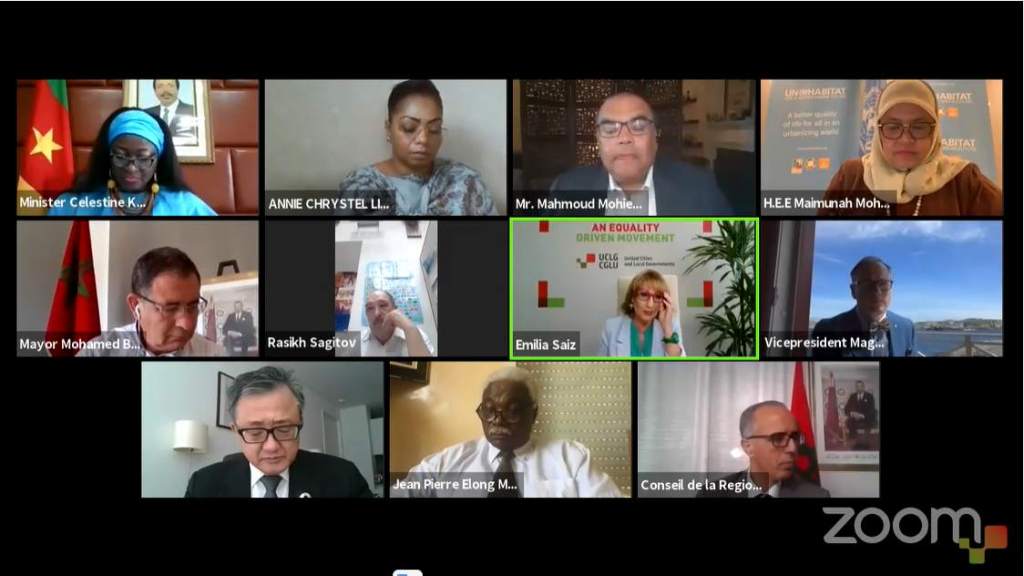
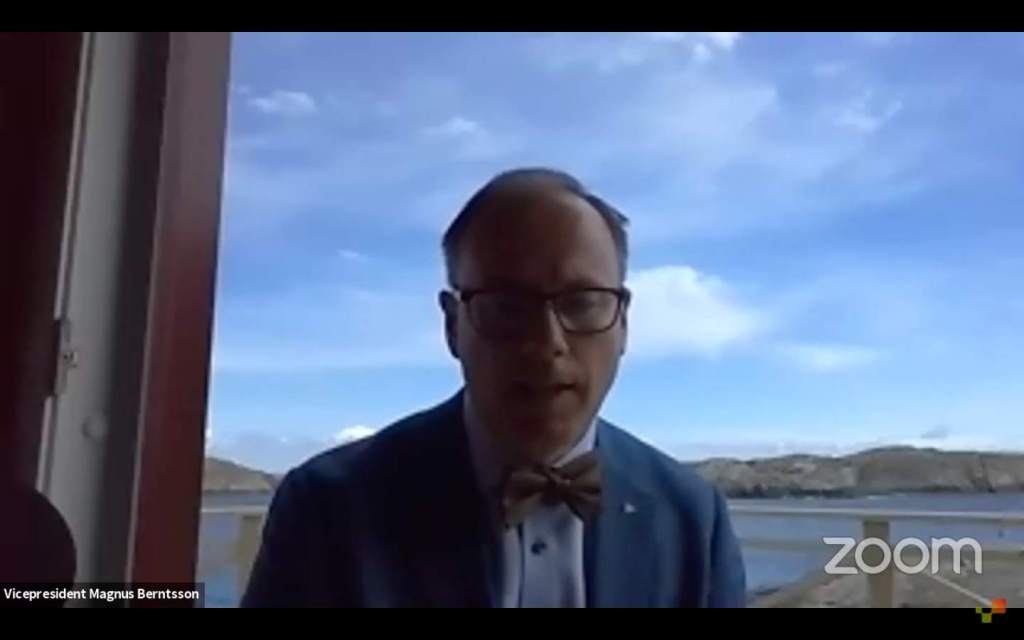
On 13 July 2020, Mr Magnus Berntsson joined the Local and Regional Government Forum (LRGF) organised within the framework of the United Nations High-Level Political Forum. The AER President had the pleasure to represent the constituency of Local and Regional Governments of the Global Taskforce and speak on behalf of those who could not make their voice heard on such an important day.

The 3rd edition of the LRGF was marked by the pandemic, which prevented the participants to convene in New York as planned in the first place. The world has been put to test during the past several months, a test to which anyone was prepared for. As reiterated by many local and regional representatives, all of them found themselves at the forefront of the health crisis, having to coordinate a quick response to protect their citizens and their economy from the pandemic. Some months have passed since the COVID-19 destabilized the global health systems and most regional and local governments have been able to take quick action in responding to the pandemic through universal public service delivery. Indeed, housing played a fundamental role in our fight against COVID-19 allowing social distancing and hygiene, two key elements to stopping the further spread of the virus.

However, while some member states and regions are already recovering and making progress against the pandemic, others, the poorest and most vulnerable ones, the ones that have not been granted access to basic services, are still suffering the most from this crisis.  

In this regard, the local and regional governments should take responsibility for the provision of basic services to their citizens in order to improve their living standards and their quality of life. Basic social services are part of the fundamental human rights, and no one is better placed than regions and cities to understand and respond to the needs of the most vulnerable.

According to the last progress report by the UN Secretary-General, half of the world’s population do not benefit from any form of social protection nor have access to essential health services. Food insecurity has been on the rise since 2015 and due to the pandemic, the figures have been exacerbated. Global health systems have been devastated amid COVID-19, which has revealed the insufficient healthcare facilities and medical supplies. Children’s education has been put at risk by the closing of schools during the global lockdown affecting over 90% of the student population, remote education has worked well in some countries whereas in others it has only widened the digital gap. Billions of people throughout the world still lack access to safely managed water and sanitation services which are critical to preventing the spread of the virus. 

And these are only a few examples that show how COVID-19 has exposed and widened the profound inequalities that exist in the year 2020 among regions and countries. The AER President remembered to all the participants that we have just entered the decade of delivery and the global pandemic should not undermine the joint efforts and achievements reached so far, and it is the shared responsibility from local and regional governments to ensure that no one is left behind. 

As reiterated on several occasions by the UN: there is an increased acknowledgement of the necessity to involve all stakeholders in order to provide basic services to those furthest left behind. Providing basic services means protecting the fundamental human rights, and promoting social, territorial, and economic cohesion. Thus, in order to deliver basic universal services, it is urgent to strengthen multilateral systems, increase knowledge transfer and open dialogue, as well as investment and cooperation at all levels of government. 

The AER President concluded his speech with a call to action to members states, regions, cities and civil society organisations to coordinate efforts in order to establish a fair future for all with resilient regions and cities and to guarantee the quality living standards that each citizen of this world deserves.

Follow AER!
Facebooktwitterlinkedinrss

Localising Agenda 2030: how regions can help meet the SDGs

12 June, 2020 By Erica Lee

Join us for our online debate on “Localising Agenda 2030: how regions can help meet the SDGs”, on Wednesday 24 June from 14:30 to 16:00 CEST.

UNDER DISCUSSION

Regions and cities have been the first responders to the outbreak of the COVID-19 pandemic, coping with the immediate impact on their health systems, and enforcing lockdowns while sustaining families and local businesses. In its economic recovery plan, the European Commission has recognized the instrumental role of regions for a sustainable recovery. Now more than ever, local and national authorities should join forces towards achieving a more resilient global society. With 2030 a decade away, regions should take a lead on implementing the UN Sustainable Development Goals (SDGs), focusing on ensuring healthy lives and wellbeing, inclusive and sustainable economic growth and equality within and among countries.

Key questions include:

  • What is the role of regions in attaining SDGs and how can they make sure that these are not taking the back seat in the current health crisis?
  • What tools and key partnerships can be identified to strengthen resilience of regions and communities?
  • What role do regions play in the framework of the Conference on the Future of Europe aimed at giving European citizens and localities a greater say on how the European Union could better work for them?
SPEAKERS INCLUDE

Aziza Akhmouch, Head of the OECD Division for Cities, Urban Policies and Sustainable Development

Magnus Bertnsson, President of the Assembly of European Regions (AER)

Raffaele Cattaneo, Minister for Environment and Climate of Lombardy (IT); member of the Regions 4 Steering Committee 

Damià Calvet, Minister of Territory and sustainability of the Government of Catalonia, representative of UCLG-Global Taskforce

Wallis Goelen, Senior Expert, European Commission Directorate-General for Regional and Urban Policy


Moderation by Dharmendra Kanani, Director of Insights, Friends of Europe

This event is part of a series of events focussing on the Sustainable Development Goals in the run up the Regions2030 Conference in Strasbourg in 2021.

We are partnering with Friends of Europe for this event and, as such, are offering a limited amount of virtual spaces– on a first come, first serve basis – allowing you to pose your questions and interact directly with the speaker as in any of our events. You will be visible directly on the screen too.

Alternatively, you may also watch the event via livestream and submit your question, tweeting @europeanregions @FriendsofEurope using #FoEDebate. The best written questions will be asked to the panellists.

Please fill in the registration link with your preferred option below. 

>> Register for or decline the online event here

>> Watch the live-stream here 


Territorial Approach to Smart Specialisation: Experience from Värmland

4 June, 2020 By Editor

The ongoing COVID-19 pandemic led to the cancellation of the AER Spring Committee Plenaries in Covasna County, Romania. The debate on “Smart specialisation strategies in rural areas, inclusion & wellbeing” could therefore not go ahead as planned. In order to harness the knowledge and expertise of our membership, AER is sharing content from speakers online instead.

In the below article, Kenneth Johannesson, Committee 2 Vice President for Health Innovation shares experience from Värmland (SE) on Smart Specialisation.

Welcome to Rural Värmland…

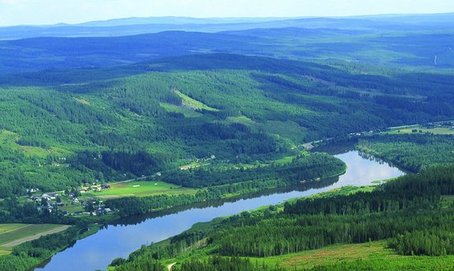
The Värmland region is part of North Central Sweden. Värmland borders Norway and the Oslo region and is thus a border region in the EU. Proximity to Oslo is an important condition for business and employment. The population of the region in 2014 was 274,691 inhabitants and the population grew by 0.5% from 2009 to 2014.

Värmland is facing important challenges, such as slow population growth, a low level of education, low wages and a low degree of employment compared to the Swedish average. Companies in Värmland are dependent on good communications due to the long distances to the metropolitan regions. Compared with other regions, Värmland is home to large tracts of forestland, which is promoted as an asset for the region and its forest industry in the Värmland strategy. The public sector provides most of the jobs in Värmland, followed by the manufacturing and steel industries and retail trade industry.

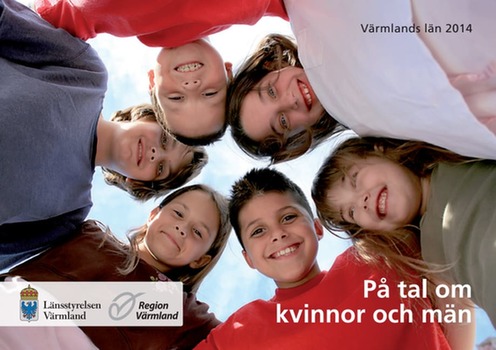
The labour market is gender-segregated both horizontally and vertically, which means that women and men find themselves in different sectors and industries, and in different positions within one and the same industry or workplace. In the case of business and entrepreneurship, most men in Värmland operate businesses in farming, forestry and fishing, while most women run companies offering cultural and personal services.

Defining Smart Specialisation in Värmland

The goal of smart specialisation in Värmland is to create new good jobs and sustainable and inclusive growth in Värmland. It is a holistic strategy that involves citizens, industry, the business community, municipal councils, the county council and the region of Värmland.

In short, smart specialisation involves learning how to prioritize and invest in innovations in order to bolster Värmland’s competitiveness. This is achieved by profiling the business and research sectors of Värmland, defining the areas of specialisation, as well as forming collaborative partnerships in Europe to successfull network and influence European policies.It is important that it is a comprehensive process where actors understand the importance of the strategy that they are creating.

Värmland has a number of priorities when it comes to Smart Specialisation, they include:

Leading the way for gender equality…

Värmland is the first region in Europe to have conducted a gender analysis study and undertaken a conscious gender-mainstreaming of the strategy for smart specialisation. In this regard, Värmland stands out as a pioneer for gender equality.

Services that create value for users

Given the progress already made in Värmland within research related to service innovation, service design and servitization, we are continuing to develop research in order to enhance the abilities of private and public actors to contribute to value-creation for customers, users and society as a whole.

Forest-based Bioeconomy

A thriving bioeconomy is demonstrated throughout Värmland through innovation and also by increasing the selection and demand for forest-based products and services. At the same time, we blaze a trail to convert to a fossil-free and sustainable society. Our fundamental strength is a sustainable forest industry with high-quality raw materials. Forest industry processes and products are the spearhead of our industries.

Digitalisation of Welfare Services;

We are developing and testing welfare services in actual environments with users: women, men, girls and boys as co-creators to provide varying types of solutions, many of which are digital. The public sector is an important user and producer of these processes. This results in better and more efficient care, education and other social services and ultimately happier, more competent and healthier citizens.

Advanced Manufacturing and Complex Systems;

We develop and offer energy- and resource-efficient system solutions and components for – primarily –  heavy vehicles, the forest industry and within renewable energy, energy efficiency and hydrodynamics. For companies, we offer membership in a cluster organisation with an open climate of collaboration in which we help each other with solutions to problems, in the development of composite systems, and with service offers.

Nature, culture and Place-based Digitalised Experiences;

We visualise knowledge, stories and natural values of places using digital technology and media in order to create unique experiences for visitors. Värmland possesses a rich diversity of more or less utilised opportunities for outstanding experiences. We have a lively cultural legacy in music, art, handicrafts, historic finnish culture and storytelling traditions. Värmland’s nature offers features such as clean water, biological diversity, different climate zones and activities such as hiking, cycling, canoeing and boating as well as an unexplored unique inland sea. Our region is also popular for winter sports with good access to skiing.

System Solutions with Photovoltaics;

We contribute to renewable power for more people all over the world and we have solutions for our own control over the production of electric power. The specialisation helps to reduce emissions of greenhouse gases as we develop and offer solutions for the production of electric energy from photovoltaics.

Follow AER!
Facebooktwitterlinkedinrss

Cohesion and partnership must be the driving force for European recovery

29 May, 2020 By Erica Lee

The #Cohesion Alliance – an EU-wide alliance of 12,000 signatories calling for a stronger cohesion policy after 2020 – welcomes the European Commission’s revised 2021–2027 EU budget and Recovery Plan proposals including the extension of the current cohesion programmes with increased flexibility and additional funding.  However, the Alliance urges the European Commission and Member States to ensure the involvement of cities, municipalities and regions and maintain a strong focus on cohesion in all recovery measures, aimed at rebuilding the economy, fostering sustainability and strengthening the territorial and social fabric of our Union, including in the European Semester process.  

The EU’s Multi-Annual Financial Framework (MFF) and Recovery Plan must focus on cohesion as a fundamental value of the European Union, to pursue major challenges such as the European Green Deal, the Sustainable Development Goals, the European Pillar of Social Rights as well as the digital transformation. In the current crisis, cities, municipalities and regions need the direct support of a strong cohesion policy more than ever to prevent widening territorial disparities and an asymmetric recovery as Member States have different financial means to address the current economic and social challenges.

The #CohesionAlliance welcomes the European Commission’s proposal to ensure the role of Cohesion policy as a strong EU long-term investment policy, as well as the investment of 55 bn EUR (2018 prices) through REACT-EU to provide an effective response to the COVID-19 pandemic and its social and economic consequences. The extension of the current Operational Programmes will allow for a quick implementation of crucial investment. In addition, the increased flexibility for transferring resources between funds and the widening of scope to support the health services, tourism and culture sectors as well as to provide working capital to SMEs will help local and regional governments invest money where it is most needed, provided that it fully respects the cohesion core principles.

The Alliance is nevertheless concerned that without consideration for the diverse needs of regions, cities and municipalities as well as strong involvement of local actors, the Recovery and Resilient Facility – which is the most powerful investment tool of the EU recovery plans – is at risk of failure. For now, most measures are only directed to Member States without clarifying how much say local and regional authorities would have in revising programmes and in spending resources. The strong link of the Facility to the European Semester and to country specific recommendations can lead to a further centralisation of the recovery plans. The Alliance urges all EU and national institutions – and in particular EU Reforms and Cohesion Commissioner Elisa Ferreira – to take the needed steps to ensure that the national plans for recovery and resilience comply with the Partnership Principle, respond to the real needs of citizens and businesses and allow for stronger and more structured involvement of local and regional authorities.

The #CohesionAlliance partner organisations have put forward their priorities in a new draft declaration affirming cohesion as a fundamental value of the European Union and a key objective for all its policies and investment. The partners of the Cohesion Alliance 2.0 will launch the new declaration during their next meeting in early June.

 Contact the #CohesionAlliance secretariat:

[email protected]

Follow AER!
Facebooktwitterlinkedinrss

Agenda 2030: Now More Than Ever

22 May, 2020 By Justine Lambert

The achievement of the Sustainable Development Goals set by the UN in 2015 has always been of great importance. From Poverty to Education through Health and Climate Action, and many more areas, the SDGs offer a broad range of activities needed to improve societal and environmental issues. 

However, recently, life has taken an unusual turn and the achievement of the SDG goals has gained significance. With the appearance of COVID-19, many areas have been affected or have shown to be needing improvement. Whether it is on a national or a local level, the crisis showed us that improvements have to be made in acting long-term and in a sustainable way. The health sector is not the only one that took a hit during this crisis but so did the economic sector, affecting many other areas such as employment, poverty, education, etc..

This crisis revealed the weaknesses in our systems and now gives us the opportunity to rethink and rebuild stronger bases for the future. Therefore, Now More Than Ever, it is time to act together on sustainable solutions which include each and every stakeholder and sector.  During this crisis, we have seen that in extreme situations, extreme measures could be taken and citizens were willing to implement them to make a change. There are lessons to be learned from the past months and behavioural changes that can be made towards common objectives. 

The relevance of the SDGs continues to increase as time passes by. However, there will be new challenges to face on the road to their achievement. There needs to be an active approach towards them and the different stakeholders involved will have to coordinate in order to be as efficient as possible. The emphasis needs to be put on finding long-term sustainable solutions rather than short-term fixes that will only result in later issues in the future. The danger we are facing now is that governments turn to short-term solutions in order to quickly fix what the crisis has caused. Instead, now is the best time to review our approach to SDGs.

The crisis will give opportunities to work on the tactics and the means to the final goals. Local and regional involvement more specifically will be increasingly required, hoping for inclusive multi-level governance. Acting at the level closest to citizens means acting faster. The 10-year window that is left is our opportunity to act. All stakeholders involved need make an effort to achieve SDGs, not one-by-one, but as a whole. Because they are interconnected, the issues connected to one another should be worked on simultaneously. 

AER strongly believes that the achievement of these goals is necessary and urgent which is why the SDGs form the basis of its work, not only in the Bureau Taskforce, but throughout our work in policy, programmes and projects. The upcoming webinar on 24 June is the first event of a one-year-long action plan to stimulate action around SDGs. The action plan will end with a two-day conference in June 2021. In doing so, AER is partnering up with other organisations and institutions to unite our actions and reach as many stakeholders as possible.

Now More Than Ever is the time to act, to rethink and to rebuild together.

→ link to event page

Follow AER!
Facebooktwitterlinkedinrss

Call for Proposals: Research & Innovation Projects in response to COVID-19

23 April, 2020 By AER Secretariat

If you are an organisations interested in submitting research and innovation proposals in response to short to medium-term COVID-19 specific needs in Austria, Canada, Denmark, France, The Netherlands, Spain and Turkey, this call for proposals is for you. The Assembly of European Regions is happy to present this call launched by the Eureka Network. The Eureka Network is an intergovernmental organisation for market-driven industrial Research, Development and Innovation.

The call for project proposals may include but not limited to: 

  • Infection prevention and protection
  • Sanitation technology
  • Diagnostics and testing
  • Therapeutics, vaccines and medicines
  • Disease-tracking technology, analytical solutions for health systems
  • Smart technology for COVID-19 patients
  • Smart technologies and support systems for critical production and supply chains under lockdown
  • Safe mobility: migration data and trends, regional risk monitoring, protection of isolated and risk groups, safe use of public transports
  • Education technologies and digital workplace.

This call for solutions for the COVID-19 Echo Period only concern organisations in the following countries (based on mutual consent between participating national funding bodies (NFB):

  • Austria (Forschungsförderungsgesellschaft – FFG)
  • Canada (National Research Council Industrial Research Assistance Program – NRC IRAP)
  • Denmark (Innovation Fund Denmark – IFD)
  • France (Bpifrance)
  • The Netherlands (Rijksdienst voor Ondernemend Nederland – RVO)
  • Spain (Centro para el Desarrollo Tecnologico Industrial – CDTI)
  • Turkey (Türkiye Bilimsel ve Teknolojik Araştırma Kurumu – TÜBİTAK)

Application deadline: 15 May 2020.

You can apply here.The form must be completed in English.

Eligibility criteria  

In order to apply to the present call, the partners must meet the following qualifications:

  • The consortium should include at least two organisations independent of each other from at least two of the participating countries.
  • Funding assistance follows each national funding body’s (NFB) funding regulations.
  • The project partners must express their willingness to cooperate, on a win-win/fair basis in the development of a new product, industrial process or service.
  • The product, process or service must be innovative and there must be a technological risk involved.
  • The project must have a civilian purpose.
  • The project should benefit all involved partners in a well-balanced consortium.
  • The project should have an obvious advantage and added value resulting from the technologic cooperation between the participants (e.g. increased knowledge base, commercial leads, access to R&D infrastructure, etc.).
  • The duration of the project may not exceed 12 months.
  • Projects are expected to start by August 3 2020. Participants must discuss with their NFB about the expected start date of their activities. NFB regulations may apply.
  • Product, service or process implementation or market launch should happen no later than 6 months after project completion.

 Important to note: Each participating NFB may apply additional eligibility criteria based on their national regulations. Applicants are strongly advised, prior to submitting the application, to contact their NFB to discuss their project idea, and verify their and their project’s eligibility.

Partners from other Eureka countries or countries outside of the Eureka network can also participate, but funding must be secured within the deadlines of the call.

 More information here.

 If you have any questions, please do not hesitate to contact the AER Secretariat. 

Photo by Ousa Chea on Unsplash

Follow AER!
Facebooktwitterlinkedinrss

European Youth Foundation: Funding Opportunities Responding to COVID-19

20 April, 2020 By AER Secretariat

If you are a local or a national non-governmental youth organisation looking for funding for activities aimed at demonstrating solidarity and supporting all persons affected by the COVID-19 crisis, this call is made for you.

The Assembly of European Regions (AER) is happy to share this special call from the European Youth Foundation (EYF). The EYF is a fund established by the Council of Europe providing financial and educational support for European youth activities.

For this call, priority will be given to pilot activities that aim at demonstrating solidarity and support to all persons affected by the COVID-19 crisis, such as:

  • Reaching out to and supporting particularly vulnerable groups of people, including homeless, refugees and asylum-seekers, people with disabilities, people living in isolation or in remote communities;
  • Support to health, social and educational services;
  • Education and awareness-raising of the importance of human rights in responses to the COVID-19 crisis.

Important to note: pilot activities MUST respect the sanitary and safety measures implemented by health services or national/local authorities. There should be coordinated with competent authorities and indicated in the project proposal.

 The maximum available EYF grant for a pilot activity is €10,000.

Only youth organisations which are registered with the EYF can submit applications. The youth NGO must be located in one of the 50 signatories to the European Cultural Convention. More information on registering can be found here. 

Deadline:  10 May 2020

For further information (see here)

If you have any questions, please do not hesitate to contact the AER Secretariat. 

Follow AER!
Facebooktwitterlinkedinrss

COVID-19: A Global Crisis That Requires a Collective Response

1 April, 2020 By Editor

A message from the AER President, Magnus Berntsson on COVID-19 and AER’s current and future work.

The Assembly of European Regions and its members are acutely aware of how the current pandemic, the coronavirus, is affecting all members of society, not just in Europe but around the globe.

Regional and local leaders are at the forefront of the fight against the pandemic – engaging with communities to avoid the spread and coordinating health and other essential services to look after those who become infected.

Although this virus is a new challenge for European regions, there are some lessons we can take from previous crises. It is only through cooperation that we can successfully battle this virus and deal with its long-term societal and economic effects. Nationalist and protectionist strategies will not succeed against an ‘enemy’ that does not respect borders. Coordination, cooperation, sharing of best practices and solidarity are needed now more than ever.

As we look around the regions most affected by the virus, we see acts of kindness, communities coming together, workers providing essential services, keeping our societies and economy going.

The virus does not discriminate based on skin colour, citizenship, level of education, or income. As it progresses, we are learning, too, that it does not discriminate based on age, either. Those of us who can work from home should do so, grateful in the knowledge that we are safe and we are keeping other people safe.

The AER Political Priorities include a pillar on “Fostering a society that is based on the promotion and protection of equality.” Now more than ever, it is important that we bear in mind the importance of fostering a society of equals.

As we work with the Intercultural Regions Network, we are reminded of the struggles of newcomers to our regions, particularly in challenging times such as these. Regions are working hard to make informative resources available to new communities in a wide range of languages as this is crucial for safeguarding the health of all members of society.

The current crisis will most probably also have an impact on the environmental and sustainable agenda. This crisis shows us more than ever that we must act globally on the 17 United Nations Sustainable Development Goals.

It is disappointing that we must to postpone the AER event dedicated to the SDGs, whose aim was to launch a regional roadmap on localising the SDGs. The many event partners and AER are adamant that this postponement will not mean putting our work on sustainability on hold. Activities will carry on and will be shared shortly.

In the meantime, AER has contributed to the Local Authorities Major Group 2020 position paper to prepare for the UN High-Level Political Forum. You are warmly invited to follow the AER’s work on the SDGs on our dedicated platform: Regions2030.com

Through our European projects, such as Includ-EU on regional and local expertise, exchange and engagement for enhanced social cohesion in Europe and the SCIROCCO Exchange project on Integrated Care, our members and the secretariat are continuing their everyday work in these areas and playing their part in responding to the public health crisis and its societal implications.

AER is a network for interregional cooperation. COVID-19 has shown that coordination and cooperation between regions are more relevant than ever.

As a member-led organisation, we are open to hearing your suggestions & inputs for how we can help you to respond to the crisis, by facilitating mutual learning, the sharing of best practices or spreading the word about EU-related funding opportunities.

Do not hesitate to get in touch with us via the link below.


CONTACT US

AER COVID-19 Hub

AER Secretariat Contact Info

EUROPEAN WEB SITE ON INTEGRATION: COVID-19’s impact on migrant communities

Photo by visuals on Unsplash

Follow AER!
Facebooktwitterlinkedinrss

Global Sustainable Development Report: Is it already too late?

31 March, 2020 By Shubhaangi Srivastava

On Monday 23rd February representatives from AER attended a Webinar on the 2019 Global Sustainable Development Report.
The webinar was organised by the UN DESA (Department of Economic and Social Affairs), presented by Astra Bonini and Stephanie Rambler and focused in particular on which transformation is needed to attain the sustainable development goals.

As we currently are lagging far behind in progress on the Global Sustainable Development Goals, it is important to highlight the need for all cities and regions to play an active part in achieving these goals.

Overview

The 2019 report was a product of a group of scientists with a diverse background, nominated by UN member states and appointed by the Secretary-General. It aims to be a tool to help develop policies for advancing towards the SDG goals.


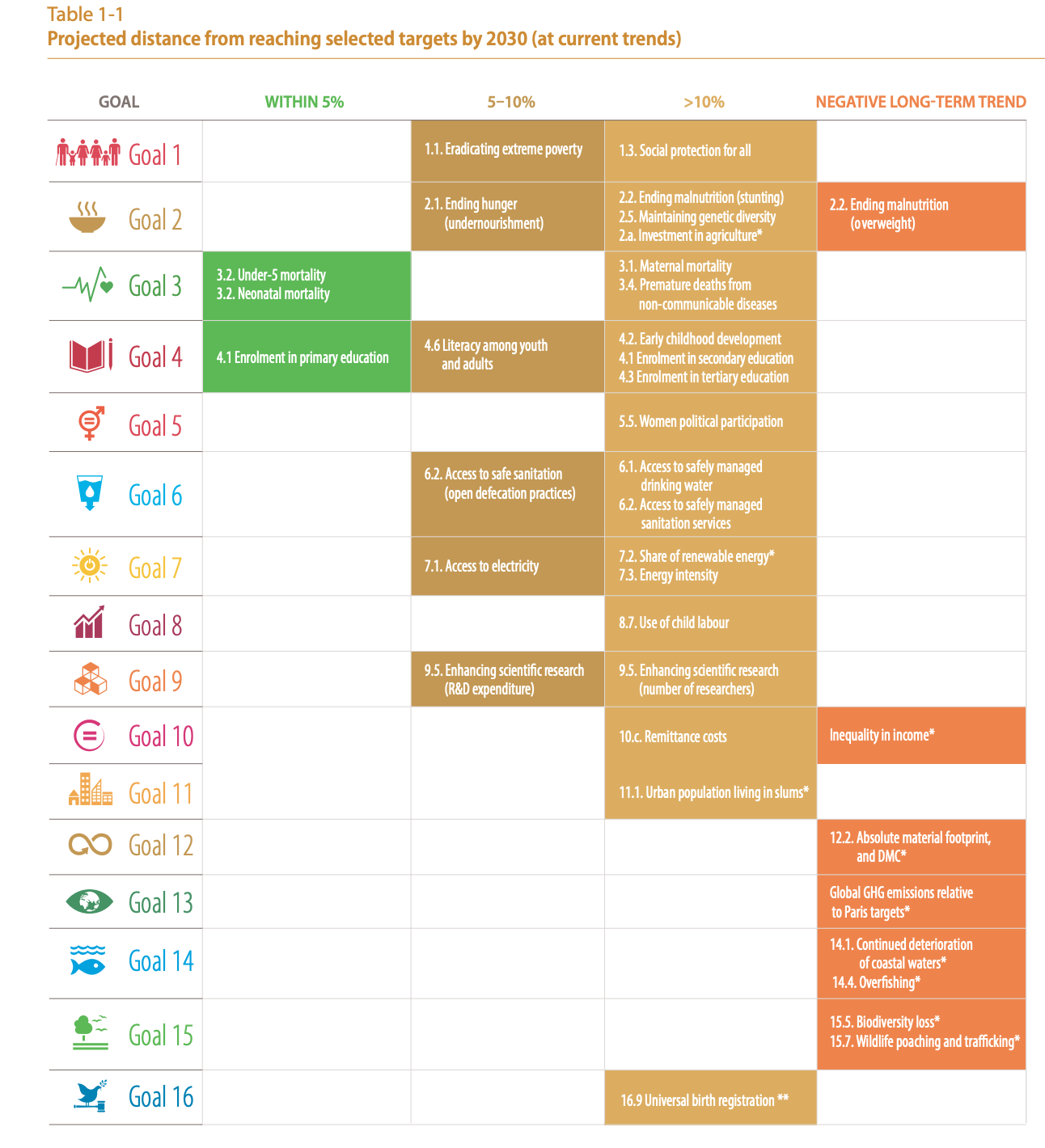
The report concludes that it is time to sound the alarm bell. Looking at the table above (1-1 in the report), it is clear that most goals will be impossible to reach by 2030 if we continue along the current trend, with key systemic challenges facing both biodiversity loss, climate change and income inequality.

Another major issue mentioned in the report is that no country has managed to achieve social thresholds without significant environmental impact, shown in Figure 1-9. This clearly shows what was a major point highlighted in the webinar, namely the interconnection between different sustainable development goals, where progress along one goal can have adverse or positive effects on another goal. An example of it would be:
In order to achieve Goal 2, Zero Hunger, more land would need to be allocated to agriculture and food production. This would negatively affect Goal 15, Life on Land, but at the same time have a positive effect on Goal 1, No Poverty, and Goal 3, Good Health and Well-being.

Entry-points and levers

Recognizing this tradeoff effect between goals is especially important as policies are implemented to address sustainable development goals. The report highlights 6 entry-points where action can have a positive effect on several points:

  • Human wellbeing and capabilities
  • Sustainable and just economies
  • Energy decarbonisation with access
  • Food systems and nutrition patterns.
  • Urban and peri-urban development
  • Global environmental commons

Further on, a set of four levers are identified which can be used to bring about the necessary transformations set forth by the entry-points, namely governance, economy and finance, individual and collective action, and at last science and technology. One action can enact upon several levers at once, and the report highlights that there needs to be cooperation between government, the private sector and academia in the development of policies.

Harnessing science for knowledge-based transformation

At last, the webinar highlighted some surprising aspects, and especially how scientists from poorer countries opened the eyes of scientists from richer countries. Institutions in poorer countries do not always have access to paid journals, and as such, it is important for science related to the SDGs to be open-access.

The scientists also highlighted that the agenda needs to be enacted at a local level, and therefore the science also needs to work on the local level. This makes it crucial for research to also be conducted locally, not only internationally. The research should still be made available internationally in order to enhance knowledge-sharing and experience exchange.

The presentation from the webinar can be found here.

Photo by Sam Balye on Unsplash

Follow AER!
Facebooktwitterlinkedinrss

Committee 1 progress Report Spring 2020

25 February, 2020 By Shubhaangi Srivastava

Twice a year the members of the AER Committee on Regional Development and Economy gather in plenary meetings. This is the opportunity to set goals for cooperation through the elaboration of a joint work programme and to evaluate progress every six months.

On the occasion of the Spring 2019 Committees’ plenaries in Örebro, AER members identified joint actions they wanted to implement with fellow regions. A year later it is time to evaluate progress, celebrate achievements and share experiences!

Evaluating progress

During the elaboration of the work programme in Örebro, planned activities were organized in 3 categories:
Projects
Good practice sharing
Lobbying

The below progress report was compiled for the spring 2020 plenary meeting in Covasna. It gives an overview of the situation, a year after the adoption of the work programme.

Projects

Together for Cohesion: let’s rEUnite! ongoing

“Together for Cohesion: let’s rEUnite!” is a project submitted under a call launched by DG REGIO. This project raises awareness on the importance of programmes, projects, and services funded by the cohesion policy funds. It also encourages the participation of citizens and stakeholders to become active players in the dialogue on cohesion policy. AER coordinates the project and has collected experiences on cohesion policy together with regions.

This project was officially launched during the 2019 General Assembly in Larnaca (CY). Six AER member regions are partners in this project: Varazdin (HR), Csongrád (HU), Trentino (IT), Timis and Alba (RO), and Catalonia (ES). The project also had an information stall dedicated to the Together for Cohesion project at 2019 Autumn Committee Plenaries.

Partner regions have organized several local events to raise awareness on Cohesion policy among EU citizens:

The first event of Together for Cohesion held, the “Apulum Agraria” Fair in Alba (RO) held from 20-22nd September 2019, promoting agriculture, the economy of Alba and local farmers and members of professional associations.

The project was also represented at the 37th session of the Local and Regional Authorities Congress, led by the Council of Europe between the 28-31st October 2019.

The project contributed to the organisation of a Career management fair in Alba (RO), which raised awareness on the use and benefits of the EU cohesion policy and funds – with a special focus on how to find employment opportunities and how to receive the appropriate career guidance.

The Forum for Mayors, on the 11th of December, in Szeged, Hungary, by the General Assembly of Csongrand County was an opportunity to learn more about why cohesion policy and funds are crucial for the social and economic development of the cities and towns led by the Mayors taking part in the Csongrad Forum

Regions have also prepared several trainings focused on developing communication skills and understanding of European cohesion policies. The first training, on Together4Cohesion: how to use social media to better communicate the EU cohesion policy took place on the 23rd of January, in Trentino, Italy.

In Varazdin (HR), the annual Gala Ball of Varaždin County on 24 January 2020 was an opportunity to promote the project.

CUBES: Cultural Administration Boosting with the Engagement of Sustainability for Local Communities ongoing

The CUBES project was developed to create a bridge between cultural heritage, administrative bodies, and digitalization. The project will:

  • raise awareness
  • emphasizing the importance of culture
  • increase competitiveness and economic growth.

Target: local communities, public authorities, NGOs and CSOs. The kick-off of the CUBES project took place on the 25th of October 2019 in Lisbon, the project will end in April 2020

The experience of the CUBES project on grassroots approaches for sustainable regional development will also inform the discussions at the conference “Territorial Approaches to Regional Development” in Covasna on 11 March 2020.

Includ-EU: Regional and local expertise, exchange and engagement for enhanced social cohesion in Europe ongoing

AER and the International Organisation for Migration, together with several regional and local authorities have joined forces in the Includ-EU project. This project will improve transnational knowledge and experience sharing, cooperation and partnerships to build a more inclusive and cohesive Europe.

AER will organise 5 workshops to facilitate knowledge and experience sharing as well as to support the implementation of pilot activities around the 5 key priorities of the EU action plan: post-arrival support, education, labour market integration, access to services, citizen participation & inclusion. AER will also organise 5 webinars on these topics, to share experiences regarding practical aspects such as housing, health services or the integration of services especially regarding the access to the labour market. These activities will be open to AER members, especially regions in the Intercultural Regions Network (see below “Lobbying”)

E-health in rural areas: planned

Members discussed the possibility to develop a pan-AER regional e-health rural project based on innovation and digitalization.

  • Regions interested in developing such a project should share their idea during the development of the 2020-2021 work programme on 12 March in order to find regions who want to cooperate on this and start developing this initiative.

Project development on farming, rural planning, and infrastructure: planned

Members of the AER working group on rural development would like to develop a project to compare and incorporate good practices in farming (cattle, dairy) and infrastructure.

  • Regions interested in developing such a project should share their idea during the development of the 2020-2021 work programme on 12 March in order to find regions who want to cooperate on this and start developing this initiative.

Project on rural development: planned

Members of the AER working group on rural development would like to develop a project on how to invest and develop basic infrastructure in rural areas. For example, water, waste, gas, roads, education, health care.

  • Regions interested in developing such a project should share their idea during the development of the 2020-2021 work programme on 12 March in order to find regions who want to cooperate on this and start developing this initiative.

Good Practice Exchange

Breakfast seminar “Sustainable Development Goals and regional growth”: finished

On 15 May 2019, a breakfast seminar was organized by Oppland (NO) on how to integrate the SDGs in regional planning. This event which gathered speakers from the region and from the OECD revolved around the question of whether it is possible to reach the SDGs and have economic regional development, or if they are mutually exclusive? The Powerpoint presentations and videos are available on the AER event page.

2019 AER Autumn Committee Plenaries – Podčetrtek (SI): finished

The annual Autumn Committee Plenaries of the Assembly of European Regions took place on September 24-26 2019, in Podčetrtek, Slovenia.

The topic of the thematic event of the plenaries was Cohesion & Contrasted Regional Realities. The thematic event consisted of discussions with perspectives from all of Europe, with a special focus on Ireland and Slovenia. Despite the varying experiences and realities in the regions represented, it was agreed that a holistic approach to regional development is necessary

The aim was to share experiences, especially from regions with considerable disparities within their territories to learn about different strategies and practices as well as enablers and barriers to more cohesive regional development.

2020 AER Spring Committee Plenaries – Covasna: ongoing

The main focus of the AER 2020 Spring Committee Plenaries in Covasna County (RO) between 10-12 March will be territorial approaches. Urban-rural divides within regions will be in the spotlight.

While the Autumn 2019 plenaries “Territorial cohesion and Contrasted Realities” looked at how regions address territorial differences, this spring’s plenary will take stock of the situation in Europe. How to bridge the gap between theories on place-based policies and the actual implementation of effective and participative policies?

Members will, in particular, discuss the state of play of smart specialization strategies in Europe, health innovation and wellbeing, as well as brain drain vs brain gain.

Supporting members to use the TAIEX-Environmental Implementation Review: ongoing

The AER Secretariat disseminated information about the TAIEX-EIR peer to peer learning program and is supporting members to use this program to gain or provide knowledge on environmental policies on topics as diverse as air quality, waste management, water management, the circular economy. This program which is relatively easy and quick to access is a good complement to activities carried out within AER and an opportunity to access support from the Commission to carry out exchanges with other regions.

Gelderland (NL) and the European Commission organized a TAIEX-EIR workshop on “Maintaining and Enhancing Ecosystem Services in Urban Regions” on 4 and 5 July 2019.

In the context of the joint action to protect Romanian forests, the AER Secretariat has been in touch with DG Environment, to identify ways to use the TAIEX-EIR program. This should help improve legislation and practices for the protection of primary forests and biodiversity in Romania.

Mutual learning event on economy 4.0: Finished

On 4 December 2019, AER, the Brussels Capital Region and the Government of Catalonia organized a mutual learning event on economy 4.0. Economy 4.0 describes a new era of productive, industrial and economic development characterized by the implementation of big-scale automatization, artificial intelligence (AI) robotic instruments, computational big data analytics software, and high tech infrastructure. It aims to gather experiences from all three AER Committees and regions who are welcomed to share inputs and regional examples.
The report on the event can be found here.

Workshop ” connectivity vs sustainability?”: finished

On the occasion of the Autumn plenary meeting in Podčetrtek (SI), the working group on transports & mobility chaired by Martin Tollén organised a workshop on connectivity and sustainability. Speakers featured Matej Gojčič from the Regional Development Agency of the Ljubljana Urban Region and Sergi Alegre, President of the Airport Regions Conference.

New mobility services: ongoing

Good practices exchange on electric cars and infrastructure both at AER meetings and in events of the European Innovation Partnership on Smart Cities and Communities (EIP-SCC), where Östergötland (SE) is representing AER.

Workshop on sustainable transport and mobility: canceled

AER member regions Gelderland (NL) and Östergötland (SE) planned a workshop on sustainable transport and mobility during the European Sustainability Energy Week on Clean Energy from 18-20 June in the House of Dutch Provinces in Brussels.

Lowering emissions in transport: planned

AER member region Norrboten (SE) would like to organize good practice exchange on identifying how to lower emissions in transports within the Working group on Energy and Climate Change.

  • Regions interested in developing such a project should share their idea during the development of the 2020-2021 work programme on 12 March in order to find regions who want to cooperate on this and start developing this initiative

Waste collection in rural areas: planned

Within the working group on rural development, members would like to have an exchange of good practices on how to raise awareness of recycling and waste collection in rural areas.
This topic could be addressed either in the context of a meeting of the working group on rural development or in separate events, such as Breakfast seminars in Brussels.

  • Regions interested in developing such a project should share their idea during the development of the 2020-2021 work programme on 12 March in order to find regions who want to cooperate on this and start developing this initiative

AER Delegation at Smart City Expo World Congress: finished

AER took part in SCEWC19. The 3-day conference confirmed its role as the world’s greatest meeting point for cities and companies sharing the same goals as regards the future of cities. Different stakeholders gathered together in Barcelona and explored new innovative ways to make cities inclusive, efficient and sustainable.

All member regions and partners interested in attending the next iteration of SCEWC 2020 as speakers can submit an application here

Small hydropower plants: planned

Exchange of good practice on noise reduction with (small) hydro powerplants (finding a suitable location also from an environmental point of view). Lobbying and advocacy with NGOs and governments about the environmental point of view, partnership, and exchange of good practice. National stimulations for developing projects on national tourism strategy on a local and regional level.

  • Regions interested in developing an activity on this topic should share their idea during the development of the 2020-2021 work programme on 12 March in order to find regions who want to cooperate on this and start developing this initiative

Creation of a working group on how to attract more workforce: planned

Several regions in AER have expressed the need to exchange experiences on how to attract more workforce to regions that are largely rural.
This action could be developed within the context of the working group on business and SMEs.

The 2020 Spring plenaries in Covasna will specifically look at territorial approaches and the ways in which regions address challenges linked to regional development, innovation and rurality.

  • Regions interested in developing an activity on this topic should share their idea during the development of the 2020-2021 work programme on 12 March in order to find regions who want to cooperate on this and start developing this initiative

Effective legislative frameworks: planned

Tulcea would like to collaborate with other regions to elaborate good legislative frameworks for tourism, business, industry, research. The goal would be a simplification of administration and the reduction of red tape.

  • Regions interested in developing an activity on this topic should share their idea during the development of the 2020-2021 work programme on 12 March in order to find regions who want to cooperate on this and start developing this initiative

Energy efficiency: planned

Good practice sharing on stimulating energy efficiency, for instance, competition between organizations and OECD. Indicators on energy efficiency and EC energy efficiency directive.

  • Regions interested in developing an activity on this topic should share their idea during the development of the 2020-2021 work programme on 12 March in order to find regions who want to cooperate on this and start developing this initiative

Advocacy/Lobbying

Building a Network of Intercultural Regions: ongoing

The Bureau Task Force on migration organized a Breakfast debate on the occasion of the General Assembly in Larnaca to examine the possibility of creating an intercultural regions programme, similar to the existing Council of Europe Intercultural Cities Programme. The network will support regions for the design and implementation of diversity and inclusion strategies. The Intercultural Regions Network was launched on 5th November 2019.

The process to develop this network requires intense dialogue with institutions.

AER and the Council of Europe are now planning activities for the coming months, a first meeting is foreseen on 16 March. This meeting will be followed by a public presentation of the Network, and a training on tactics and strategies for effective intercultural messaging by Nigel Smith, media and communication expert at the Council of Europe. Regions interested to participate in the public meeting and the training should contact Gisela Guari Cañada

European Week of Regions and Cities: ongoing

The European Week of Regions and Cities (EWRC) is an annual four-day event during which cities and regions showcase their capacity to create growth and jobs, implement European Union cohesion policy, and prove the importance of the local and regional level for good European governance. It took place from 7-10 October 2019 in Brussels.

As part of the European Week of Regions and Cities, AER hosted an event entitled “REGIONerating Europe” on the 8th of October 2019, focusing on the role regions can play in regenerating the European Project as well as how citizens in the regions of Europe benefit from EU membership through Cohesion Policy, structural and development funds.
AER is preparing for the next European Week of Regions and Cities 2020.

The call is now open for regions to apply to become a partner at the European Week of Regions & Cities 2020, that will take place from 12-15th October 2020 in Brussels

Mobility: engagement in the EIP-SCC: ongoing

AER is involved in the European Innovation Partnership on Smart Cities and Communities (EIP-SCC). This framework is an opportunity for strategic intelligence, state of the art information, partnership building and influence.

Protection of Romanian forests: ongoing

Primary forests are rare in Europe and the ones in Romania are threatened by excessive logging. AER members, therefore, agreed at the Committee 1 Spring plenary meeting in Örebro, to support Romanian regions to protect this invaluable natural heritage.
At the AER Autumn Committee Plenaries on 26 September, the AER Working Group on Rural Development hosted a Breakfast Debate on European Biodiversity: Protecting Primary Forests. AER was pleased to be joined by some external experts on this topic, among them, Shiroma Sathyapala, Forestry Officer, Food and Agriculture Organization of the United Nations (FAO) Regional Office for Europe and Central Asia

Joint initiatives for advocacy

Member regions can decide to initiate joint actions and find partners among AER members. Regions can get support from the Secretariat to connect with other regions, get an overview of the existing legal framework and identify relevant actions and target institutions. The AER Secretariat will also organize Breakfast Briefings to help regions organize their advocacy activities.

Cohesion meeting with members of the European Parliament: finished

An AER delegation led by President Magnus Berntsson met a large number of Members of the European Parliament, including the Chair of the REGI Committee, to discuss the future of Cohesion Policy and the upcoming EU Budget for 2021-2027.

AER Bureau Task Forces

The Bureau established the creation of Task Forces on dedicated topics. These Task Forces will gather examples, identify and formulate policy messages which will be brought together in position papers which will then be used for advocacy. Members who would like to contribute to one of the below Task Forces should contact AER Coordinator for Advocacy & Institutional Relations Vania Freitas.

-Task Force on Food Security

-Task Force on Cohesion Policy

-Task Force on Digitalisation

-Task Force on Migration

-Task Force on Sustainable Development Goals

The Committees’ work programs and the AER Action Plan

The development of the Action Plan is a collective process to enable all participants to specify needs and decide to initiate activities that add value to their region. The principle is the following: as long as an action fits with the AER values, is in line with the AER priorities and has support from other regions, it can be included in the Committee’s work programs. The Committees’ work programs are developed in spring each year.

The AER action plan is the consolidation of the three Committees’ work programs with all other activities led by the Bureau and the Executive Board. It is adopted at the General Assembly.

Members can propose new joint initiatives at any time during the year, these are then approved by the Executive Board and included in the Committee’s work programs and the AER action plan.

Photo by Sergey Shmidt on Unsplash

Follow AER!
Facebooktwitterlinkedinrss

Committee 2 Progress Report Spring 2020

25 February, 2020 By Shubhaangi Srivastava

Twice a year the members of the AER Committee on Social Policy and Public Health gather in plenary meetings. This is the opportunity to set goals for cooperation through the elaboration of a joint work programme and to evaluate progress every six months.

On the occasion of the Spring 2019 Committees’ plenaries in Örebro, AER members identified joint actions they wanted to implement with fellow regions. A year later it is time to evaluate progress, celebrate achievements and share experiences!

Evaluating progress

During the elaboration of the work programme in Örebro, planned activities were organized in 3 categories:

Projects
Good practice sharing
Lobbying

The below progress report was compiled for the spring 2020 plenary meeting in Covasna. It gives an overview of the situation, 1 year after the adoption of the work programme.

Projects

SCIROCCO Exchange project – Personalised knowledge transfer and access to tailored evidence-based assets on integrated care: ongoing

The SCIROCCO Exchange project, under the EU Health Programme, is based on the SCIROCCO project, which resulted in the development of an online self-assessment tool for integrated care. The project runs from January 2019 to August 2021. It supports regions, mainly health and social care authorities for the adoption and the scaling-up of integrated care. The Maturity Model, at the core of the project, offers a tool for regions to better deliver integrated care for their citizens while at the same time empowering citizens. With this tool, regions can assess their current status, revealing areas of strength and also gaps in their capability managing the many activities needed in order to deliver integrated care.

The lead partner is the Scottish Government, a recent AER member. The consortium is composed of 14 organizations.

AER is leading the Working Package on knowledge transfer, helping the regions in preparing the local environment for implementation and scaling-up integrated care.

The Institute of Social and Behavioural Medicine of Pavol Jozef Safarik University in Kosice in Slovakia, one of SCIROCCO Exchange consortium partners, organized a local conference “Integrated care for people with chronic diseases” on 15 May 2019. The conference was organized as part of the European Public Health Week “Care4Care”. The objective of the conference was to raise awareness about the importance of integrated health and social care for people suffering from multiple chronic conditions. The conference was particularly useful to review the current progress with the adoption of integrated and long-term care in Slovakia and highlight the existing challenges such as change of culture, stakeholder engagement or political commitment

The project was presented at the Smart City Expo, which was held between 19 to 21st November 2019.
The project was also represented in the European Parliament at a debate, “EU 2019-2024: Health Champions Wanted”, held on 9 October 2019.

Together for Cohesion: let’s rEUnite! ongoing

“Together for Cohesion: let’s rEUnite!” is a project submitted under a call launched by DG REGIO. This project raises awareness on the importance of programmes, projects, and services funded by the cohesion policy funds. It also encourages the participation of citizens and stakeholders to become active players in the dialogue on cohesion policy. AER coordinates the project and has collected experiences on cohesion policy together with regions.

This project was officially launched during the 2019 General Assembly in Larnaca (CY). Six AER member regions are partners in this project: Varazdin (HR), Csongrád (HU), Trentino (IT), Timis and Alba (RO), and Catalonia (ES). The project also had an information stall dedicated to the Together for Cohesion project at 2019 Autumn Committee Plenaries.

Partner regions have organized several local events to raise awareness on Cohesion policy among EU citizens:

The first event of Together for Cohesion held, the “Apulum Agraria” Fair in Alba (RO) held from 20-22nd September 2019, promoting agriculture, the economy of Alba and local farmers and members of professional associations.

The project was also represented at the 37th session of the Local and Regional Authorities Congress, led by the Council of Europe between the 28-31st October 2019.

The project contributed to the organisation of a Career management fair in Alba (RO), which raised awareness on the use and benefits of the EU cohesion policy and funds – with a special focus on how to find employment opportunities and how to receive the appropriate career guidance.

The Forum for Mayors, on the 11th of December, in Szeged, Hungary, by the General Assembly of Csongrand County was an opportunity to learn more about why cohesion policy and funds are crucial for the social and economic development of the cities and towns led by the Mayors taking part in the Csongrad Forum

Regions have also prepared several trainings focused on developing communication skills and understanding of European cohesion policies. The first training, on Together4Cohesion: how to use social media to better communicate the EU cohesion policy took place on the 23rd of January, in Trentino, Italy.

In Varazdin (HR), the annual Gala Ball of Varaždin County on 24 January 2020 was an opportunity to promote the project.

AMiD project for the inclusion of migrants with disabilities: finished

This project was led by the European Association of Service Providers for Persons with Disabilities and aimed to improve the access to services for migrants with disabilities. AER was a partner and Valencia, Timis and Värmland were all members of the Advisory Board. The AMiD project provided opportunities for experience sharing and capacity building in this area for all AER members.

During the 2019 Summer Academy in Novi Sad, Vojvodina (RS), a workshop on AMiD was organized. Participants were invited to reflect on the challenges that migrants with disabilities face on a daily basis.

The final conference of the AMiD project was held on 5th November 2019 in Brussels. After a wave of presentations and questions, participants split into three groups to discuss and agree on recommendations. They concluded:

  • Improving capacity for CSOs – Civil Society Organisations working in the sector.
  • To set and spread the multi-stakeholder approach to inclusion.
  • Engagement to raise the topic of migrants with disabilities in the next Disability Strategy 2020-2030

Includ-EU: Regional and local expertise, exchange and engagement for enhanced social cohesion in Europe ongoing

AER and the International Organisation for Migration, together with several regional and local authorities have joined forces in the Includ-EU project. This project will improve transnational knowledge and experience sharing, cooperation and partnerships to build a more inclusive and cohesive Europe.

AER will organise 5 workshops to facilitate knowledge and experience sharing as well as to support the implementation of pilot activities around the 5 key priorities of the EU action plan: post-arrival support, education, labour market integration, access to services, citizen participation & inclusion. AER will also organise 5 webinars on these topics, to share experiences regarding practical aspects such as housing, health services or the integration of services especially regarding the access to the labour market. These activities will be open to AER members, especially regions in the Intercultural Regions Network (see below “Lobbying”)

E-health in rural areas: planned

Members discussed the possibility to develop a pan-AER regional e-health rural project based on innovation and digitalization.

  • Regions interested in developing such a project should share their idea with the Secretariat in order to start developing this initiative.
This image has an empty alt attribute; its file name is Banners-for-committee-progress-page-20182.jpg

Good Practice Exchange

Autumn Committee Plenaries – Podčetrtek (SI): finished

The annual Autumn Committee Plenaries of the Assembly of European Regions took place on September 24-26 2019, in Podčetrtek, Slovenia.

The topic of the thematic event of the plenaries was Cohesion & Contrasted Regional Realities, and the aim was to identify strategies and actions to boost regional development and innovation in the face of contrasting realities.

2020 Spring Committee Plenaries – Covasna (RO): ongoing

The main focus of the AER 2020 Spring Committee Plenaries in Covasna County (RO) between 10-12 March will be territorial approaches. Urban-rural divides within regions will be in the spotlight.

While the Autumn 2019 plenaries “Territorial cohesion and Contrasted Realities” looked at how regions address territorial differences, this spring’s plenary will take stock of the situation in Europe. How to bridge the gap between theories on place-based policies and the actual implementation of effective and participative policies?

Members will, in particular, discuss the state of play of smart specialization strategies in Europe, health innovation and wellbeing, as well as brain drain vs brain gain.

Mutual learning event on economy 4.0: finished

On 4 December 2019, AER, the Brussels Capital Region and the Government of Catalonia organized a mutual learning event on economy 4.0. Economy 4.0 describes a new era of productive, industrial and economic development characterized by the implementation of big-scale automatization, artificial intelligence (AI) robotic instruments, computational big data analytics software, and high tech infrastructure. It aims to gather experiences from all three AER Committees and regions who are welcomed to share inputs and regional examples.
The report on the event can be found here.

Workshop of the AER e-health network: ongoing

The AER e-health network has achieved the objectives it had set at its creation. It is time now to revamp the network, explore synergies with other initiatives and fellow networks around Europe. On the occasion of the Autumn Committee Plenaries the AER e-health network under the leadership of Donna Henderson, Scotland (GB), planned to hold a workshop to reinvent its way of working and set new goals.

While a discussion did take place on this occasion, only few members were able to attend, because of the exceptional circumstances in Slovenia, were Adria Airlines stopped activities during the AER plenaries. The group decided to change the name to “Digital Health network” and to cooperate more with other networks as well as with the European Commission. The SCIROCCO Exchange project is instrumental in this respect, as it positions AER on a very important topic.

Breakfast seminar on innovation in healthcare design: finished

Värmland (SE), Scotland (GB) and AER organized a Breakfast Seminar on health innovation on 10 September 2019 in Brussels. The event looked at Health Innovation and User-centric Design and Digital Innovation in health and care. Kenneth Johannesson, Committee 2 Vice President for Health Innovation and Donna Henderson, Chair of AER eHealth Network, opened the event and provided background to it.

Sharing experiences on integrated care at Smart City Expo World Congress: finished

AER facilitated a 1h discussion in the Agora of Smart City Expo World Congress on the topic of mutual learning & international cooperation for the deployment of integrated care systems in Europe.

Through this session, attendees explored the regional perspective of integrated care systems and the related challenges and benefits, high-level speakers showcased the latest solutions from West Slovenia, Catalonia and Scotland. At the same time, it was presented the Scirocco Exchange Project, a pillar project for AER, which embodies our values as it aims to transfer good practices in integrated care across European regions.

AER Delegation at Smart City Expo World Congress: finished

AER took part in SCEWC19. The 3-day conference confirmed its role as the world’s greatest meeting point for cities and companies sharing the same goals as regards the future of cities. Different stakeholders gathered together in Barcelona and explored new innovative ways to make cities inclusive, efficient and sustainable.

All member regions and partners interested in attending the next iteration of SCEWC 2020 as speakers can submit an application here

Elderly care homes in rural areas: planned

Exchange experiences and identify solutions around the issue of isolated elderly people in rural areas

  • Regions interested in working on this topic should share their idea with the Secretariat in order to start developing this initiative.

Advocacy/Lobbying

Building a Network of Intercultural Regions: ongoing

The Bureau Task Force on migration organized a Breakfast debate on the occasion of the General Assembly in Larnaca to examine the possibility of creating an intercultural regions programme, similar to the existing Council of Europe Intercultural Cities Programme. The network will support regions for the design and implementation of diversity and inclusion strategies. The Intercultural Regions Network was launched on 5th November 2019.

The process to develop this network requires intense dialogue with institutions.

AER and the Council of Europe are now planning activities for the coming months, a first meeting is foreseen on 16 March. This meeting will be followed by a public presentation of the Network, and a training on tactics and strategies for effective intercultural messaging by Nigel Smith, media and communication expert at the Council of Europe. Regions interested to participate in the public meeting and the training should contact Gisela Guari Cañada

Engagement in the European Innovation Partnership on Active and Healthy Ageing (EIP-AHA)

AER is a member of the B3 Group for integrated care in the European Innovation Partnership on Active and Healthy Ageing. Its contribution to the work is done via the SCIROCCO Exchange project and the AER e-health network.

Joint initiatives for advocacy

Member regions can decide to initiate joint actions and find partners among AER members. Regions can get support from the Secretariat to connect with other regions, get an overview of the existing legal framework and identify relevant actions, target institutions. The AER Secretariat will also organize Breakfast Briefings to help regions organize their advocacy activities.

AER Bureau Task Forces

The 2018 Spring Bureau established the creation of Task Forces on dedicated topics. These Task Forces will gather examples, identify and formulate policy messages which will be brought together in position papers which will then be used for advocacy. Members who would like to contribute to one of the below Task Forces should contact AER Coordinator for Advocacy & Institutional Relations Gisela Guari Cañada

-Task Force on Food Security

-Task Force on Cohesion Policy

-Task Force on Digitalisation

-Task Force on Migration

-Task Force on Sustainable Development Goals

The Committees’ work programmes and the AER action Plan

The development of the Action Plan is a collective process to enable all participants to specify needs and decide to initiate activities that add value to their region. The principle is the following: as long as an action fits with the AER values, is in line with the AER priorities and has support from other regions, it can be included in the Committee’s work programmes. The work programmes are developed in spring each year and the 2019/2020 work programme is available here.

The AER action plan is the consolidation of the three Committees’ work programmes with all other activities led by the Bureau and the Executive Board. It is adopted at the General Assembly.

Members can propose new joint initiatives at any time during the year, these are then approved by the Executive Board and included in the Committee’s work programmes and the AER action plan. The action plan for 2019/2020 is available here.

Photo by Katherine McCormack on Unsplash

Follow AER!
Facebooktwitterlinkedinrss

National insights. AMiD closer look at everyday situation of migrant with disabilities

8 October, 2019 By Luca Magri

AMiD project looks at the topic of migrant with disabilities under different angles.

The very starting point of the journey was getting the picture of the different situation of migrants and refugees with disabilities in some EU member countries. Mostly, the ones on the front line to the welcome.

Greece, Austria and Italy were part of the study. Finland played the role of reallocation countries.

Findings and information gave the fuel to activities and the setting of the NAT-Need Assessment Tool.

Knowing and understanding gaps and challenges in the existing disability sector and the services available to the migrants with disabilities were one of the basic cornerstones of the project.

The report, as it is

The report is the result of contributions collected in different ways and from different sources.

The voice of the migrants with disabilities were heard via focus groups in each of these countries. Positive and negative experiences, suggestions and stories back on how their day to day, month after months lives is.

Experts and professionals were interviewed as well in focus groups.

Desk research brought the current situation on migration and disability. But also spotted the concept of integration and disability, the rights of migrants and the level of discrimination (in social life, laws, healthcare, education etc.).

Final recommendations for each country sum up the sense, the need and the requests for improvements.

What AMiD learned and you will learn

Migrants with disabilities have really clear something that sounds, unfortunately, obvious.

They are facing double discrimination. First because of their disability and second because they are not European citizens.

Frustration can be higher in some cases. Even when services are available, procedures might make them inaccessible. For example, requiring an official translator. Not only easy to get one.

Or the never-ending quest for an accommodation. The whole process might last more than one year.

Not only seeing dark

Very appreciated can be little but warm things. Like when the staff made a course in sign language and decided to use this ability to support colleagues working with refugees.

Or when refugees’ families discover that their children can go to school and the National educational system fully provides assistive devices.

Leisure activities are very important. And can be a nice surprise as well. Like being able to take part in social activities, like local festivities in the different regions, both Catholic or from the Muslim calendar when there is a Muslin community in the area.

And for the future

Briefly, in the different countries there were crosscutting recommendations that came from all the different countries:

  • Refugees and asylum seekers with disabilities must stay together with their family. Splitting family members causes more stress and insecurity to those family members that have disability.
  • Simplify bureaucracy. Sometimes is difficult even for native, what for those coming for the first time in a totally new country?
  • the need for raising awareness on the topic and a help from a higher political European level Especially when right-far right coalitions are in power in national countries to balance the efforts of local authorities and local no-profit organisations

And a final say: all assistance activities must be carried out with full respect for the fundamental rights of migrants.

Take a look of the full reports, the cross country and the national ones for Austria, Finland, Greece and Italy on the AMiD project page.

This project has received funding from the European Union’s AMIF – Asylum Migration and Integration Fund programme under grant agreement No 776055

Photo by Olivier Villard on Unsplash

Follow AER!
Facebooktwitterlinkedinrss

Cohesion & Contrasted Regional Realities

10 September, 2019 By Norina Haubold

This year’s AER Autumn Committee Plenaries in Podčetrtek (SI), will start off with a conference on Cohesion & Contrasted Regional Realities.

Disparities within regions can hamper sustainable regional development by generating tensions and leading to difficult choices between for instance innovation on the one hand and equal provision of services on the other hand.

A holistic approach to regional development is therefore needed. Place-based strategies, participatory approaches, and multilevel governance are of major interest in this context. At the same time, international cooperation provides opportunities for mutual learning and knowledge flow. 

A shift towards inclusive growth policies

According to the OECD, the GDP per capita dispersion is now greater within countries than between countries which means that the different national economies have converged but within countries, regions have diverged.

The European Union counters regional disparities in particular through cohesion policy and next to strengthening economic and social cohesion, the European Commission introduced a new dimension which is territorial cohesion. With each new country joining the EU, territorial cohesion received more and more importance focussing on different issues:

  • Ensure having the same quality of life in all the territories.
  • Capitalise on the strengths of each territory to contribute sustainably to the whole of Europe.
  • Manage the positive and negative impacts of cities and regions. An example of positive and negative impacts would be that cities would like to intensify innovation and productivity but, at the same time, cities increase pollution and social exclusion.
  • Develop cooperation over administrative borders between regions and countries, or even between urban and rural territories, to tackle transversal challenges such as climate change or traffic congestion.

A policy shift towards inclusive growth policies constructed through an appropriate governance system could counter the development of diverging regions. Inclusive growth policies would integrate policy packages that address both physical/environmental capital and human/social capital to foster equity and cohesion in cities and regions. Key actors involved in such policies would be partnerships across levels of government, as well as partnerships between public and private spheres, and civil society.

Sharing experiences

The conference will explore the topic of regional development in the face of contrasting regional realities and take the Sustainable Development Goals as a framework, in particular:

  • GOAL 3: Good Health and Well-being
  • GOAL 6: Clean Water and Sanitation
  • GOAL 9: Industry, Innovation, and Infrastructure

The following speakers will share their experience:

  • Lilijana Madjar, President, Development council of Cohesion, region Zahodna (West-Slovenia)
  • Ivan Žagar, President, Development council of Cohesion, Host region Vzhodna (East-Slovenia)
  • Luc Paque, Director, European Union External Relations, Wallonia, BE
  • Ronan Mac Con Iomaire, Director of Community Development and Language, Udaras na Gaeltachta, (IE) tbc

Join the conference to learn from our speakers’ experiences and get various insights on the topic of regional development and territorial cohesion.

Photo by Tom Fisk on Pexels.

Follow AER!
Facebooktwitterlinkedinrss

Committee 1 Progress Report Autumn 2019

9 September, 2019 By Norina Haubold

Twice a year the members of the AER Committee on Regional Development and Economy gather in plenary meeting. This is the opportunity to set goals for cooperation through the development of a joint work programme and to evaluate progress every six months.

During the AER Spring Committee Plenaries 2019 in Örebro (SE), AER members identified joint actions they wanted to implement with fellow regions and came up with a work programme for 2019-2020 which was integrated in the AER Action Plan. Six months later it is time to evaluate progress, celebrate achievements and share experiences!

The progress report below is organised into 3 categories and gives an overview of the current situation and progress of the different activities going on within AER.

Projects
Good practice sharing
Lobbying

Projects

Together for Cohesion: let’s rEUnite! project: ongoing

“Together for Cohesion: let’s rEUnite!” is a project submitted under a call launched by DG REGIO. On the one hand, this project aims at raising awareness on the importance of programmes, projects, and services funded by the cohesion policy funds. On the other hand, the project will encourage the participation of citizens and stakeholders to turn them into active players in the dialogue on cohesion policy. AER coordinates the project and it will collect experiences on cohesion policy together with regions.

Within AER this project was officially launched during the General Assembly in Larnaca (CY) in June 2019. With the project partner mc Group, also six AER member regions have taken up the challenge of becoming core partners: Varazdin (HR), Csongrád (HU), Trentino (IT), Timis and Alba (RO), and Catalonia (ES).

E-health in rural areas: planned

Members discussed the possibility to develop a pan-AER regional e-health rural project based on innovation and digitalisation.

  • Regions interested in developping such a project should share their idea with the Secretariat in order to start developping this initiative.

Project development on farming, rural planning and infrastructure: planned

Members of the AER working group on rural development would like to develop a project to compare and incorporate good practices in farming (cattle, dairy) and infrastructure.

  • Regions interested in developping such a project should share their idea with the Secretariat in order to start developping this initiative.

Project on rural development: planned

Members of the AER working group on rural development would like to develop a project on how to invest and develop basic infrastructure in rural areas. For example, water, waste, gas, roads, education, health care .

  • Regions interested in developping such a project should share their idea with the Secretariat in order to start developping this initiative.

Good Practice Exchange

Breakfast seminar “Sustainable Development Goals and regional growth”: finished

On 15 May 2019, a breakfast seminar was organised by Oppland (NO) on how to integrate the SDGs in regional planning. This event which gathered speakers from the region and from the OECD revolved around the question whether it is possible to reach the SDGs and have economic regional development, or if they are mutually exclusive? The Powerpoint presentations and videos are available on the AER event page.

2019 AER Autumn Committee Plenaries – Podčetrtek (SI): ongoing

The annual Autumn Committee Plenaries of the Assembly of European Regions will take place on September 24-26 2019, in Podčetrtek, Slovenia.

The topic of the thematic event of the plenaries will be Cohesion & Contrasted Regional Realities. The aim is to share experiences especially from regions with considerable disparities within their territories to learn about different strategies and practices as well as enablers and barriers to more cohesive regional development.

Workshop ” connectivity vs sustainability?”: ongoing

On the occasion of the Autumn plenary meeting in Podčetrtek (SI), the working group on transports & mobility chaired by Martin Tollén is organising a workshop on connectivity and sustainability.

Supporting members to use the TAIEX-Environmental Implementation Review: ongoing

The AER Secretariat disseminated information about the TAIEX-EIR peer to peer learning programme and is supporting members to use this programme to gain or provide knowledge on environmental policies on topics as diverse as air quality, waste management, water management, the circular economy. This programme which is relatively easy and quick to access is a good complement to activities carried out within AER and an opportunity to access support from the Commission to carry out exchanges with other regions.

Gelderland (NL) and the European Commission organised a TAIEX-EIR workshop on “Maintaining and Enhancing Ecosystem Services in Urban Regions” on 4 and 5 July 2019. 

In the context of the joint action to protect Romanian forests, the AER Secretariat has been in touch with DG Environment, to identify ways to use the TAIEX-EIR programme. This should help improve legislation and practices for the protection of primary forests and biodiversity in Romania.

Mutual learning event on economy 4.0: ongoing

Each year Brussels Capital proposes a mutual learning event on a current and transversal topic. On 4 December 2019, Brussels Capital will organise a mutual learning event on economy 4.0. Economy 4.0 describes a new era of productive, industrial and economic development characterized by the implementation of big-scale automatization, artificial intelligence (AI) robotic instruments, computational big data analytics software, and high tech infrastructure. It aims to gather experiences from all three AER Committees and regions who will be welcome to share inputs and regional examples.

Creation of a working group on how to attract more workforce: planned

Several regions in AER have expressed the need to exchange experiences on how to attract more workforce to regions which are largely rural.

  • This action could be developped within the contect of the working group on business and SMEs. Regions interested in working on this topic should share their idea with the Secretariat in order to start developping this initiative.

Effective legislative frameworks: planned

Tulcea would like to collaborate with other regions to elaborate good legislative frameworks for tourism, business, industry, research. The goal would be a simplification of administration and the reduction of red tape.

Workshop on sustainable transport and mobility: cancelled

AER member regions Gelderland (NL) and Östergötland (SE) planned a workshop on sustainable transport and mobility during the European Sustainability Energy Week on Clean Energy from 18-20 June in the House of Dutch Provinces in Brussels.

Lowering emissions in transport: planned

AER member region Norboten (SE) would like to organise good practice exchange on identifying how to lower emissions in transports within the Working group on Energy and Climate Change.

Waste collection in rural areas: planned

Within the working group on rural development, members would like to have an exchange of good practices on how to raise awareness on recycling and waste collection in rural areas.

  • This topic could be addressed either in the context of a meeting of the working group on rural development or in separate events, such as Breakfast seminars in Brussels. Regions which would like to develop something aroud this topic should contact the AER Secretariat.

Small hydropower plants: planned

Exchange of good practice on noise reduction with (small) hydro powerplants (finding suitable location also from environmental point of view). Lobbying and advocacy with NGOs and governments about environmental point of view, partnership, and exchange of good practice. National stimulations for developing projects on national tourism strategy on a local and regional level.

Energy efficiency: planned

Good practice sharing on stimulating energy efficiency, for instance, competition between organisations and OECD. Indicators on energy efficiency and EC energy efficiency directive.

New mobility services: ongoing

Good practices exchange on electric cars and infrastructure both at AER meetings and in events of the European Innovation Partnership on Smart Cities and Communities (EIP-SCC), where Östergötland (SE) is representing AER.

European Week of Regions and Cities: ongoing

The European Week of Regions and Cities (EWRC) is an annual four-day event during which cities and regions showcase their capacity to create growth and jobs, implement European Union cohesion policy, and prove the importance of the local and regional level for good European governance. It will take place from 7-10 October 2019 in Brussels.

AER is hosting a workshop during the EWRC with the title REGIONerating Europe on 8 October 2019 from 9.00am in Brussels. More information is available on the AER event page.

AER Delegation at Smart City Expo World Congress: ongoing

AER will again be taking part in the Smart City Expo World Congress (SCEWC) from 19-21 November in Barcelona (ES). This 2019 edition aims to be the meeting point to encourage all stakeholders (from technology industries to policy-makers and entrepreneurs) to engage in dynamic action to enable a sustainable and inclusive future.

  • Members interested in attending should contact Tina Wu. AER has received 10 free Expo passes and a 25% discount on the 3 day congress pass.

Advocacy/Lobbying

Mobility: engagement in the EIP-SCC: ongoing

AER is involved in the European Innovation Partnership on Smart Cities and Communities (EIP-SCC). This framework is an opportunity for strategic intelligence, state of the art information, partnership building and influence.

Protection of Romanian forests: ongoing

Primary forests are rare in Europe and the ones in Romania are threatened by excessive logging. AER members therefore agreed at the Committee 1 Spring plenary meeting in Örebro, to support Romanian regions to protect this invaluable natural heritage. As a first step, a breakfast debate will be organised at the 2019 AER Autumn Committee Plenaries in Podčetrtek (SI), on the topic of European Biodiversity: Protecting Primary Forests. The situation will be presented and different opportunities for concerted action and next steps will be discussed. The goal will be to establish a joint initiative for the protection and preservation of the Romanian forests.

Action for the protection of Romanian forests will also entail a mutual learning dimension (see above in “good practices”)

Joint initiatives for advocacy

Member regions can decide to initiate joint actions and find partners among AER members. Regions can get support from the Secretariat to connect with other regions, get an overview of the existing legal framework and identify relevant actions and target institutions. The AER Secretariat will also organise Breakfast Briefings to help regions organise their advocacy activities.

AER Bureau Task Forces

The Bureau established the creation of Task Forces on dedicated topics. These Task Forces will gather examples, identify and formulate policy messages which will be brought together in position papers which will then be used for advocacy. Members who would like to contribute to one of the below Task Forces should contact AER Coordinator for Advocacy & Institutional Relations Vania Freitas.

-Task Force on Food Security

-Task Force on Cohesion Policy

-Task Force on Digitalisation

-Task Force on Migration

-Task Force on Sustainable Development Goals

The Committees’ work programmes and the AER Action Plan

The development of the Action Plan is a collective process to enable all participants to specify needs and decide to initiate activities that add value to their region. The principle is the following: as long as an action fits with the AER values, is in line with the AER priorities and has support from other regions, it can be included in the Committee’s work programmes. The Committees’ work programmes are developed in spring each year.

The AER action plan is the consolidation of the three Committees’ work programmes with all other activities led by the Bureau and the Executive Board. It is adopted at the General Assembly.

Members can propose new joint initiatives at any time during the year, these are then approved by the Executive Board and included in the Committee’s work programmes and the AER action plan.

Photo by Thomas on Pexels

Follow AER!
Facebooktwitterlinkedinrss

  • « Previous Page
  • 1
  • …
  • 8
  • 9
  • 10
  • 11
  • 12
  • …
  • 15
  • Next Page »
  • Facebook
  • Instagram
  • LinkedIn
  • Twitter
  • YouTube

AER Projects

  • Ongoing projects
    • EU-BELONG: An Intercultural Approach to Migrant Integration in Europe’s Regions
    • MEET: Mobilise Europe = Engage Together
    • CL-YE | Climbing the Ladder: Fostering a Culture of Youth Engagement
  • Partner search

Library

Statutory Documents
AER Strategies
Minutes
Media Kit
Activity Reports
Newsletters
European Regions Map

Join AER!

Become a Member

Job Opportunities

Sign up for our Newsletter

Website map

Brussels · Strasbourg · Alba Iulia

A Network, a Partner and a Voice of European regions, since 1985 · Copyright © 2025 · Assembly of European Regions · [email protected] · Log in