• Home
  • About
    • Governance & Structure
      • The AER Executive Board
      • The AER General Assembly
      • The AER Political Bureau
      • Statute & strategies
        • AER Election Committee
        • AER Monitoring & Evaluation Group (MEG)
        • AER Procedures
      • The AER Secretariat
    • The History of AER
  • Members
    • Who are AER’s members?
    • Member Directory
    • AER stands with Ukraine
    • Join AER!
  • Mutual Learning
    • About Mutual Learning
    • Working Groups
    • Knowledge Transfer Events
  • Advocacy
    • About Our Advocacy Work
    • The Bureau
    • The 2030 Agenda for Sustainable Development
    • AER Political Priorities 2025-2030
  • Projects
    • About Our Projects
    • Ongoing Projects
    • Look for Partners
    • Completed Projects
  • AER Programmes
    • AER Summer Academy
    • Eurodyssey – Paid traineeships in European regions
    • Intercultural Regions Network
    • AER Youth Regional Network (YRN)
  • Events
    • AER events
    • Other events

Assembly of European Regions

Connecting regions, inspiring Europe since 1985

You are here: Home / Search for "mental health"

Search Results for: mental health

Together4Cohesion: Knowledge-Sharing – a regional perspective.

17 June, 2019 By Editor

This article was penned by Hrvoje Kovač, Varaždin (HR), the Chair of the AER Subcommittee on Youth. Varaždin is one of the pilot regions of the Together4Cohesion project.

Given that Cohesion Policy is a key EU investment tool to foster the development in Europe, regions could benefit from it in order to improve citizens’ quality life through job creation, business competitiveness, economic growth and sustainable development. That was the key point of a knowledge-sharing workshop in the context of the project “Together for Cohesion: Let’s rEUnite!” that took place during the 2019 General Assembly and Spring Bureau Meeting in Larnaca (CY).

During ‘Knowledge Sharing Workshop’, participants shared their communication campaigns and reflected on concrete examples from the regions that participate in this project: Trento (IT), Brussels (BE), Martinique (FRA), Catalonia (ES), Alba and Timis (RO) and Varazdin (HR). All participants evaluated best practices in communication that showed the beneficiaries of European Cohesion funding in regions. The initial mapping of good regional practices represents a crucial step in developing our communication campaign: giving us the state of art of the already existing and successful campaigns at local level that we are willing to scale up with innovate ways of communication in order for better reach the citizens and stakeholder in the regions.

The Eurobarometer surveys prove that there is a big discrepancy in the way citizens acknowledge the existence and the benefits of Cohesion Policy from one region to another all over Europe. The European Institutions along with different organisations have been constantly developing actions to improve this situation, but apparently, there is still room to work on it.

In this context the Assembly of European Regions designed the project “Together for Cohesion: let’s rEUnite!”, conceived as a communication campaign that aims to raise awareness about the importance of programmes, projects and services funded by the Cohesion Policy funds in terms of benefits on citizens’ life as well as to turn citizens and stakeholders as active players regarding the future debate on Cohesion Policy. At the heart of it, there is a bottom-up approach that leads regions, citizens and stakeholders to become main protagonists of the action. The campaign is based on the stories of locals in each of these countries as focal points to convey the positive impact of Cohesion Policy in people’s everyday life.

As for one region that participates in this project, Varazdin County from Croatia, this project is great opportunity to exchange good practices, experience and knowledge with other participants because of the fact that Varazdin County is the most successful region in Croatia when it comes to projects financed by the EU – in last 2 years it has been implementing EU projects worth almost 100 million euros. With such amount of public’s money comes big responsibility on informing citizens where and for what this money actually goes. Since Varazdin County is one of the most transparent regions (within 5% of all the regions and municipalities in Croatia that has highest index of transparency), the challenge that they are facing is how to ‘explain’ using common peoples language from where and for what this millions of euros are being spend.

And since these are not like some typical infrastructural investment projects such as road or sewers, but more in the context of social infrastructure because half of the money Varazdin County got for energy efficiency of public buildings (schools, hospitals and other public buildings), by which it has been trying to create better or adequate working conditions for teachers, pupils, students, doctors as well as for patients and other beneficiaries, and of course to contribute to environmental protection and energy savings, the challenge is even bigger. The other half of project money is for various projects – in their education system, health care, preservation of the environment, free school meals for pupils at risk of poverty, etc.

The activities of Varazdin County shows how is important to have a good communication campaign and strategy in order to help citizens understand, as main beneficiaries of EU Cohesion Policy what actually ‘that Cohesion Policy’ IS in their daily lives. The project “Together for Cohesion: let’s rEUnite!” is one of the great tools in overcoming these challenges not only for Varazdin County but for all the participating regions in the project, as well as all those regions which would like to join the project in this stage or as multipliers in the next stages of the project.

More about the project “Together for Cohesion: let’s rEUnite!” HERE

Photo by Glen Noble on Unsplash

Follow AER!
Facebooktwitterlinkedinrss

Developing sustainable and inclusive food systems at regional level

12 June, 2019 By Vania Freitas

The AER Bureau Meeting in Larnaca (CY) on 6 June included an in-depth panel on “Sustainability from Farm to Fork”, moderated by Irén Lejegren, Chair of the AER Task Force on Food Security, Region Örebro (SE).

The session looked at the challenges and opportunities involved in developing sustainable and inclusive food systems at regional level.

The Agricultural Research Officer at Agricultural Research Institute of Cyprus, Dionysia Fasoula, spoke about the major social, environmental, political and scientific challenges facing food security in Europe. She said that adopting a participatory approach, investing further in organic farming and agroforesting, and creating better awareness and education are key to deliver the solutions to these challenges and a prerequisite to accelerate the transition to sustainable food systems. 

Yannis Fallas, Member of the European Bioeconomy Stakeholders Panel, added that food security is a complex interplay of different but connected factors, policy areas and actors that regional authorities must take into account to develop sustainable food systems. The Director of the West Macedonia Bioenergy and Environment Cluster referred to the link between bioeconomy food objectives and energy, touching upon a wide range of aspects such as bioenergy, food waste, circular economy, better agricultural education, rural-urban linkages, rural development and innovation. 

Rastislav Trnka, Member of the European Committee of the Regions, presented the opinions of the EU’s assembly of local and regional elected representatives on promoting food security. The Chairman of Košice Self-Governing Region stressed that a comprehensive EU food policy, in line with a multi-level governance principle is the right way to achieve future-proof food systems. Rastislav Trnka asserted that addressing climate change and environmental challenges, sustainability, food waste, healthy diets and public procurement rules, together with information campaigns, will be key to developing innovative food strategies across Europe.  

Maria Nikolopoulou, Member of the European Economic and Social Committee, highlighted the importance of all relevant stakeholders from the food system to work together to tackle the food security challenges and develop innovative food strategies, notably through food policy councils. If we want to achieve food security in Europe, we need a comprehensive food policy and a shift to “food citizenship”, she said. 

The outcomes of the debate will inform the development of the AER position paper on food and nutrition security to be presented at the Autumn Bureau Meeting 2019.

Follow AER!
Facebooktwitterlinkedinrss

Regions take holistic and wholehearted approach to SDGs

15 May, 2019 By Erica Lee

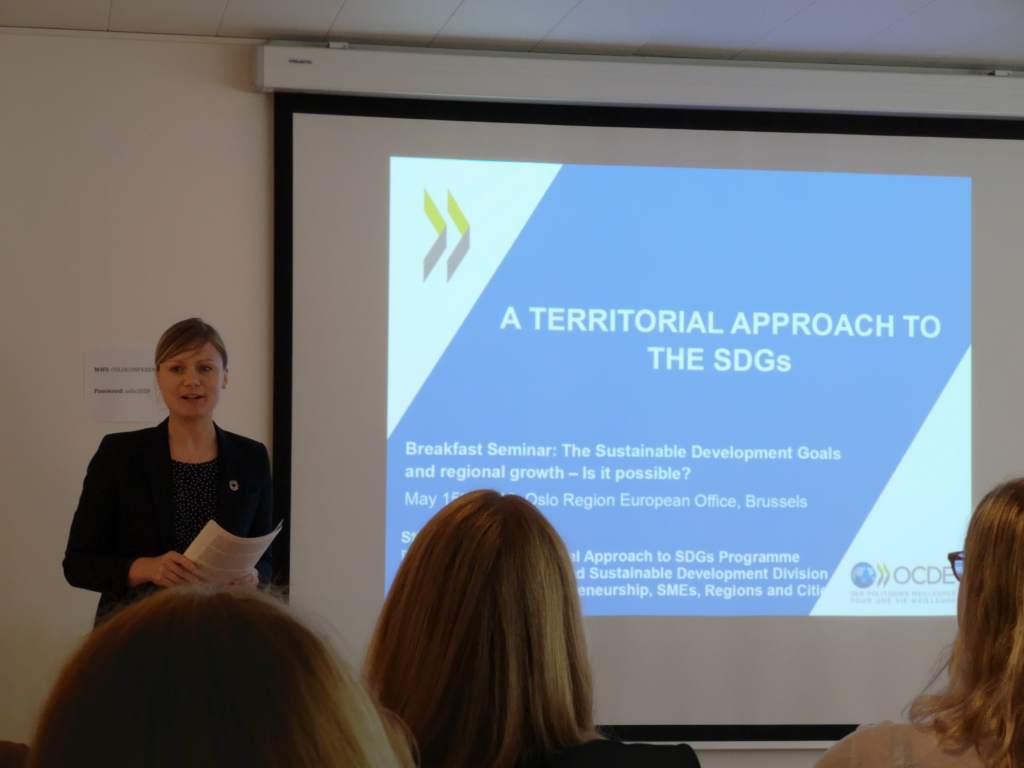
On the morning of 15 May 2019, AER and Oppland (NO) co-organised a Breakfast Seminar entitled “The Sustainable Development Goals and regional growth – Is it possible?“, which took place at Oslo Region European Office in Brussels

The sustainable development goals (SGD) call upon governments, businesses and civil society to come together and work towards a sustainable planet, leaving no one behind. Many, if not all regions, are working towards this in one form or another.

The discussion, moderated by Turid Wulff Knutssen from Oppland County, featured input from Oppland County, (NO), Region Värmland (SE), Flanders (BE) and the OECD Centre for Entrepreneurship, SMEs, Regions and Cities.

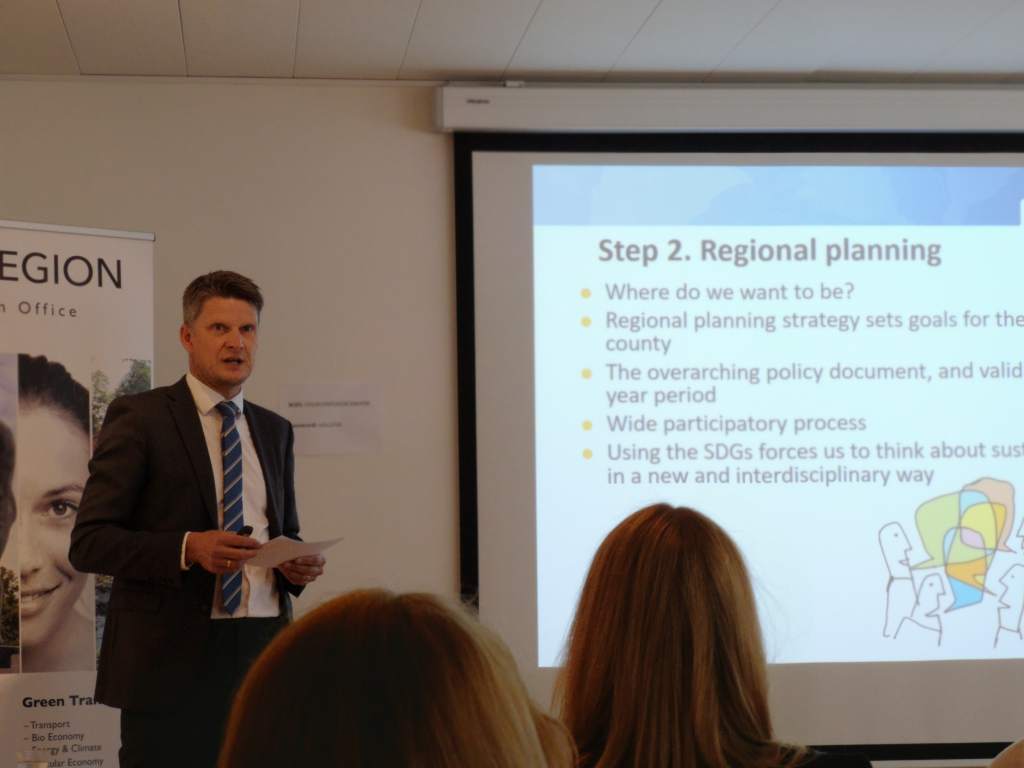
After some warm words of welcome by Even A. Hagen, County Mayor, Oppland, the discussion turned to the subject of how to build a new region in the light of Sustainable Development Goals? Erik Lagethon, Advisor on Regional Development for Oppland County Authority shared his views on how the SDGs can be framework or roadmap for regional planning and the upcoming merger of the Oppland and Hedmark regions in Norway.

Stina Heikkila, Consultant on Territorial Approaches for the SDGs at the OECD, spoke about the OECD’s work on a Territorial Approach to the Sustainable Development Goals.

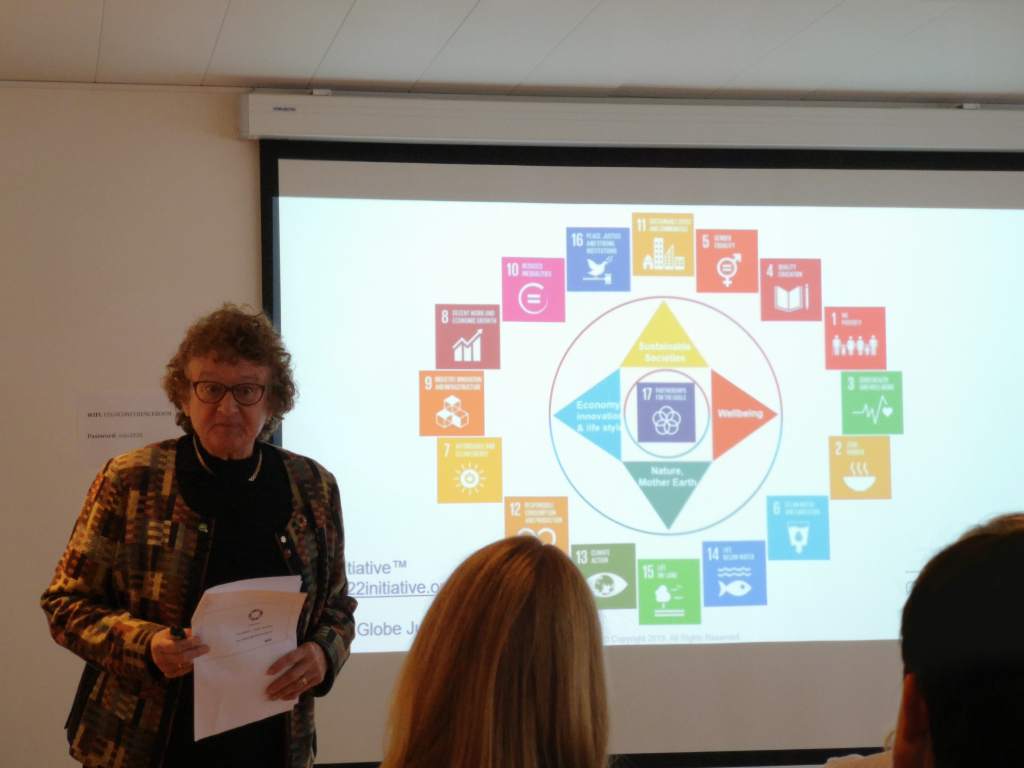
AER Working Group on Climate Change and Energy Chairperson, Eva Hallström, took the floor to present her view on “Implementing SDGs in regional planning – more than words?” and to give examples from her region, Värmland (SE) before being joined by Ine Baetens, Expert on Sustainable Development for Flanders (BE), who presented “Vision 2050: a long-term strategy for Flanders” linked to the SDGs.

Is the question really Growth vs Sustainability?

Many of the speakers highlighted that the paradigm needn’t be so black and white. Regions, national governments and international organisations are looking beyond economic growth alone for indicators for progress. Social and environmental factors, as well as happiness indices, can also be used as measures that we are moving in the right direction.

How best should regions approach the SDGs?

Whether undergoing regional restructuring or simply reflecting on how to move forward on the Global Goals the consensus was that regions need to anchor the #SDGs in an interdisciplinary way, taking a whole of government approach, involving all stakeholders and avoiding that the Goals are siloed into the work of the regional department for the environment, for example.

Additionally, when looking at the 17 Sustainable Development Goals, regions need to go ‘all-in’ rather than focusing on one or two goals that suit their current work plans or are likely to lead to successful outcomes.
An integrated approach is fundamental to ensuring progress made has the widest possible impact. As such, comprehensive implementation is therefore essential to ensuring success.

Emphasis needs to be placed on including reporting and evaluation into a regional SDG strategy to avoid ‘greenwashing’.

It may be demanding & time-consuming to implement SDG’s into regional planning but the consensus at this widely-attended event was that the effort is undoubtedly worthwhile.

What can be done? And where do we start?

This event jointly organised by AER and Oppland County is a direct result of the 2019 AER Committee Plenaries in Örebro, Sweden, where sharing best practices and knowledge exchange takes centre stage.

In this spirit, the breakfast seminar afforded the regions present to exchange on concrete actions they have undertaken to inspire others to do the same.

One such example is the Oppland County Bioeconomy Strategy and the integrated approach taken in this work. In a similar vein, Värmland County Council shared its experience as Swedens most sustainable County Council. Citing the award it received for Europe’s first LEED Healthcare Gold-certified hospital, Värmland showed how its active efforts for a sustainable environment have yielded positive results.

The Flanders region in Belgium also shared its experience of how it has grown to change the way we perceive what it means to evolve in the right direction. The wide-ranged efforts untaken have covered everything from Blue Growth (moving from subsidising fossil fuels to subsidising waste removal from the seas) through to Industry 4.0 & the circular and sharing economies.

  • Erik Lagethon, Oppland County
  • Stina Heikkilä, OECD
  • Ine Baetens, Flanders
  • Eva Hallström, Region Värmland
Follow AER!
Facebooktwitterlinkedinrss

The Committees’ 2019-2020 work programme is out!

3 April, 2019 By Johanna Pacevicius

On the occasion of the Committees’ plenaries in Örebro, AER members identified the topics which matter most for them and on which they want to develop joint actions on with fellow regions. The development of the work programme was a collective process to enable all participants to specify needs and decide to initiate activities which add value for their region. The principle is the following: as long as an action fits with the AER values, is in line with the AER priorities and has support from other regions, it can be included in the Committees work programmes.

Committee for Economy & Regional Policy

The planned actions in the AER Committee on Economy and Regional Policy can be summed up as follows:

Innovation & SMEs :

-sharing experiences & mutual learning on simplification of legislation
-exchange of experiences on attraction & retention of workforce
–organisation of a mutual learning event on a current & transversal aspect of innovation & industry in Brussels on 4 december 2019

Rural development

-exchange of experiences on waste management in rural areas
-initiating collective action for the protection of Romanian forests
-develop a project for good practice exchange on farming practices
-sharing experiences on investments & financing of infrastructure in rural areas
-develop a project together with the Committee on Social Policy & Public Health on e-health in rural areas

Energy & climate change

–organisation of a roundtable on how to integrate the Sustainable Development Goals in regional planning, during the EU Green Week in Brussels on 15 May 2019
-exchange of good practices on small hydropower plants
-exchange of experience on multistakeholder engagement around the topic of energy, partnerships, and advocacy towards different levels of governance
-sharing good practices around gas exploitation: environmental & economic impact on national tourism strategy on Norway in Sweden in particular
–organisation of workshop at European Week of Cities and Regions in Brussels in October 2019
–organisation of a workshop on energy efficiency
-Breakfast briefing on competition

Transports & mobility

-exchange of good practices and engage a shared reflexion on how to achieve zero emission transports
–organise a workshop during the European Sustainable Development Week in Brussels on clean energy hubs
–organise a side event at Smart City Expo World Congress

Committee for Social Policy& Public Health

The planned actions in the AER Committee for Social Policy & Public Health can be summed up as follows:

Social inclusion

-exchange experiences and identify solutions around the issue of isolated elderly people in rural areas
-share information on the inclusion of children with disabilities in school
-exchange experiences around the care and wellbeing of children whose parents have moved abroad for work (specifically in Romania)
-identify good practices for the support of young orphans who are 18 and are no longer supported by institutions

Health innovation

-compile achievements of the AER e-health network in the past 13 years
-mapping of e-health systems and integrated care in Europe via the Scirocco Exchange project
-develop a project together with the Committee on Economy & Regional Development on e-health in rural areas

Committee for Culture, Education & Youth

The planned actions in the AER Committee on Culture, Education, and Youth can be summed up as follows:

Culture

-mutual learning around culture for all and how to, in particular, reach out to young people
-mutual learning on culture &

Education

-share knowledge, experiences and practices to address the issue of brain drain and move from brain drain to brain gain
-exchange around the issue of governments investing in education and “losing” their qualified workforce and identify elements of resilience or compensation for territories which “lose” qualified workforce
-exchange experiences on lifelong learning for 50+ people in order to improve wellbeing and employability

Youth

-share experiences on early school leaving and the issue of young people who are not in education and not in employment. In particular explore practices around building confidence and encouraging young people.
-Organise a workshop, potentially at the Eurodyssey Forum, on the Eurodyssey programme to increase the number of applicants for the first youth mobility programme in Europe

The AER Action Plan & planning cycle

The AER Committees’ work programmes are developed at the Spring plenaries each year and are then consolidated into the AER Action Plan, which is adopted at the General Assembly.

The AER Action Plan brings together all the activities carried out within and via the AER network, be they large or small, including the Committees’ work programmes. The Action Plan is constantly updated during the year. It is the Executive Board, which approves actions to be added to the AER Action Plan, in order to ensure alignment with values and priorities.

Follow AER!
Facebooktwitterlinkedinrss

At International Migrants Day event, regions share intercultural approaches to diversity, inclusion

19 December, 2018 By Editor

On 18 December, AER marked International Migrants Day in Barcelona. A source of inputs for the AMiD project (Access to Services for Migrants with Disabilities), the event was partially funded by the European Union’s Asylum, Migration and Integration Fund. We and our co-host, AER member region Catalonia, brought together representatives from regions from around Europe to push forward the conversation on integration and diversity management.

Participants came to exchange and learn, united in recognition of the vital role played by local and regional authorities in managing diversity and building cohesive societies, improving the lives and opportunities of citizens, and contributing to their social, economic and civic inclusion. The day-long event was held In the Petralbes Royal Palace, and simultaneous interpretation in English, Catalan and Spanish was offered throughout.

Opening Session and Plenary Session

The opening session was moderated by AER Secretary General Mathieu Mori. President of AER Magnus Berntsson and Oriol Amorós, Secretary of Equality, Migration and Citizenship for the Government of Catalonia set out the conference’s mission of establishing an intercultural approach to integration based on “equality, relationships and recognition” and expressed hopes that it represented a first step toward sustained collaboration on the issue among the regions involved. Laura Corrado of the European Commission’s DG Home spoke about the Commissions efforts to bring a multi-level, multi-stakeholder approach to migration policy, while Leen Verbeek of the Congress of Local and Regional Authorities of the Council of Europe championed a less ideologically-charged, more pragmatic diversity management policy that focused on the positive benefits of migration to European cultures, economies, and societies. Albert Castellanos, Secretary General of Ministry of Vice Presidency and Economy, Government of Catalonia, gave a stirring contribution and argued for a common European approach to migration “based not on fear, but on shared welfare, rights and duties.”

Carles Macian of the Catalan government and Dani de Torres, expert of the Council of Europe’s Intercultural Cities Programme, then took the stage to discuss intercultural approach to diversity management in cities and regions. De Torres pointed to the potential of regions to collaborate with cities and civil society to bring about intercultural integration, while Manel advocated for a comprehensive approach to integration on the basis of inclusion, diversity and interaction, targeting a variety of sectors with specific strategies.

Roundtables

Following the opening session participants split into two rooms to hold more participative discussions on key topics. There were four sessions, two before a lunch break and two after, in which representatives of local and regional governments, civil society organisations and researchers shared knowledge and experience

Roundtable 1  was all about providing Public policies and services for diversity and inclusion. Participants promoted the personalization of services in producing positive outcomes for migrants. Fatmé Khalil-Hammoud of the Vienna (AT) touted the success of the city’s tailored actions to young women, providing avenues to social inclusion on the basis of activities related to the beneficiaries’ interests.  Meanwhile, Silvija Ladić Fischer of Varaždin County (HR) argued that focusing on industries that where demand for labor was higher and providing individualised services to help migrants validate the skills they had gained before their arrival was key to the high impact of the region’s low-budget project on labor market inclusion. In the discussion session, Iñigo Magdaleno of Murcia (ES) called for investments in the creation of social capital, understood as social networks and associated norms of reciprocity and trust, has been correlated with more effective conflict management and gains in social justice. Contributions from Marzio Barbieri of Emilia Romagna (IT) and Çiçek Bacik of the German Children and Youth Foundation highlighted the inclusion of migrants in mainstream services and empowering young people through sports participation and rights education, respectively, as means of furthering this end.

Roundtable 2 – Recognising Diversity and Combating Racism was moderated by Director of Open Society Initiative for Europe Jordi Vaquer. Brussels-Capital Region (BE), the Government of the Basque Country (ES), the Autonomous Province of Vojvodina (RS),  Region Västra Götaland (SE), and Barcelona City Council (ES) all made contributions, with a special focus on hate speech and discrimination.  A particular highlight was the Brussels Action Plan Against Racism and Discrimination 2018-2020, presented by Katrien Lefever and Noémie Emmanuel. The comprehensive and multi-perspective plan incorporates 29 concrete measures adapted to contemporary challenges, such as cyber hate-speech.  Amanda Rohde from Friends of Europe underlined the importance of sharing the perspectives of newcomers to combat xenophobic narratives, calling for “forward-looking, sustainable and inclusive solutions” to the problems we face.

 Roundtable 3 – Comprehensive approaches to inclusion and participation was moderated by Professor Ricard Zapata. In this session, members of the Community Advisory Board for AMiD, Kenneth Johannesson (Värmland, SE) and Dr. Angela Unufe, presented the project’s work on bringing access to services to migrants with disabilities. They were joined by representatives of the regional governments of Valencia (ES), the Basque Country (ES) and Umbria (IT). Inmaculada Carda Isach presented Valencia’s plan for Inclusion and Social cohesion, with its PANGEA offices for education, information and intercultural mediation. Lide Amilibia discussed the Basque Country’s comprehensive and multi-perspective plan for the reception and integration of migrants, including the support to local entities, the areas of training and employment, sports, and health. Meanwhile, Anna Ascani highlighted the Urbagri4Women project, which provides migrant women with an opportunity to develop innovative and self-sufficient urban agricultural initiatives. Bruno António of Portugal’s DYPALL, focused on the youth network’s work on boosting the participation of young migrants in decision-making processes at local level.

Roundtable 4 – Sense of belonging & Second-generation migrants brought a focus on the initiatives and experiences young people with a migration background. Moderator Gemma Aubarell guided discussion, which saw Jana Zah of Sindelfigen (DE) present her work as Integration officer of the city, collaborating with the young population to broaden the boundaries of civic and national identity. Youcef Allaoui advocated for the empowerment of young people, presenting ongoing projects from Union of Catalan Muslim Communities in which young Muslims are the protagonists of research, stating “We cannot leave to others the responsibility of answering questions about us on our behalf.” Komal Naz  of the association PakMir and  Students Aliu Diallo and Lisabeth Murga were particularly active in the discussion, wrestling with socially-defined ideals of immigrant success and the complexities of individual and collective identities. Speakers underlined that their senses of self were informed by a harmonious ensemble of values and traditions that entailed neither renunciation nor conformism, contending that the idiosyncrasy of personal cultural identity defies categorisation.

Closing Session

Participants from the roundtables reconvened at the end of the day for a session that brought the conference to its conclusion. Kenneth Johannesson spoke first, appealing to a social vision of Europe that would combat discrimination in order to ensure that all people have access to “a freedom not from society, but through society.” His contribution was followed by a summary of the conclusions from the conference gathered by two rapporteurs: Marlen Niubò and M’hamed Abdelouahed Allaoui.

At conference’s climax, Xantal Genovart, read aloud to the audience one of the main outputs of the event: The International Migrants Day Manifesto. Genovart, who also moderated the closing session, is Vice-President of the Association of Muslim Women in Catalonia. The manifesto proclaims the need for an outlook that defends respect for fundamental rights due to migrants but goes further. It proclaims that host societies have obligations to foreign-born residents as citizens, members of the community. Local and regional governments are called on to adopt a set of approaches that aim toward an intercultural model of inclusion and diversity, while combatting racism and discrimination. The full text of the manifesto can be found below.

Two performances bookended the statement; the Bollywood-style dance group Associació Dancing Ganesh preceded the manifesto’s declaration, and String orchestra Vozes Barcelona, an organisation which favours integration through music, followed. Secretary Oriol Amorós closed the ceremony, thanking participants and looking forward to future collaboration toward a more just and harmonious future.

Follow AER!

Facebooktwitterlinkedinrss

New rules, new roles for governments in a Sharing Economy

11 December, 2018 By Editor

The Sharing Economy is disrupting not only transports and tourism, it may soon drastically change the way we envision public services, raising new questions for policymakers. On 4 December 2018 the “The Sharing Economy: Reshaping the way we do business” event, co-organised by AER, Brussels Capital and Catalonia brought together policymakers, entrepreneurs, academics and representatives of the third sector for vivid exchanges.

Governments in the Digital Age

The digital transformation changes the way institutions work, share information and organise power. This is why the topic is recurring in different AER thematic activities be it e-health, transports, food… Indeed it touches upon governance and multistakeholder cooperation.

With views to the sharing or collaborative economy, it poses new challenges to governments in terms of taxation but also for the protection of citizens, security of users and workers, or with respect to the support to innovation and SMEs.  As Lluís Juncà, General Director for Economic Promotion, Competence and Regulation at the Generalitat de Catalunya, explained, this raises the question as to what governments  should support and how. How should they regulate to the benefit of citizens? Different governments have taken steps to, at the same time provide protection to workers, and impose taxes. The disruption however goes further than taxes and insurances and involves changes in the very role of governments. This regards the way governments:

  • ask for data (for instance from shared mobility or hospitality stakeholders)
  • share the data they generate or collect
  • collaborate with other entities to provide the seamless services citizens want to access at the tip of their fingers.

These questions were specifically addressed in the discussion group moderated by Anna Merino Castelló, who is an economist, expert in competition, better regulation and digital markets and has worked extensively with the Catalan government to define their sharing economy policy. This group included François Gerard, Managing Director at Helpper, an interface which connects people who need help, for instance for the groceries, with people who can help and would like to sell such services. A cooperation has already started in Flanders with a local government in order to help people with low incomes to access services via Helpper. Yves Muyters, is Project Manager at KlaarIsKees, a similar company, which allows individuals to either propose their paid services or, at the end-user level, to ask for support for a task. Mayo Fuster, Director of research on the collaborative economy at the Dimmons Research Group of the Open University of Catalonia, is well known for crowdsourcing the Barcelona policies on the sharing economy. She provided numerous examples on collaborations between the public sector and the entrepreneurs from the Sharing Econonmy in Catalonia. Èlia Ferrer, Public Affairs Manager at mytaxi The Taxi App, explained how for citizens what matters is the easy access to a service and its capacity to answer a specific need.

Business in a changing world

The group moderated by Aurora Sanz, Lawyer  at Grant Thornton, focused on the support to entrepreneurs. The sharing economy representing a wide span of very different types of businesses, it can be difficult for governments to navigate. Jean-Luc Vanraes, President of the AER Committee on Economy and Regional Development highlighted the difficulty to decide how to tax new services in the context of a new economy. A harmonised tax on digital services at global level in 2020 will simplify the situation. Mar Alarcón, CEO of SocialCar, a car sharing company explained how close contact with the Catalan government when developping the company, enabled them to provide feedback on existing legislation and advise on needed changes. This contact also ensured the company was gathering right type of data, regarding mobility and usages, to inform the government. Camille Lepinay shared experiences from the EU-Give project, a pilot project on the sharing economy initiated by the European Parliament, while Philippe Eiselein from the Chair on Social Entrepreneurship at the Vrije Universiteit Brussel presented elements of success for social entrepreneurs. Together the group agreed that key success factors were:

  • people: A team can change the business plan along the way, ideas do evolve. Investors are very serious about people and teams.
  • space for interaction between peers: to achieve this, some would recomend the support and creation of incubators while others thought there were actually too many incubators
  • a clear vision

Skills and Competences

Governments also face challenges in the field of education and training, as it is likely that children and students today will have jobs which don’t even yet exist. In this context David Vuylsteke, founder of PiggyBee, a crowdshipping company and Lieza Dessein, Project manager at SMart, a cooperative supporting freelancers and empowering enrepreneurs, insisted on the need for peer learning, ceativity from an early age and acceptance of failure. The sharing economy is rarely adressed in economy lessons and more contacts and cooperations with entrepreneurs can be very beneficial for students. The digital transformation is not only about digital skills, it is also very much about interpersonnal skills, the ability to build connections and networks, to engage others. Creative hubs are a powerful tool in that respect as they provide a space where entrepreneurs meet others in a more engaging and facilitated way than mere co-working spaces.

Ethics: what is good, what should be supported?

The founder of Consumo Colaborativo, a Spanish language blog dedicated to exploring the trend of collaborative consumption Albert Cañigueral, facilitated a discussion around ethics, inclusion and how to define what is good and should be suported in the sharing economy. He reminded participants that technology doesn’t exist in the void, it exists in a legal and cultural context. The discussion brought together Víctor Moyano, a Project Manager at the Fundación Creafutur, a public-private initiative which identifies business opportunities with positive social and environmental impact, raises awareness and advises stakeholders, Xavier Marichal, the CEO of USITOO, a platform where users can borrow “things” instead of buying them and Dimitri Berliner, cofounder of Communa, an organisation which develops shared spaces in empty buildings. Contributors found that the platform economy intersects with several aspects: legal, social, taxation. More people are willing to share and provide services and while platforms are providing massive opportunities, key questions to be addressed to know what kind of stakeholders should b supported by governments could be:

-how to ensure these services are accessible?

-What about decent working conditions?

-How is the value generated by those activities shared?

-What is the model of governance of the business?

In general there is a need to make a difference between the many types of stakeholders of the sharing economy who can have diverging purposes. As Lieza Dessein mentioned in her keynote address, the narrative of the original sharing economy has been adopted by companies from the platform economy, which do not share collaborative values. This has created confusion both for users and for governments. Lieza Dessein proposed that the cooperative and sharing economy stakeholders reinvent a new narrative to be able to differentiate themselves from the other platforms.

Contributors in the discussion group on ethics, inclusion and social cohesion also suggested that “frictions” be potentially created to slow dow the pace of the sharing economy to adjust and make improvements on access, benefits, etc. The codes of conducts and guidelines adopted by some regions could be replicated in other regions and combined across different levels of governance (national, regional, local). At the moment regulation across Europe is uneven, which is why contributors in this groups advocated for harmonised rules.

Mutual learning for policy innovation

This was the third year in a row that AER organised this special kind of mutual learning event on a current and transversal topic together with Brussels Capital. Previous events focused on “E-health: let’s find a common language” and “Artificial Intelligence: are regions up to the challenge?“. Stakeholders from the private and public sector, industry specialists, entrepreneurs, and policy makers engaged in genuine exchange. The idea being to share and discuss initiatives which can be implemented right away, not to develop an official declaration. This contributes to creating an environment of trust and free speech.

A major asset of these events is also to discover initiatives and hear of stories first hand. Entrepreneurs presented their work in the afternoon, which prove both exciting and interesting. Moreover, participants also had the opportunity to test Scooty’s shared electric scooters during the break, which was very entertaining.

In a setting where each participant is a contributor, this event aimed to generate new ideas, challenge people to think further and inspire policymaking.

Presentations,  pictures and the list of participants are available on the event webpage.

 Follow AER!

Facebooktwitterlinkedinrss

AER discusses food sustainability and governance in the digital age

10 December, 2018 By Editor

On the occasion of the elaboration of the AER Committee 1  work programme for 2018-2019, members decided to develop activities around quality food, short supply chains and sustainable development. In parallel, on the occasion of the Spring Bureau, members decided to initiate a Task Force on Food to develop policy messages on food for advocacy. The approach of the Task Force was from the beginning very holistic, including health, innovation and education. In this context AER decided to seize the opportunity to organise a side event at Smart City Expo World Congress to prepare a session on Food, Sustainability & Governance in the Digital Age.

Complex challenges

Food lays at the core of sustainable regional development as it touches upon topics as diverse as the densification of cities, the digital transformation of all sectors, food supply chains and waste management, multilevel governance and citizens participation. The challenge of providing the inhabitants of cities with affordable, safe and nutritious food is both urgent and complex. Moreover, the health and wellbeing of citizens and consumers are directly affected by the way cities and regions themselves are shaping a sustainable food environment. Globally over 50% of the world’s population lives in urban areas. According to the United Nations, by 2050, over six billion people will be living in cities.

The supply of food is still highly dependent on transport, which is heavily dependent on burning fossil fuels. The impacts on the environment and the climate are dire. Food, mobility and housing are responsible for almost 80% of the environmental impacts of consumption. Sustainable food systems have therefore a major role to play in making cities and regions better places to live in.

The AER session at Smart City Expo World Congress looked therefore at governance and citizens participation in the Digital Age to support sustainable food production and consumption. Reflecting about food supply chains as well, experts discussed how territorial approaches lead to more sustainable food systems.

Bringing together different voices

Three experts, representing regional governments, academia and civil society, shared their experience and perspectives on food. The session was organised in an interactive way, where regular inputs from the public helped move forward with the discussion.

Raimondo Mandis, Member of staff of the President of Sardinia as expert in agriculture, Member of the national council of Slow Food and President of Slow Food Cagliari, presented the experience of his region. Key success factors to increase the sustainability of food systems and lower the climate impact of food in Sardinia haved been:

  • Transversal approaches: when different sectors work together they realise that what is waste for one sector is raw material for another. The example of artichokes
  • Awareness raising and education are key elements to engage citizens and help them generate a positive impact on more sustainable food supply chains and food waste reduction
  • Innovation in terms of processes and products

Samuel Féret, Senior project manager at the Mediterranean Agronomic Institute of Montpellier (CIHEAM IAM) and project manager of the Interreg Europe project ECOWASTE4FOOD shared findings from this project which looks in depth at how to minimise food waste at user level, indeed around half of food waste in developped countries originates at end-user level. This project found that many initiatives exist at regional and local level to close the loops:

  • Donation of food surpluses and redistribution to less privileged people is very developed in almost all EU countries, regardless support from public authorities. These practices are rooted in local charity and solidarity networks that involve food processors, retailers, food banks and local charities.
  • Innovative solutions arise from new interactions among the food system at local level. Food residues from the industry of leftovers rescued by gleaners can be re-processed into new food products.
  • A more circular food economy is emerging from bottom-up solutions to reduce food waste.

Elisa Bodenstab, Founder of international youth exchange project “Perpetuum Mobility Germany” and representative of citizens initiative “Verwenden statt verschwenden” shared the experience of her organisation, which collects food which is still good but can no longer be sold and redistributes it. Elements which help the emergence of citizen-led initiatives for sustainable food systems are:

  • empowerment: most initiatives arise from peoples’ needs. They identify a problem and try to find a solution. The main obstacle for many is the lacking belief in themselves. They have an idea, but don’t dare to realize it, because their knowledge might not be sufficient. The belief that they can change something is the basis to start social enterprises, which tackle problems in society.
  • mutual encouragement: when stakeholders start an initiative, others who share the same mindset, start noticing and join. ‘Verwenden statt Verschwenden’ for example arose when a couple of people, who noticed how much food is being wasted everyday, started talking, made a plan and put it into action.
  • multilevel cooperation between stakeholders: if governments, businesses, NGOs and communities work hand in hand, the probability to succeed is way higher.

Governments can think their action in this context and encourage initiatives by raising awareness on the topic, showing support, increasing the legitimacy of initiatives and developping multi level cooperation to share common aims at different levels.

Identifying areas for action

Samuel Féret shared that, based on his experience, in the very short term, it is urgent to implement harmonised measurements of quantities lost on the farm and wasted in the food supply chain, both at regional and national levels. It is also urgent to coordinate an annual reporting which will help to diagnose the critical areas for actions as well those where progress reach encouraging milestones, so to identify good practices that should be replicated.

Raimondo Mandis underlined the need for awareness raising and citizens participation as well as support to innovation in the sector.

Elisa Bodenstab insisted on the need for a holistic approach to food systems. One point of focus sector is the food waste management and overproduction. 18 Million tons of food are being thrown out in germany each year, which is 1/3. Instances should be motivated to waste as little food as possible or also being fined for doing the opposite. Another area is food packaging. It is not only responsible for a huge amount of waste, but also not always economically reusable. Finding alternative ways of packaging or also just packaging less already has the potential for a big impact.

 Follow AER!

Facebooktwitterlinkedinrss

Regional representatives gather in Vojvodina, Serbia

25 September, 2018 By Editor

The AER travelled to Vojvodina, Serbia for its Autumn Plenary from 25 – 27 September 2018. A detailed recap of all the meetings that took place is available  below. The key takeaways from the plenary are as follows:

  • There will be a strong collaboration in the coming months between the Committees, where mutual learning and experience exchange take place, and the Bureau Task Forces, where the findings from the Committees will be used to develop policy messages. For example, the three AER committees and the AER Task Force on Migration will work closely together to develop messaging ahead of the International Migrants Day: Promoting Diversity in Regions event in Barcelona on Tuesday 18 December.
  • The Task Force on Cohesion Policy, which is currently under the responsibility of the Committee for Economy and Regional Development, will be transferred to the Bureau.
  • The regions of Umbria (IT), Maramures (RO) and Brussels Capital (BE) discussed support for social entrepreneurs and the impact of such on improving regional and national policy frameworks. A discussion on the potential creation of an exchange programme for entrepreneurs from different regions took place. Interested regions should contact the Policy and Knowledge Transfer Coordinator.
  • Talks progressed on the new Civil Servant Exchange Programme. It will be co-organised with the European College of Cluny and will provide high quality training and education as well as placements in regional administrations. Please fill out this survey if your region would like to participate in the programme.
  • Emax Sweden presented their concept of a Youth Innovation Camp which could be deployed elsewhere in Europe. A workshop on the development of such a Youth Innovation Camp will be held during the Spring 2019 Plenary in Orebro (SE). Please contact the Programmes Coordinator for further information.
  • A handbook on the use of SDGs as a policy framework could be developed. Interested regions should contact the Policy and Knowledge Transfer Coordinator.
  • A webinar will be organised in January 2019 to further help regions make use of the TAIEX EIR programme for peer learning in the field of environmental policies. Please contact the Project Unit for further information.

Detailed recap

The plenary was officially opened on Tuesday 25 September with a video message from Ana Brnabić, Prime Minister of Serbia. In it she stressed the importance of regional cooperation as a means to promote integration. She also reiterated her support for the European Union, saying that it is the ‘first and foremost priority’ for Serbia.

The opening ceremony was followed by the joint plenary. At this we were very pleased to recognise the outstanding contributions of three AER regions: Umbria, Vienna and Scotland. All three were rewarded a ShineBright Recognition Award for their commitment to the AER core priorities.

We were also very pleased to hear from the latest AER and Eurodyssey member, the region of Sardinia, Italy. Massimo Temussi, Managing Director fo the Sardinia Employment Agency ASPAL, provided an overview of active labour policies in the region.

The AER Project had the opportunity to provide and overview of their work with this video.


Finally, we gave a warm send-off to Agneta Granström, County Council Commissioner, Norrbotten County Council, Sweden, who will be leaving politics. She has been an active and engaged member of the AER for several years.

A panel debate, focusing on the role of Open Data and the role it can play in governance, start-ups and innovation took place in the evening. Panellists were:

  • Brigitte Lutz, Open Data Coordinator, City of Vienna
  • Margriet Nieuwenhuis, The European Data Portal
  • Geert-Jan Waasdorp, The Intelligence Group
  • Ton Zijlstra, The Green Land
  • Moderator: Slobodan Markovic, UNDP Technical Advisor on Digital Governance

The discussion focused on how public institutions collect and generate enormous quantities of data in areas as varied as unemployment, air pollution, hospital consultations etc and how this data can best be re-used to create or improve both public and private services. There is a need to change the political perception of Open Data and instead view it as opportunity for policy-making.

On Wednesday 26 September our focus turned to the activities of our three Committees:

  • Economy and Regional Development
  • Social Policy and Public Health
  • Culture, Eduction and Youth

All three outlined achievements made over the last six months, including regional projects which have recently gained funding to work on integrated care systems, social entrepreneurship and social inclusion. Jean Luc Vanraes, president of  the Committee on Economy and Regional Development initiated a discussion on the Sharing Economy and the role it can play in the regions. While many AER regions are very familiar with collaborative services such as Uber, Airbnb and Deliveroo, the sharing economy landscape is very diverse and includes companies, which are very social and very green as well as classic larger corporations. The stakes are furthermore very different for larger cities or for rural areas, where collaborative services can compensate gaps public services. Bruxelles Capitale region will organise a conference on this very topic on 4 December in Brussels. Further information will follow on this in the coming weeks but we do hope you can join us.

At the plenary for the Committee on Economy and Regional Development members decided that the Task Force on Cohesion Policy, which for historic reasons was under the responsibility of this Committee, should be transferred to the Bureau for coherence purposes, as it is the Bureau which is in charge of the identification of policy messages and advocacy activities.

Martin Tollen, Östergötland (SE) was re-elected Chair of the Working Group on Transports and Mobility, other positions were left open for future candidacies

At the plenary for the Committee on Social Policy and Public Health members said farewell to Agneta Granström, Vice President of the Committee and Chair of the AER e-Health network. Albert Castellanos, Catalonia (ES) was elected Vice-President for Inclusion & Social entrepreneurship, other positions were left open for future candidacies.

At the plenary for the Committee on Culture, Education and Youth a discussion took place on the launch of the Civil Servant Exchange Programme, an initiative proposed by Radimir Čačić, President of this Committee. This programme will be hosted at the European College of Cluny, in the region of Bourgogne, France and is expected to be operational by 2020. If your region is interested please fill out this survey.

Emax Sweden presented their concept of a Youth Innovation Camp which could be deployed elsewhere in Europe. A workshop on the development of such a Youth Innovation Camp will be held during the Spring 2019 Plenary in Orebro, Sweden

Two workshops took place in the afternoon. The AER Working Group on Energy and Climate Change looked at use of the Sustainable Development Goals as a policy framework. Many regions are very active in this space. Oppland, Norway and Varmland, Sweden provided case studies.

A presentation on the ways in which The UNDP in Serbia is helping stakeholders from the private and the public sector to reach the SDGs, provided useful insights to participants on how to structure support: Areas for action are

  • improving legislation;
  • encouraging private investments and providing information on funding opportunities;
  • supporting the development of infrastructure for renewable energies such as biomass;
  • sourcing innovation through prizes and open data challenges;
  • supporting engagement of society through awareness raising; and
  • matchmaking.

The AER Working Group on Transport and Mobility looked at Sustainable Urban Mobility, with Miroslav Tadic, UNDP Climate Change Portfolio Manager, providing the foundation for the discussion. The region of Östergötland, Sweden is particularly engaged in this field.

Mathieu Mori explained the main advantages of an EGTC, especially for interregional projects on transports. Regions interested in developing an EGTC to develop project should get in touch with the EGTC platform of the Committee of the Regions for support.

AER is involved in the New Mobility Services Initiative of the European Commission. This initiative was set up within the Sustainable Urban Mobility Action Cluster of the European Innovation Partnership on Smart Cities and Communities (EIP-SCC). The engagement in this partnership has proven very beneficial for Östergötland as it allows to source knowledge, innovation and qualified advice. Other regions are invited to take part in the New Mobility Services Initiative. On 10 October, a seminar on “Sustainable Urban Mobility in the Smart City: How to make change happen?” in Brussels will be an opportunity to learn more about this initiative and meet stakeholders. Interested members can register here.

On the occasion of the AER Black Sea Summit, the AER partnership with the Arge Donau Working Community was reinstated. This will be of interest for members who would like to develop partnerships along specific transport corridors too.

On Thursday 27 September a breakfast debate on ‘Welcoming unaccompanied migrant children’ was held with guest speaker Sarah Sommer, Senior Programme Manager at the European Programme for Integration and Migration, a collaborative fund supporting civil society projects in the fields of migration and integration. This topic was chosen by the President of the Committee on Social Policy & Public health Mihai Ritivoiu based on the discussions, which took place during the Spring plenaries in Arad. At the EPIM the focus is on youth on the move, rather than unaccompanied children only, in order to not leave out other vulnerable youth. The difficulty with youth on the move is not scale, as such, but the fact that good solutions still have to be developed. This can only happen through pilot projects, mutual learning between stakeholders and involving users in a feedback loop to evaluate the effectiveness of measures. Further collaboration with EPIM and partners will be developed to prepare the mutual learning event on migration to be held on 18 December in Catalonia, which will feed the work of the Bureau Task Force on Migration.

Following this our Working Group on Rural Development met to discuss waste management in rural areas. Svetlana Marusic presented the situation in Vojvodina (RS) and Olimpia Neagoe, Chair of the Working Group, presented a project which is being implemented in Dolj (RO) and which is substantially supported by EU funding. Sustainable Waste Management involves both considerable investments in infrastructure and a lot of work on behavioural changes. The main takeaways are:

  • things take time;
  • changing behaviours requires a lot of work, awareness raising and discussions, in all regions;
  • it is worth working on it, investing time, energy, creativity and money in changing the way things are done; and
  • it should be more expensive to behave badly than to do the right thing.

The workshop finished with a presentation on the TAIEX EIR programme of the European Commission which finances study visits, workshops and expert visits to help regions improve environmental policies and learn from their peers abroad. Regions interested in using the programme can check the Commission webpage explaining the procedure to benefit from it here. A webinar will be organised on this topic in January 2019.

The AER Group on Equal opportunities has regular phone meetings and met as well in Novi Sad to discuss the development of a Code of Conduct for AER.

View photos HERE and HERE. 

View press conference videos HERE.

Presentations & background articles

Joint Plenary meeting

New AER Member: Sardinia’s Agency for Active Labour Policy (ASPAL), by Massimo Tenussi

The AER Programme for youth mobility: Eurodyssey (and how to join), by Andres Muñoz Rojo

Eurodyssey from the youth point of view: video

The AER Summer Academy: video by 2018 host region Maramures

Address by Monica Gundahl, Interim Chair of the Election Committee

Debate on Open data

Background article on Open Data

Regional Business forum

Peer review in Flevoland, NL, by Rutger Schuitemaker

Bursa Chamber of Commerce and Industry, TR

Economic Development of West Region Romania, by Mihai Ritivoiu

Vojvodina Development Agency, RS

Plenary meeting of the Committee on Economy & Regional Development

Introduction, by Snezana Sedlar

General presentation & info on the Sharing Economy, by Jean-Luc Vanraes

Background article on the sharing economy & the stakes for regions

Plenary meeting of the Committee on Social policy & Public Health

SCIROCCO Exchange: knowledge transfer to help regions implement integrated care systems, by Andrea Pavlickova

Umbria, IT: support to Social Entrepreneurs, by Ana Ascani

Maramures, RO: ASSOC, a good practice with high impact, by Florian Sălăjeanu

General Presentation, by Mihai Ritivoiu

Background article on social entrepreneurship & the stakes for regions

Plenary meeting of the Committee on Culture, Education and Youth

Speech by Aleksandra Djankovic

The new AER Civil Servants Exchange programme, by Larisa Križan Breljak

Emax, youth innovation camp, by Janis Lancereau

General Presentation, by Radimir Čačić

Workshop on Using the SDGs as a policy framework

The SDGs to achieve Climate Goals in Serbia, by Miloslav Tadic

Localising the SDGs in Oppland, NO, by Hakon Noren

Environmental Work in Värmland, SE: a political affair, by Eva Hallström

Workshop on sustainable urban mobility

The New Mobilities Initiative of the EIP-SCC, by Martin Tollén

Sustainable Urban Mobility in Serbia, by Miloslav Tadic

General Presentation, by Martin Tollén

Background article on New Mobilities & AER’s work in the field

Breakfast Debate “Welcoming unaccompanied migrant children”

Background article on youth on the move

Workshop on waste management in rural areas

Waste Management in Vojvodina, by Svetlana Marušić

The integrated waste management project in Dolj, RO, by Olimpia Neagoe

General presentation, by Olimpia Neagoe

Summer Academy Organising Committee meeting

Background article on the Summer Academy Organising Committee meetingFollow AER!

Facebooktwitterlinkedinrss

Umbria and Maramures: the power of social entrepreneurship

21 September, 2018 By Editor

The AER Committees are a space for experience exchange, which enable mutual learning and regional policy innovation. During the 2018 Spring plenary of the AER Committee on Social Policy and Public Health, members identified social entrepreneurship as a topic of high interest. This is why the President of the Committee  on Social Policy & Public Health, Mihai Ritivoiu invited Umbria (IT) and Maramures (RO) to share their experience on social entrpreneurship and initiate a discussion among members.

Pioneering social change

A social entrepreneurship does business focusing on a social purpose trying to bring a social change in the society. The Business encyclopedia says that the “social entrepreneurs combine commerce and social issues in a way that improves the lives of people connected to the cause. They don’t measure their success in terms of profit alone – success to social entrepreneurs means that they have improved the world, however they define that.”  Indeed, the main aim of social entrepreneurship is to bring a positive change in the society. After recognizing the social problems, the entrepreneurs achieve their objectives by using market-based strategies. At the European level, the definition of a social enterprise is built along three dimensions: an entrepreneurial dimension (with earned income generated by the sale of goods and services on the market, including through public contracting); a social dimension (the pursuit of an explicit social aim and delivery of products and services with a social connotation); a governance dimension (accountability, participation and transparency).

A diverse reality

Many commercial businesses would consider themselves to have social objectives, but social enterprises are distinctive because their social or environmental purpose remains central to their operation. The following examples show the wide spectrum covered by social entreprises:

  • Meet My Mama is a French foodtech startup that helps women with different cultural backgrounds to share their traditional dishes by cooking in events, organizing caterings or delivering food;
  • Soma Water creates a home water filtration solution that use the proceeds of the sales to bring safe drinking water to over 663 million people who don’t have access to water;
  • CO2 online is a German social enterprise focused on the environmental benefits. This enterprise assists private households in decreasing their consumption of energy and with this lower their CO2 emissions. At the same time, consumers benefit from lower energy bills;
  • Le Mat is a social franchise system of social entrepreneurs operating in tourism, hospitality and local development through the creation of hotels, hostels, and bed and breakfasts, as well as other tourism services. A specific feature of this social franchise is that it allows social franchisees to adapt their model to the local context, in terms of culture, geography, architecture, production of goods and social aspects.

In these examples is highlighted the rich variety of missions carried out by social entrepreneurs. Moreover, companies could have as goal to solve problems, hire people in need or both, open schools in far-flung areas, educate women in need, allow farmers and poor individuals to access low-interest credits, establish plants for waste treatment, plant trees and so on.

Social entrepreneurship: the driving force of regional development

According to OECD European Commission, Social entrepreneurship plays an important role in addressing social, economic, and environmental challenges while fostering inclusive growth, shared prosperity, and social inclusion. In response to the crisis and austerity, social enterprise demonstrates the ability to address societal needs and build social cohesion. Moreover, social entrepreneurship contributes to job creation, especially at local level, as well as to democratic participation and improvement of welfare services delivery.

Discussion at AER plenaries: Umbria and Maramures example of good practices

Nowadays, many questions have risen around social enterprises. Are they efficient? What is their social impact at a regional level? How can a region measure the social impact of a social enterprise? Last but not least, the most common argument is: how do you find the balance between social purpose and the economic success of the enterprise?
These and many other questions will be discussed in Vojvodina thanks to the experience that will be shared by Umbria region (IT) and Maramures (RO). Ms. Anna Ascani -dirigent of the department on social affairs and international relations at Umbria region- will present good practices developed in the last years in her region. She will show the different successes and obstacles that Umbria region is facing. While Mr. Florian Sălăjeanu -president of Asociația Profesională Neguvernamentală de Asistență Socială ASSOC Baia Mare in Maramures (RO)– will deepen the link between the scope of social enterprises and the meaning of social inclusion.


Photo Credits: Rawpixel on Unsplash.Follow AER!

Facebooktwitterlinkedinrss

Brussels Capital: the Sharing Economy & the way forward

29 August, 2018 By Johanna Pacevicius

The sharing economy will be at the heart of discussions on the occasion of the Autumn plenary meeting of the AER Committee on Economy and Regional Development chaired by Jean Luc Vanraes, Brussels Capital (BE)

The sharing economy: reshaping the way we do business

In 2011 TIME Magazine described the sharing economy as one the ten ideas that will change the world (Walsch). Today the sharing economy is effectively reshaping the way we do business. It is a rapidly growing socio-economic trend disrupting traditional business sectors by revolutionising the way people share goods and services and interact with one another. It has allowed a substantial amount of flexibility for work and business, blurring the boundaries between employment and unemployment, consumer and provider, employee and self-employed and between the professional and non-professional delivery of services.

A need for public action

The rise of the sharing economy has created opportunities for citizens and regions, but being a new form of economy, it has also raised issues that will need to be resolved. It can contribute to job creation and be an important driver of regional competiveness, innovation and sustainable economic growth. However for this, European public authorities need to establish a proper policy, regulatory and legislative environment that serves to aid rather than hamper the sector, while also addressing issues faced by market operators and protecting consumers. The Sharing Economy is a still emerging, but rapidly growing sector. As such regions are often still in the process of figuring out how best to adapt to it.

Mutual learning event on the sharing economy

As is now a tradition and has been promised during the elaboration of the Committee 1 work programme, Brussels Capital will host this year again a mutual learning event on a current and transversal topic. This year it will be the Sharing economy, which will be in the spotlight. Previous editions of this unique annual event have included:

-A mutual learning event on bringing diverse stakeholders find a common language in the field of e-health

-A mutual learning event on Artificial Intelligence, its opportunities and challenges for regions

These events always bring together very diverse stakeholders who engage in genuine exchange. The idea is to share and discuss initiatives which can be implemented right away. Another major asset of these events is to discover projects and initiatives and hear of stories first hand. Stakeholders from the private and public sector, industry specialists, entrepreneurs, and policy makers will gather to identify opportunities and points of action of the sharing economy.

This year’s event will take place late November or early December and will be organised in partnership with AER and Catalonia.

Back to basics, what is the Sharing Economy?

A reality that spans from “very social and green” to “rather cynical”

The sharing economy covers a wide variety of sectors including everything from sharing mobility and accommodation to food, goods, domestic and business services. Most citizens will have likely engaged with, personally benefitted from, or at least have heard of some of the companies operating or services provided by this new business trend. Uber and Airbnb are two of the bigger names associated with the sharing economy, which has sometimes led to skepticism and misunderstandings towards the sharing economy as a whole. There is however a wealth of other examples for profit and not-for-profit organisations operating in the field including

  • COVIVO, a Grand Est (FR) example of shared mobility solutions offering carpooling for companies and communities, which was presented at the AER workshop on smart green and integrated transport systems
  • Couchsurfing, a service that connects members to a global community of travelers to find a place to stay for free or share their home and hometown with travelers
  • Deliveroo or Takeaway are food delivery services
  • To Good To Go is app-based solution which allows users to act against food waste, by buying food that is still fresh at a great price instead of stores throwing away their unsold food.
  • Paupiette is a platform which facilitates intergenerationnal lunches between students and older people at an affordable price
  • The Repair Café movement was started in Amsterdam in 2009. There are now 1,003 centres worldwide, with hundreds in Belgium, Germany and the Netherlands and 18 in Britain. Each is a community hub where local residents can bring in broken items and get them repaired for free, as well as network, learn skills, socialise and help others. Local expertise, tools, repair manuals and materials are all on hand. Melding education, social inclusivity, sharing economy practices and sustainable action, the cafés have become nodes in the circular economy, teaching its principles from the bottom up.
  • Other platforms propose cultural experiences, the selling or exchange of services, including care or education services, sharing gardens etc

A concept still under construction

While the sharing economy is being widely talked about, the definition and the boundaries delineating what exactly falls into the sharing economy still remain unclear (European Commission, 2016 & Teffer, 2017: 4). The sharing economy is the term most popularly used by the general public, but it is sometimes also referred to as the “peer-to-peer economy”, “on-demand economy”, “platform economy” and “gig economy” among others. The European Commission prefers to refer to it as the “collaborative economy”.

Having access to, not owning

It involves individuals having access to, as opposed to ownership of, goods and services. It is a peer-to-peer commerce which allows people to share, borrow or exchange goods and services between one another through online platforms. Individuals make use of the ‘idle’ or ‘surplus’ capacity of their assets usually in exchange for some type of payment or service. Sharing in itself is nothing new but it is the possibilities that have opened up through the use of technologies that has changed the game. It has made sharing easier and cheaper than ever enabling it on a scale that would not have otherwise been possible. Through the collaborative economy people are empowered to become not only consumers but providers. This form of business has become popular because of the numerous social, environmental and economic benefits it can have.

Business support in a changing world

While Europe has been relatively slow at embracing this new business phenomenon in comparison to others such as the US or China, the European Commission expressed its support for the sharing economy through its communication on ‘A European agenda for the collaborative economy’ issued in June 2016. Through this the European Commission has provided guidance aimed at supporting consumers, businesses and public authorities to engage confidently with the sector. It has shown its commitment to facilitating the balanced development of the collaborative economy as a means of encouraging the adoption of new and innovative services where quality and productivity is improved. As stated by the European Commission “these new business models can make an important contribution to jobs and growth in the European Union, if encouraged and developed in a responsible manner” (European Commission, 2016).

Discussion at AER plenaries

If the sharing economy has had so much success so early on it is because it has been able to address the needs of consumers. As such authorities at all levels including the regional level will need to find ways of working with it because it’s here to stay and it’s only going to continue growing. This is why the President of the AER Committee on Economy and Regional Development and Chair of the Working Group on SMEs, Business and Investments, Jean Luc Vanraes, decided to initiate a discussion on the sharing economy on the occasion of the AER Autumn Committee Plenaries taking place between the 25-27 September in Vojovdina.


References
Walsch, B. (2011) 10 Ideas that will change the world. Time Magazine
Teffer, P. (2017) The ‘sharing economy’ lacks a common definition. Euobserver
European Commission (2016a) Fact sheet: A European Agenda for the collaborative economy. Press Release Database
European Commission (2016b) Press Release: A European Agenda for the collaborative economy. Press Release Database

This article was written by Mariangela Clendon, Eurodyssey Intern in Brussels Capital working for Bruxelles International and supporting Committee 1 Seconded Officer Pierre Gérard

Photo by Robin Benzrihem on Unsplash

Follow AER!
Facebooktwitterlinkedinrss

Fresh news from last AER Bureau Meeting in Oppland!

1 June, 2018 By Editor

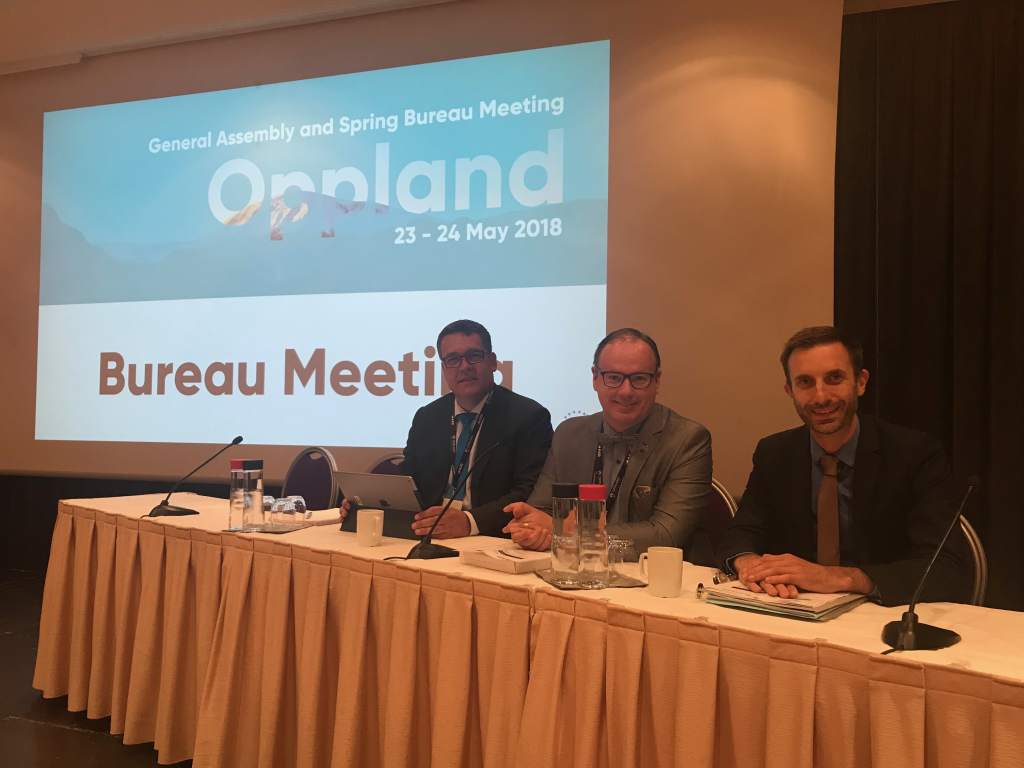
Following the past AER General Assembly which took place in Lillehammer (Oppland, NO) on 23 May, the Bureau members got together on Thursday 24 May to discuss key issues concerning the future of the cohesion policy budget and AER overall political direction and priorities for 2018-2019. The Bureau is the primary political voice of AER and establishes the political base for AER lobbying and advocacy actions by preparing strategical positions and decisions on European and global affairs affecting regions.

Welcome words and introduction

The Bureau Meeting was opened by Ms. Aud Hove, Deputy County Mayor of Oppland, who stressed the repercussions and challenges that climate change entails for policy-making urging to take advantage of the window of opportunities awaiting to build a green and sustainable future.

Mathieu Mori, AER Secretary General, outlined very briefly the main points of the Bureau meeting agenda:

  • Discussion and adoption of the statement on the next Multiannual Financial Framework and future of cohesion policy budget;
  • introduction to the topic of social innovation towards a more sustainable and inclusive economic model – an initiative proposed by Catalonia (ES) which will lead to a political position at the next Bureau meeting in Autumn;
  • and the identification of the specific issues for the Bureau political discussion in the next year.

Position on new EU cohesion policy budget

On 2 May 2018, the European Commission announced its proposal for the new EU budget which will be followed by detailed legislative proposals to frame cohesion policy after 2020. This new architecture for funding is crucial for the regions to fulfil their social, economic and territorial cohesion objectives. Overall, the Commission proposes a long-term budget of €1.135 billion in commitments (expressed in 2018 prices) over the period from 2021 to 2027, equivalent to 1.11% of the EU27’s gross national income. This level of commitment translates into €1.105 billion (or 1.08% of gross national income) in payments in 2018 prices.

Mr. Michiel Rijsberman, AER Rapporteur for the Cohesion Policy Task Force, made a short introduction on the Multi-annual Financial Framework (MFF) for the 2021-2027 period pointing out that important EU contributors (such as France, the Netherlands or Austria) have expressed reluctance to increase their share of the budget in concept of payment for the Brexit bill. Another remarkable aspect of the MMF is the fact that the European Social Fund (ESF) will turn into ESF +. Despite this fact, it is foreseen that the ESF may be expanded, and Bureau members demanded greater clarity regarding its future and impact on regions.

In this context, Mathieu Mori invited Bureau members to discuss and adopt the AER statement on the future cohesion policy budget to guide AER’s advocacy work in the negotiation process. In order to boost the debate, Bureau members were divided into six working groups to discuss the draft and possible amendments.

Following the discussions and the amendment process, the Bureau Statement on the Future of the Cohesion Budget was unanimously approved!

New political horizons for the Bureau meeting!

The discussion on the EU budget was followed by a brainstorming session to raise specific issues of concern for the Bureau political discussion in the year ahead. In order to do so, the Bureau members were asked to work in groups in order to put forward other possible topics besides the ones proposed by the AER Executive Board (EB) on the previous day –namely, digitalisation, EU Pillar for Social Rights, the Common Agricultural Policy (CAP) and migration–.

Andrew Gibson, AER Vice-President from Hampshire county (UK), referred, on the topic of migration, to the EU position document on migration and asylum which sets out a new plan for a sustainable policy to strengthen the cooperation among EU countries as well as providing a more flexible funding to address migration and the inclusion of immigrants and refugees in society. Andrew Gibson pointed out that AER must contribute to this European Agenda by sharing the knowledge and good practices of regions.

Mr. Jean Luc Vanraes, President of AER Committee 1 for Economy and Regional Development, addressed the Bureau members stating that the digital, new technology and public affairs policy stream is preparing the next generation of actors to leverage the nexus of interactions between exponential technologies, public affairs and civil society. The digital revolution is transforming the inner workings of our economies, businesses, democracies, social models and public affairs. The regions therefore need to take the lead and invest in this strategic sector where many jobs will be created.

Ms. Anna Magyar, AER Vice President for EU enlargement, took the floor to stress the importance of the Common Agriculture Policy (CAP) for the economic development of regions. The CAP is a vital policy enabling farmers to provide a stable food supply, produced in a sustainable way at affordable prices for the benefit of more than 500 million European consumers. Considering it is a key policy for integration and development, and in view of the next financial period pos-2020 which tends to decrease the budget for the CAP, Ms. Anna Magyar suggested to the Bureau members to do a strong lobby for keeping the budget.

Mr. Mihai Ritivoiu, President of AER Committee 2 for Social Policy and Public Health, proposed the Bureau members to contribute to the European Pillar of Social Rights, by formulating recommendations based on the good practices of regions in the areas of equal opportunities and access to the labour market, fair working condition and social protection and inclusion.

Finally, Ms. Irén Lejegren (Örebro), suggested to work on the topic of food safety, which has a profound effect on regional development, not only in terms of production but also in terms of environmental challenges. In her view, the EU current level of legislation needs further development in the field of food safety and lacks an approach on sustainable development in line with the 2030 Agenda.

Following this round of presentations, the Bureau members decided by means of a vote to pick food safety, digitalisation and migration as priority matters for the next year.

Social innovation is now on the Bureau Agenda!

In the context of the ongoing reflection on the future of Europe and evolving discussions on the new EU budget and priorities for the programming period after 2020, Magnus Berntsson stated that social innovation can bring new solutions that address social challenges and improve the effectiveness of public policies and services, promoting growth and well-being. 

Vania Freitas, AER Institutional Relations & Advocacy Coordinator, introduced this topic –proposed by Mr. Albert Castellanos, AER Vice President – by sharing the definition of social innovation presented by the EU Commission in its Guide to Social Innovation, its key aspects and approaches. The idea is to shift the innovation process by focusing on the needs of the people and engaging them in the solutions developed to meet those needs, at the adequate territorial level of intervention. 

After this presentation, Bureau members were broken up into groups to explore the potential contributions of social innovation to growth and jobs, social equity and more healthy communities, and discuss the processes that facilitates social innovation and harness its positive potential to support social sustainability at regional level.

The outcomes of this discussion will lead to a political position at the next Bureau meeting in Autumn!Follow AER!

Facebooktwitterlinkedinrss

Committee 1 Annual Report June 2017 – May 2018

7 May, 2018 By Johanna Pacevicius

The General Assembly is the highest authority of AER and convenes representatives of all its full members at least once a year. The General Assembly adopts among other things, the annual reports of the Thematic Committees.

This report is the compilation of actions developped and implemented within Committee 1 between the 2017 General Assembly in Sankt Pölten, Lower Austria (AT) and the 2018 General Assembly in Lillehammer, Oppland (NO).

Activities are organised in 3 categories:

  • Projects
  • Good practice sharing
  • Advocacy/ Lobbying

The AER Action plan, which brings together all the activities carried out within AER, is constantly updated.

  • Silver Economy Awards (SEED): ongoing

The Silver Economy Awards aim to catalyse a sustainable European digital Silver Economy movement by promoting and rewarding innovative solutions to improve the quality of life for over 50s. The Awards are an opportunity to raise awareness around the lesser-known notion of the Silver Economy. They illustrate the breadth of the consumer markets and the public spending involved and the size of the opportunities available for entrepreneurs, investors, public authorities and civil society.

This year the Silver Economy Awards replace the traditional AER Regional Innovation Award. The first Awards Ceremony took place on May 2018 in Brussels under the moral patronage from Commissioner Mariya Gabriel.

SEED is a two-year project: 10/2016 to 09/2018

  • ARLEM project – Capacity building for an integrated and sustainable urban development: planned

This is a joint project of the Committee of the Regions regional and local authorities focused on the Mediterranean. In this context, AER answered to the call of ARLEM – Euro-Mediterranean Regional and Local Assembly in order to provide technical expertise and political support. AER expressed its interest to focus piloting actions in Turkey, Tunisia and Morocco having already implemented several actions in these geographical areas.

This project aims to reinforce the capacities of local and regional authorities from the southern and eastern shores of the Mediterranean both in terms of urban management and integrated urban development. AER will contribute in the capacity building activities as well as the organisation of regional conferences.

It is funded by the Finnish Development Agency and activities are planned for 2 years and six months

  • Citizens for Cohesion. 351 times closer to Europe: cancelled

Building on the work previously done by AER on cohesion policy, the regions of Catalonia (ES), South Ostrobothnia (FI), Trentino (IT) and West Slovenia, together with AER Cohesion Policy Task Force lead on a project on awareness raising. While the project received a very good evaluation it was not accepted.

  • Brokerage event in Partnership with ERRIN on health innovation: finished

After the success of the brokerage event on the green economy and innovation early 2017, we collaborated with ERRIN to stimulate project development. This resulted in the organisation of the Horizon 2020 Project Development Week.

  • Development of an environment project based on the UN’s Sustainable Development Goals (SDGs): in progress

YRN representatives met with AER Coordinator for European Projects & Private Partnerships Agnese Pantaloni to learn about project development steps and potential funding opportunities. The YRN will work on the definition of an EU project. The AER Secretariat Project Unit will explore calls for projects if there is still interest in developping such a project.

  • MULTIPLE, MULTI-layer Governance PoLicy-making for the Environment: cancelled

MULTIPLE aimed to build an ecosystem of policy-support tools and methods for a more effective, efficient policy making in the field of environmental policies. Its aim was to support the entire policy cycle from issue identification to policy implementation, monitoring and evaluation by the use of open data systems. The project was not accepted.

  • Migrant Entrepreneur Support Scheme Against Gap of Economic System: cancelled

This project proposal aimed to share approaches and lessons learnt for migrant entrepreneurship support schemes. Migrant entrepreneurship had been raised in specific during the 2016 Spring plenary meetings in Timis. The proposal brought together public administrations, business support organizations, non-profit organisations and NGOs, educational institutions and other organisations active in the field across cities, regions and countries. The project was not accepted.

  • From local to global: Connecting the Dots in the EU’s 2030 energy transition: cancelled

The theme of this project proposal was to contribute to a coherent energy transition across the EU and support progress towards a low-carbon economy in light of the EU’s 2030 climate and energy targets and policy framework. The consortium was led by EURACTIV.

The AER Secretariat collected letters of support from member regions: Abruzzo (IT), Catalonia (SP), Gelderland (NL), Trentino (IT). The aim was to highlight, compare and contrast Member States’ initiatives to achieve the EU’s 2030 climate and energy targets, supporting the energy transition as well as the transition towards a competitive and low-carbon economy, by sharing information on best practice at the local level (regions, cities, towns) and the connection with global agreements. The project was submitted under the LIFE+ programme but was not accepted.

  • RAINBOW project – Raising Awareness INitiative for a Beautiful Open World: cancelled

RAINBOW aimed to transform the 2030 Agendas into policies and to launch concrete actions at local level, in order to improve the management of the territories, whilst continuing innovating and learning from one another. It focused on interdependencies between developing countries and the European Union, with focus on the neighbouring areas. ALDA was the initiator of the project. The project was not accepted


  • Committees Autumn Plenaries in Nancy: finished

This Autumn’s committees’ plenary took place in Nancy (FR) from the 12th to the 14th of September. The events featured a debate on culture in the digital age, a workshop on the value of data, a workshop on transport & mobility, a workshop on life-cycle approaches and the Committees Plenary meetings.

A discussion on Cohesion Policy and its advantages also took place in Nancy.

  • Committees Spring Plenaries in Arad: finished

The 2018 Spring Committees’ Plenaries took place in Arad (RO) on 20-22 March. The events featured a debate on innovation ecosystems, a workshop on integrated care systems, a lounge meeting on equal opportunities, a meeting of the working group on transports, a Breakfast Briefing on implementing democracy in regional policy making, a presentation of the social inclusion policies in Arad, a meeting of the Summer Academy Organising Committee and the Committees Plenary meetings.

The Committees’ Plenaries were an opportunity to develop the Committees’ work programmes.

  • INTERREG Europe Policy Learning Platform (IEPLP): finished

AER was a partner of the Policy Learning Platform (PLP) which is the second action of the Interreg Europe programme established to boost EU-wide policy learning and capitalisation of practices from investments on growth and jobs. The Platform aims to be a space for continuous learning where regional actors in Europe can tap into the know-how of experts and peers. The PLP was present at the European Week of Regions and Cities (formerly Open Days).

  • Study visit on the Energy transition: finished

The main focus of the study visit, which took place from 17-19 April, was the Gelders’ Energy agreement (GEA). This collaboration between local and regional industries, governments and NGOs’ in the province of Gelderland, Netherlands, has pledged for the province to become energy-neutral by 2050. It facilitates a co-creative process where initiatives, actors, and energy are integrated into society. See the event page.

  • Event on a current transversal topic: finished

Jean-Luc Vanraes, President of the AER Committee on Regional Development and Economy invited AER members to contribute to the organisation of a mtual learning event on artificial intelligence held in Brussels, on November 30th 2017. A debate at the Committee 1 Plenary meeting paved the way for this event. This event, “Artificial Intelligence: are regions up to the challenge” was organised on the same format as the event “E-health let’s find a common language” which took place in December 2016 with the contribution of very diverse stakeholders. At the event, group discussions adressed the following topics:

  1. Supporting innovation, attracting innovators
  2. The Health Revolution
  3. Culture In a Digital World
  4. Skills and Competences: racing with machines
  5. AI: Towards a Soulless World?

The event lead also to the publication of a series of articles on artificial intelligence and its implications for different policy areas.

  • Follow up on photonics: finished

On the occasion of the Timis Spring Plenaries Professor Hugo Thienpont presented the ACTPHAST programme on photonics innovation for SMEs. The information and opportunities regarding this European programme were further disseminated via the AER website. The ACTPHAST programme for photonics. See the results as at September 2017.

  • Conference on biomass: finished

In London AER members agreed to collaborate for the organisation of a conference on Biomass in Vojvodina. The objective was to share practices and expert lectures to show the practical possibilities of production and usage of biomass in Europe, with a preview insight in the production in Vojvodina. The event also aimed to awaken the interest of individual agricultural farms, agricultural cooperatives and clusters and regional and local governments.

Partners this year were the OECD Mission in Serbia and the Central European Initiative, with expert lectures from representatives from World Bioenergy Association, State Ministries in Serbia, University in Novi Sad, the Environment Agency Austria, GIZ (Deutsche Gesellschaft für Internationale Zusammenarbeit) and KfW (German government-owned development bank, Kreditanstalt für Wiederaufbau).

  • Cooperation with the World Sustainable Energy Day: finished

On the occasion of the AER Committees plenary meetings in London, members highlighted their interest in participating to the World Sustainable Energy Days in a meaningful way. A delegation of AER representatives from across Europe was able to attend the World Sustainable Energy days for free on behalf of AER.

  • Workshop on Public procurement for green innovation: finished

This workshop was advertised in the AER network by Oppland and was organised in the framework of the INTERREG Sweden-Norway the Bioeconomy Region project involving 4 AER members: Hedmark, Värmland, Østfold and Oppland. It aimed to address the following questions:
• How can innovative public procurement accelerate take-up of green technologies and stimulate innovation?
• How is innovative public procurement adopted in regional and local authorities to implement bioeconomy?
• How are public authorities cooperating with clusters, SMEs, industry and companies?
• What are the greatest challenges to implementing large scale innovative public procurement?
The AER Secretariat provided support with the identification of potential speakers and connected them with the organisers.

  • Supporting members to use the TAIEX-Environmental Implementation Review : ongoing

The AER Secretariat is disseminating information about the TAIEX-EIR peer to peer learning programme and supporting members to use this programme to gain or provide knowledge on environmental policies on topics as diverse as air quality, waste management, water management, the circular economy. This programme which is relatively easy and quick to access is a good complement to activities carried out within AER and an opportunity to access support from the Commission to carry out exchanges with other regions.

  • Awareness raising on sustainable mobility: ongoing

AER is continuing to highlight regional good practices on sustainable mobility. In this context an AER article was published in the Autumn 2017 edition of Revolve Magazine.

AER Chair of the working group Martin Tollen contributed to the Smart Airports event in Germany

  • Meeting of the AER working group on transports and mobility in Nancy: finished

Good practices from the host region were  presented on smart mobility and policies aimed at supporting green innovation in the field of transports. Discussion about regulatory framework, challenges for regions and opportunities for cooperation

  • Digitalisation of transports: ongoing

Promote the digitalisation of transports networks both in urban and rural areas (see below as well)

  • Promotion of knowledge about innovative technologies in transports: ongoing

The sharing of knowledge is being carried out via:

–Workshop on the digitalisation of transports & information about the European Strategy on Cooperative Intelligent Transport Systems (C-ITS), a milestone on the path towards cooperative, connected and automated mobility (COM(2016) 766)
–cooperation with Revolve Media to highlight regional good practices in the field of transport and provide visibility to active AER members
–contribution on new mobilities & artificial intelligence at the AER event on Nov 30th “Artificial Intelligence: are regions up to the challenge?”
–New Mobility Services of the European Innovation Partnership on Smart Cities & Communities: involvement in the European Innovation Partnership on Sustainable Cities and Communities: within the the Action Cluster Sustainable Urban Mobility, AER is involved in the New Mobility Services initiative. AER Chairman of the Working Group on Transports and Mobility, Martin Tollén attended the first meeting of this Action Cluster.

The New Mobility Services initiative is a cooperation between private and public partners (quadruple helix type of cooperation, brings together companies, NGOs, research centers & universities, and policy makers). The purpose is to establish strategic partnerships between industry and European cities & regions to develop the urban systems and infrastructures of tomorrow. It is mainly focused on urban mobility. It is open for all European regions and cities to join or to send their stakeholders

AER AT THE EUROPEAN WEEK OF CITIES AND REGIONS

  • Workshop on climate and energy transition: finished

Led by the region of Abruzzo, AER co-organised a climate side-event during the European Week of Regions and Cities 2017.

  • Workshop on the Silver Economy: finished

Led by the SEED consortium. This workshop took participants through four inspiring examples of how a Silver Economy can help regions and cities to better match the needs of their ageing population while supporting local businesses and solution providers. It was the opportunity to discuss the complementarity between these examples and the initiatives at EU level. The networking session that followed brought together potential partners around issues related to the Silver Economy.

  • Workshop of the INTERREG Europe Policy Learning Platform: finished

The workshop aimed at helping regions learn from the project outputs from their peers in Europe.


  • Cohesion Policy Activities: ongoing

Building on AER’s role in advocating for a strong cohesion policy, and following the adoption of a position paper on the future of cohesion policy post 2020 at the Bureau meeting in Sankt Pölten, Lower Austria (AT) on 1 June 2017, AER will continue to convene and deliver joint policy influencing work for the future cohesion policy by:

  • Holding regular debates on cohesion policy among members and between members and relevant stakeholders, such as the “Cohesion Policy: are you getting anything out of it?” debate during the AER Committees’ Autumn Plenary Meeting in Nancy on 12 September.
  • Gathering facts and figures on cohesion investments results and impact for a evidence-based advocacy.
  • Disseminating the AER position on future cohesion policy to key stakeholders and decision-makers in-country (in coordination with member regions) and in Brussels.
  • Working together with other European associations of regions, municipalities and cities and the Committee of the Regions to generate broader support for regions interests and policy proposals, including #CohesionAlliance created to demand that the EU budget after 2020 makes cohesion policy stronger, more effective, visible and available for every region in the European Union.

The Task Force on Cohesion Policy post 2020 will continue to support the work of AER in this field, providing strategic direction and oversight.

These actions aim to ensure European regions engage in the future cohesion policy discussions at regional, national and European level, and meaningfully contribute to the design and implementation of a stronger and more effective reformed policy.

Following the publication of the 2021-2027 Multiannual Financial Framework on May 2nd, AER’s reaction can be found here

  • AER Report on Regionalisation: ongoing

More than 40 academic experts accepted to give their contribution to this work, by delivering detailed reports about the state of regionalisation and multilevel governance in chosen European countries. The study covers 41 countries, and each country report is based on a similar structure, thereby allowing a comparative approach among all studied countries.

  • COP23 Local and Regional governments Leaders´ Summit: finished

AER was a partner to the Climate Summit of Local and Regional Leadersat the UN climate change conference (COP23) held from 6 to 17 November in Bonn, Germany, under the Presidency of Fiji. The event gathered more than 330 political leaders and 1000 delegates. At the Summit, local and regional leaders adopted the Bonn-Fiji Commitment to Deliver the Paris Agreement at All Levels, a pledge that signals their commitment to bring forward a critical shift in global development.

AER also contributed to a number of other events, including:
-8th Annual Sustainable Innovation Forum, organised by UNEP and Climate Action.
-World Climate Summit 2017, organised by R20 and BlueOrchard, in collaboration with World Climate.
-Side Event
 “Mountains in motion: Climate Action in the Alps, the Carpathians and the Pyrenees”, co-organised by the Region of Abruzzo.

  • R20 Summit: finished

In presence of AER and R20 President, Magnus Berntsson, R20 founding chair, Arnold Schwarzenegger and all key people playing a part in climate change (private partners, NGOs, officials). R20 is a winning alliance for AER, but where do we stand?

  • Financing climate action: ongoing

AER works alongside R20, Blue Orchard and Leonardo Di Caprio Foundation to set up a 350 million $ Subnational Climate Fund to finance climate projects in European regions. In August AER met the European Investment Bank to pursue negociations. AER is now providing members with privileged access to a training on the SOURCE system which allows stakeholders to access funding for their climate action.

  • 33rd Session of the Congress Local and Regional Authorities: finished

AER has a partnership status with the Congress of Local and Regional Authorities of the Council of Europe. It sends high-level representatives to the meetings of the Congress and sits in the Chamber of Regions Bureau. On 19 October, the AER President, Magnus Berntsson, took part in the 33rd Session of the Congress of Local and Regional Authorities of the Council of Europe and addressed the Chamber of Regions during the debate on “Regional Co-operation and democracy in Europe: the role of European regional associations and organisations”. At the Session, the AER and the Congress expanded their existing collaboration by signing a Joint Action Plan for 2018-2020. The document reiterates the commitment to work together on various issues of mutual interest, notably regional democracy, youth participation and cultural diversity.

  • ERDF Funding for Regional Airports & State Aid for regional airports: ongoing

AER members get regular updates from the Working Group on transports and mobility’s Regional Airports expert Roger Estefors at meetings of the group. The Nancy meeting featured an update on the topic too.

  • Sustainable biofuels: finished

AER member regions have been exchanging experiences on the topic of sustainable energy for many years and developped different projects on the topic, such as for instance the MORE4NRG and R4GG projects or the global engagement with the R20

The region of Oppland is very active in AER on the topics of energy and the circular economy. In 2016 the YRN Spring Plenary was hosted by Oppland and delegates visited a recycling plant which produces biogas was also featured in the Autumn 2017 edition of Revolve Magazine as an outstanding regional good practice.
Description of the action. The region of Oppland proposed to exchange experiences on the topic of 2nd generation sustainable biofuels, for example from waste and forest resources.

  • Legislation on biogas: finished

The AER secretariat connected regions which were interested in initiating a lobbying action. Regions had diverging priorities, the connection therefore did not result in a joint action.Follow AER!

Facebooktwitterlinkedinrss

Good practices on refugees and disability inspired AMiD project

2 May, 2018 By Luca Magri

Refugees and asylum seekers with disabilities is the main target of AMiD project. Started on January 2018, the project team is working on the development of the main project output, the Need Assessment Tool – NAT. The lack of tool and procedures to support refugees and asylum seekers with disabilities with the right actions and services is the challenge that AMiD wants to face. The second project meeting was focused on the preparation of the Need Assessment Tool – NAT. The meeting was also the opportunity to present good practices among the project partners, as way to pave a useful, sustainable and successful Need Assessment Tool – NAT.

AER already shared successful programmes to improve the refugees situation. During the meeting two good practices became particularly important. The first one is a web platform by ARCI, Italian association, where services offered to asylum seekers and international and humanitarian protection holders are reported on a country map. The second is a set of questions developed by the Washington Group of Disability Statistics to help to detect disabilities.

The JUMA Refugees Map Services: more that a web tool

The JUMA web tool answered to the gap of putting together all the players involved in the refugees work, from the refugees themselves to the volunteers organisations passing by NGOs and public institutions. The project was developed by ARCI in collaboration with UNHCR. The web tool was launched at the beginning of 2018. As disclaimed on the website, JUMA objective is to gather in a national map of the country all the information to services that already exists.

Services are clustered on seven groups of fundamental needs expressed by refugees and international and humanitarian protection holders: where to sleep, where to find legal assistance, where to find health care, where to find psycho-social assistance, where to find a language school. All those services are showed on a map of the country, with single boxes for each office to provide more information on the single service like contacts or a description of what is offered.

JUMA is not only a web platform. ARCI provides a telephone line dedicated to both: those who are looking for services and those that are offering ones. This is a way to be closer to refugees and a strategy to increase the number of organisations registered on the map. Refugees received the information on JUMA at their arrival on the hot spots, while organisations were informed of the project via a national campaign. The telephone line and the website are proposed in the several languages.

The Washington Group Set of Questions on Disability

The Washington Short Set was originally set to identify and record in statistics figures of people with disabilities. The set of questions  does not identify particular health conditions or diagnostic categories but rather captures the possible impact of these conditions on functional abilities. The human right approach of the set based on the UN CRPD, Convention of the Rights of Persons with Disabilities is in line with AMiD values. Even the set was developed for a statistic purpose, the set of questions can fit different uses.

The questions ask whether people have difficulty performing six basic universal activities: walking, seeing, hearing, cognition, self-care and communication. The questions were not designed to measure all aspects of difficulty experienced by people, but rather those domains of functioning that are likely to identify a majority of people at risk of participation restrictions.

There are more set of questions available. There is a short set and other tailored for children (different sets for different ages). Where more information about disability is required, the Extended Set on Functioning is available to address in more detail the case.

A final word

JUMA is not an acronym neither a fancy project name. Juma is a name in urdu, the name of a young Afghan refugee, who travelled and staid in Greek and Italian camps. Once in Italy, he obtained the refugee status and the reunification with his family thanks the collaboration of different organisations. Inspired by this story, the platform linking those involved in the field made a tribute to this successful case choosing his name.

 Follow AER!

Facebooktwitterlinkedinrss

Committee 1 Progress Report Spring 2018

7 March, 2018 By Johanna Pacevicius

Twice a year the members of the AER Committee on Regional Development and Economy gather in plenary meeting. This is the opportunity to set goals for cooperation through the elaboration of a joint work programme. Progress is evaluated, achievements are celebrated and experiences shared.

Evaluating progress

During the elaboration of the work programme in London, planned activities were organised in 3 categories:

  • Projects
  • Good practice sharing
  • Advocacy/ Lobbying

The below progress report was compiled for the Spring 2018 plenary meeting in Arad. It gives an overview of the situation, a year after the adoption of the work programme. The 2018 Committee 1 work programme will be jointly developed and adopted on March 21st at the Committee 1 Plenary meeting. Activities which are still ongoing will be integrated in the 2018 work programme too if still relevant for the Committee.

Projects

  • Silver Economy Awards (SEED): ongoing

The Silver Economy Awards aim to catalyse a sustainable European digital Silver Economy movement by promoting and rewarding innovative solutions to improve the quality of life for over 50s. The Awards are an opportunity to raise awareness around the lesser-known notion of the Silver Economy. They illustrate the breadth of the consumer markets and the public spending involved and the size of the opportunities available for entrepreneurs, investors, public authorities and civil society.

This year the Silver Economy Awards replace the traditional AER Regional Innovation Award. The first Awards Ceremony will be on May 2018 in Brussels.

SEED is a two-year project: 10/2016 to 09/2018

  • ARLEM project – Capacity building for an integrated and sustainable urban development: planned

This is a joint project of the Committee of the Regions regional and local authorities focused on the Mediterranean. In this context, AER answered to the call of ARLEM – Euro-Mediterranean Regional and Local Assembly in order to provide technical expertise and political support. AER expressed its interest to focus piloting actions in Turkey, Tunisia and Morocco having already implemented several actions in these geographical areas.

This project aims to reinforce the capacities of local and regional authorities from the southern and eastern shores of the Mediterranean both in terms of urban management and integrated urban development. AER will contribute in the capacity building activities as well as the organisation of regional conferences.

It is funded by the Finnish Development Agency and activities are planned for 2 years and six months

  • Citizens for Cohesion. 351 times closer to Europe: cancelled

Building on the work previously done by AER on cohesion policy (l), the regions of Catalonia (ES), South Ostrobothnia (FI), Trentino (IT) and West Slovenia, together with AER Cohesion Policy Task Force lead on a project on awareness raising. While the project received a very good evaluation it was not accepted.

  • Brokerage event in Partnership with ERRIN on health innovation: finished

After the success of the brokerage event on the green economy and innovation early 2017, we collaborated with ERRIN to stimulate project development. This resulted in the organisation of the Horizon 2020 Project Development Week.

  • Development of an environment project based on the UN’s Sustainable Development Goals (SDGs): in progress

YRN representatives met with AER Coordinator for European Projects & Private Partnerships Agnese Pantaloni to learn about project development steps and potential funding opportunities. The YRN will work on the definition of an EU project. The AER Secretariat Project Unit will explore calls for projects if there is still interest in developping such a project.

  • MULTIPLE, MULTI-layer Governance PoLicy-making for the Environment: cancelled

MULTIPLE aimed to build an ecosystem of policy-support tools and methods for a more effective, efficient policy making in the field of environmental policies. Its aim was to support the entire policy cycle from issue identification to policy implementation, monitoring and evaluation by the use of open data systems. The project was not accepted.

  • Migrant Entrepreneur Support Scheme Against Gap of Economic System: cancelled

This project proposal aimed to share approaches and lessons learnt for migrant entrepreneurship support schemes. Migrant entrepreneurship had been raised in specific during the 2016 Spring plenary meetings in Timis. The proposal brought together public administrations, business support organizations, non-profit organisations and NGOs, educational institutions and other organisations active in the field across cities, regions and countries. The project was not accepted.

  • From local to global: Connecting the Dots in the EU’s 2030 energy transition: cancelled

The theme of this project proposal was to contribute to a coherent energy transition across the EU and support progress towards a low-carbon economy in light of the EU’s 2030 climate and energy targets and policy framework. The consortium was led by EURACTIV.

The AER Secretariat collected letters of support from member regions: Abruzzo (IT), Catalonia (SP), Gelderland (NL), Trentino (IT). The aim was to highlight, compare and contrast Member States’ initiatives to achieve the EU’s 2030 climate and energy targets, supporting the energy transition as well as the transition towards a competitive and low-carbon economy, by sharing information on best practice at the local level (regions, cities, towns) and the connection with global agreements. The project was submitted under the LIFE+ programme but was not accepted.

  • RAINBOW project – Raising Awareness INitiative for a Beautiful Open World: cancelled

RAINBOW aimed to transform the 2030 Agendas into policies and to launch concrete actions at local level, in order to improve the management of the territories, whilst continuing innovating and learning from one another. It focused on interdependencies between developing countries and the European Union, with focus on the neighbouring areas. ALDA was the initiator of the project. The project was not accepted


Good Practice Sharing

  • Committees Autumn Plenaries in Nancy: finished

This Autumn’s committees’ plenary took place in Nancy, France, from the 12th to the 14th of September. The events will feature a debate on culture in the digital age, a workshop on the value of data, a workshop on transport & mobility, a workshop on life-cycle approaches and the Committees Plenary meetings.

A discussion on Cohesion Policy and its advantages also took place in Nancy.

  • INTERREG Europe Policy Learning Platform (IEPLP): finished

AER was a partner of the Policy Learning Platform (PLP) which is the second action of the Interreg Europe programme established to boost EU-wide policy learning and capitalisation of practices from investments on growth and jobs. The Platform aims to be a space for continuous learning where regional actors in Europe can tap into the know-how of experts and peers. The PLP was present at the European Week of Regions and Cities (formerly Open Days).

  • Study visit on the Energy transition: planned

The main focus of the study visit, which will take place from 17-19 April, will be the Gelders’ Energy agreement (GEA). This collaboration between local and regional industries, governments and NGOs’ in the province of Gelderland, Netherlands, has pledged for the province to become energy-neutral by 2050. It facilitates a co-creative process where initiatives, actors, and energy are integrated into society. See the event page.

  • Event on a current transversal topic: finished

Jean-Luc Vanraes, President of the AER Committee on Regional Development and Economy invited AER members to contribute to the organisation of a mtual learning event on artificial intelligence held in Brussels, on November 30th 2017. A debate at the Committee 1 Plenary meeting paved the way for this event. This event, “Artificial Intelligence: are regions up to the challenge” was organised on the same format as the event “E-health let’s find a common language” which took place in December 2016 with the contribution of very diverse stakeholders. At the event, group discussions adressed the following topics:

  1. Supporting innovation, attracting innovators
  2. The Health Revolution
  3. Culture In a Digital World
  4. Skills and Competences: racing with machines
  5. AI: Towards a Soulless World?

The event lead also to the publication of a series of articles on artificial intelligence and its implications for different policy areas.

  • Follow up on photonics: finished

On the occasion of the Timis Spring Plenaries Professor Hugo Thienpont presented the ACTPHAST programme on photonics innovation for SMEs. The information and opportunities regarding this European programme were further disseminated via the AER website. The ACTPHAST programme for photonics. See the results as at September 2017.

  • Conference on biomass: finished

In London AER members agreed to collaborate for the organisation of a conference on Biomass in Vojvodina. The objective was to share practices and expert lectures to show the practical possibilities of production and usage of biomass in Europe, with a preview insight in the production in Vojvodina. The event also aimed to awaken the interest of individual agricultural farms, agricultural cooperatives and clusters and regional and local governments.

Partners this year were the OECD Mission in Serbia and the Central European Initiative, with expert lectures from representatives from World Bioenergy Association, State Ministries in Serbia, University in Novi Sad, the Environment Agency Austria, GIZ (Deutsche Gesellschaft für Internationale Zusammenarbeit) and KfW (German government-owned development bank, Kreditanstalt für Wiederaufbau).

  • Cooperation with the World Sustainable Energy Day: finished

On the occasion of the AER Committees plenary meetings in London, members highlighted their interest in participating to the World Sustainable Energy Days in a meaningful way. A delegation of AER representatives from across Europe was able to attend the World Sustainable Energy days for free on behalf of AER.

  • Workshop on Public procurement for green innovation: finished

This workshop was advertised in the AER network by Oppland and was organised in the framework of the INTERREG Sweden-Norway the Bioeconomy Region project involving 4 AER members: Hedmark, Värmland, Østfold and Oppland. It aimed to address the following questions:
• How can innovative public procurement accelerate take-up of green technologies and stimulate innovation?
• How is innovative public procurement adopted in regional and local authorities to implement bioeconomy?
• How are public authorities cooperating with clusters, SMEs, industry and companies?
• What are the greatest challenges to implementing large scale innovative public procurement?
The AER Secretariat provided support with the identification of potential speakers and connected them with the organisers.

  • Supporting members to use the TAIEX-Environmental Implementation Review : ongoing

The AER Secretariat is disseminating information about the TAIEX-EIR peer to peer learning programme and supporting members to use this programme to gain or provide knowledge on environmental policies on topics as diverse as air quality, waste management, water management, the circular economy. This programme which is relatively easy and quick to access is a good complement to activities carried out within AER and an opportunity to access support from the Commission to carry out exchnages with other regions.

  • AER event on EFSI: finished

AER organised a conference on sustainable financing for regions, which presented political issues related to impact investments, green investments and long term investments. These strategic aspects of regional development are not mere tools but are part of a regional development plan, which looks at private funding to leverage public resources.  AER series on investments – Episode 1, AER series on investments – Episode 2

  • Nudging: finished

The “Towards New Urban Mobility” paper presented on the occasion of the AER Breakfast Briefing on Urban mobility in London adresses the ways in which policies are set up to change behaviour. This report argues that policy interventions sensitive to group attitudes are more likely to result in behavioural change towards transport alternatives. This includes understanding which transport alternatives are more acceptable to each group and how best to target communication.

  • Awareness raising on sustainable mobility: ongoing

AER is continuing to highlight regional good practices on sustainable mobility. In this context an AER article was published in the Autumn 2017 edition of Revolve Magazine.

AER Chair of the working group Martin Tollen contributed to the Smart Airports event in Germany

  • Meeting of the AER working group on transports and mobility in Nancy: finished

Good practices from the host region were  presented on smart mobility and policies aimed at supporting green innovation in the field of transports. Discussion about regulatory framework, challenges for regions and opportunities for cooperation

  • Digitalisation of transports: ongoing

Promote the digitalisation of transports networks both in urban and rural areas (see below as well)

  • Promotion of knowledge about innovative technologies: ongoing

The sharing of knowledge is being carried out via:

–Workshop on the digitalisation of transports & information about the European Strategy on Cooperative Intelligent Transport Systems (C-ITS), a milestone on the path towards cooperative, connected and automated mobility (COM(2016) 766)
–cooperation with Revolve Media to highlight regional good practices in the field of transport and provide visibility to active AER members
–contribution on new mobilities & artificial intelligence at the AER event on Nov 30th “Artificial Intelligence: are regions up to the challenge?”
–New Mobility Services of the European Innovation Partnership on Smart Cities & Communities: involvement in the European Innovation Partnership on Sustainable Cities and Communities: within the New Mobility Services initiative, AER is involved in the Action Cluster Sustainable Urban Mobility. AER Chairman of the Working Group on Transports and Mobility, Martin Tollén attended the first meeting of this Action Cluster.

The New Mobility Services initiative is a cooperation between private and public partners (quadruple helix type of cooperation, brings together companies, NGOs, research centers & universities, and policy makers). The purpose is to establish strategic partnerships between industry and European cities & regions to develop the urban systems and infrastructures of tomorrow. It is mainly focused on urban mobility. It is open for all European regions and cities to join or to send their stakeholders

AER AT THE EUROPEAN WEEK OF CITIES AND REGIONS

  • Workshop on climate and energy transition: finished

Led by the region of Abruzzo, AER co-organised a climate side-event during the European Week of Regions and Cities 2017.

  • Workshop on the Silver Economy: finished

Led by the SEED consortium. This workshop took participants through four inspiring examples of how a Silver Economy can help regions and cities to better match the needs of their ageing population while supporting local businesses and solution providers. It was the opportunity to discuss the complementarity between these examples and the initiatives at EU level. The networking session that followed brought together potential partners around issues related to the Silver Economy.

  • Workshop of the INTERREG Europe Policy Learning Platform: finished

The workshop aimed at helping regions learn from the project outputs from their peers in Europe.


Advocacy/ Lobbying

  • Cohesion Policy Activities: ongoing

Building on AER’s role in advocating for a strong cohesion policy, and following the adoption of a position paper on the future of cohesion policy post 2020 at the Bureau meeting in Sankt Pölten, Lower Austria (AT) on 1 June 2017, AER will continue to convene and deliver joint policy influencing work for the future cohesion policy by:

  • Holding regular debates on cohesion policy among members and between members and relevant stakeholders, such as the “Cohesion Policy: are you getting anything out of it?” debate during the AER Committees’ Autumn Plenary Meeting in Nancy on 12 September.
  • Gathering facts and figures on cohesion investments results and impact for a evidence-based advocacy.
  • Disseminating the AER position on future cohesion policy to key stakeholders and decision-makers in-country (in coordination with member regions) and in Brussels.
  • Working together with other European associations of regions, municipalities and cities and the Committee of the Regions to generate broader support for regions interests and policy proposals, including #CohesionAlliance created to demand that the EU budget after 2020 makes cohesion policy stronger, more effective, visible and available for every region in the European Union.

The Task Force on Cohesion Policy post 2020 will continue to support the work of AER in this field, providing strategic direction and oversight.

These actions aim to ensure European regions engage in the future cohesion policy discussions at regional, national and European level, and meaningfully contribute to the design and implementation of a stronger and more effective reformed policy.

  • AER Report on Regionalisation: ongoing

More than 40 academic experts accepted to give their contribution to this work, by delivering detailed reports about the state of regionalisation and multilevel governance in chosen European countries. The study covers 41 countries, and each country report is based on a similar structure, thereby allowing a comparative approach among all studied countries.

  • COP23 Local and Regional governments Leaders´ Summit: finished

AER was a partner to the Climate Summit of Local and Regional Leadersat the UN climate change conference (COP23) held from 6 to 17 November in Bonn, Germany, under the Presidency of Fiji. The event gathered more than 330 political leaders and 1000 delegates. At the Summit, local and regional leaders adopted the Bonn-Fiji Commitment to Deliver the Paris Agreement at All Levels, a pledge that signals their commitment to bring forward a critical shift in global development.

AER also contributed to a number of other events, including:
-8th Annual Sustainable Innovation Forum, organised by UNEP and Climate Action.
-World Climate Summit 2017, organised by R20 and BlueOrchard, in collaboration with World Climate.
-Side Event
 “Mountains in motion: Climate Action in the Alps, the Carpathians and the Pyrenees”, co-organised by the Region of Abruzzo.

  • R20 Summit: finished

In presence of AER and R20 President, Magnus Berntsson, R20 founding chair, Arnold Schwarzenegger and all key people playing a part in climate change (private partners, NGOs, officials). R20 is a winning alliance for AER, but where do we stand?

  • Financing climate action: ongoing

AER works alongside R20, Blue Orchard and Leonardo Di Caprio Foundation to set up a 350 million $ Subnational Climate Fund to finance climate projects in European regions. In August AER met the European Investment Bank to pursue negociations. AER is now providing members with privileged access to a training on the SOURCE system which allows stakeholders to access funding for their climate action.

  • 33rd Session of the Congress Local and Regional Authorities: finished

AER has a partnership status with the Congress of Local and Regional Authorities of the Council of Europe. It sends high-level representatives to the meetings of the Congress and sits in the Chamber of Regions Bureau. On 19 October, the AER President, Magnus Berntsson, took part in the 33rd Session of the Congress of Local and Regional Authorities of the Council of Europe and addressed the Chamber of Regions during the debate on “Regional Co-operation and democracy in Europe: the role of European regional associations and organisations”. At the Session, the AER and the Congress expanded their existing collaboration by signing a Joint Action Plan for 2018-2020. The document reiterates the commitment to work together on various issues of mutual interest, notably regional democracy, youth participation and cultural diversity.

  • ERDF Funding for Regional Airports & State Aid for regional airports: ongoing

AER members get regular updates from the Working Group on transports and mobility’s Regional Airports expert Roger Estefors at meetings of the group. The Nancy meeting will feature an update on the topic too.

  • Sustainable biofuels: finished

AER member regions have been exchanging experiences on the topic of sustainable energy for many years and developped different projects on the topic, such as for instance the MORE4NRG and R4GG projects or the global engagement with the R20

The region of Oppland is very active in AER on the topics of energy and the circular economy. In 2016 the YRN Spring Plenary was hosted by Oppland and delegates visited a recycling plant which produces biogas was also featured in the Autumn 2017 edition of Revolve Magazine as an outstanding regional good practice.
Description of the action. The region of Oppland proposed to exchange experiences on the topic of 2nd generation sustainable biofuels, for example from waste and forest resources.

  • Legislation on biogas: finished

The AER secretariat connected regions which were interested in initiating a lobbying action. Regions had diverging priorities, the connection therefore did not result in a joint action.

 Follow AER!

Facebooktwitterlinkedinrss

AER members share knowledge to improve situation for refugees in their regions

5 February, 2018 By Editor

On 24 and 25 January 2018, AER co-organised several events focusing on local and regional responses to the Syrian refugee crisis in Brussels. AER would like to thank its honorary President, Dr. Hande Özsan Bozatli, who was instrumental in making these events happen. Dr Bozatli has always been a strong supporter of the Turkish-Europe dialogue. These series of events proves it once more. The Press release and background can be found HERE.

This article focuses on the experiences and best practices shared by the regions over the two days.

Best Practices – Västra Götaland (SE), Catalonia (ES) and the Netherlands

With control over the healthcare sector and certain dimensions of regional development, the AER President’s region, Västra Götaland (SE), had success integrating refugees into the labour market and socially. Recognising the need to de-institutionalise their labour market, Västra Götaland invested in programmes to accelerate the process of credential recognition for highly skilled Syrian refugees such as those arriving with medical degrees obtained in Syria.

Prior to the labour market reforms, it could take 6-9 years for professionals to undergo the re-training needed for them to enter the regional labour market. It now takes approximately two to three years before migrants acquire the certificates needed to continue working in their field. Additionally, Västra Götaland expedited the process refugees needed to go through before joining the Swedish education system. With going to local schools faster and parents participating in the labour market quicker, migrants were better able to socially integrate into communities.

Throughout the events it became clear that similar practices could be implemented elsewhere in Europe due to labour market demands. As Europe is beginning to experience large scale demographic change due to a rapidly ageing population demands for high skill workers in the public service sector will increase. Mr. Berntsson claimed that integrating refugees and migrants with professional qualifications into the labour market faster will help alleviate pressure on social services. He believes that a more flexible, de-institutionalised labour market like the one introduced in Västra Götaland will assist many EU countries in getting refugees into the labour market.

Mr. Berntsson also stated that Västra Götaland, who saw a 2 percent increase in their population with the arrival of the Syrian refugees, could not have managed to integrate the newcomers without the volunteer efforts of the local citizens. Similarly, according to Dutch MEP Ms. Piri the Netherlands had 60, 000 volunteers enlist to help Syrian refugees, translating into one volunteer for every refugee. Both claimed that having an active citizenry is vital to the resettlement of refugees with local governments unable to cope on their own.

Additionally, as stated by Catalonia (ES) Migration Secretary Mr. Amorós, his region has experienced success with a social mentorship programme to help integrate migrants and refugees into society. In the experience of Mr. Amorós, while refugees may come as temporary guests the reality is that many end up staying, meaning regions must focus on the inclusion of refugees in society. A relatively new project, the programme pairs refugees and locals who spend a minimum of one hour per week together to help refugees learn the language and adapt to local culture.

Best Practices- Gaziantep (TR)

Continuing AER’s involvement with Turkish regions, Dr. Bozatli reached out to Turkish regions Gaziantep and Adana to share their expertise in dealing with refugees, who graciously accepted Dr. Bozatli’s invitation. In each event, Gaziantep shared best practices which have allowed them to successfully host millions of refugees for over 5 years. Upon arrival, ensuring that the refugees’ basic needs were met by providing them with food, water, and shelter helped to prevent the spread of disease. When refugees began to leave camps and move to urban areas, Gaziantep established several priority areas including the provision of housing, healthcare, and education. Adequately meeting the refugees needs in each of these areas was aided by Turkey’s decision to treat refugees as nearly full citizens rather than as temporary guests.

After enrolling young children in schools and integrating current students into school systems, refugees in Gaziantep now have a higher rate of enrolment than they did in Syria. In Syria 80 percent of children would have been enrolled in schools while in Gaziantep 90 percent are now enrolled. Ms. Sahin claims that keeping children enrolled in schools has decreased their vulnerability to radicalization and has helped them feel like members of their local communities.

Gaziantep also invested in numerous infrastructure projects such as new waste management, waterworks, and transportation systems to cope with the rise in demand. Further complicating the matter for Gaziantep was a surge in housing prices because of increases in demand. Aside from building more units, the government ensured that 10 percent of all houses and jobs were available to Gaziantep citizens first, ensuring that their local population were not disadvantaged by the arrival of refugees. This has helped to reduce social tensions created by the arrival of refugees. Moreover, from the beginning the Gaziantep government has preached patience with a message of tolerance and inclusion, encouraging the local population to accept the refugees as regular citizens.

Best Practices- Adana (TR)

The sixth largest city in Turkey with a population of 1.8 million, there are officially 150, 000 refugees constituting nearly 8 percent of the local population. However, unofficially it is estimated that there are 300, 000 Syrian refugees in the Adana province, bringing numerous challenges for Adana to navigate.

In Adana, the arrival of thousands of refugees triggered increases in rent and scarcity of affordable housing. With 85 percent of migrants working in the agricultural sector, certain companies have exploited undocumented refugees for whom they pay low wages with no benefits. When adults have struggled to find employment, some have been forced to send their children to work resulting in sporadic instances of child labour.

The influx of migrants has also placed strain on local infrastructure, exacerbated by a cash strapped government. Keeping children in school has also been a challenge for Adana due to families’ need for a basic income and the remote location in which some refugees live.

Despite the challenges they face, Adana has managed to provide humanitarian support such as clothes, food, healthcare, and water to not only those residing in Adana but also to refugees stranded along the Turkey-Syria border. Furthermore, in cooperation with the University of Adana the municipality has established training centers for refugees to increase the number of trainers able to boost the vocational and skill development of other refugees. This programme has filled existing gaps in the provision of professional language learning opportunities, particularly for young adults. For refugees living on the outskirts of the city, the municipality has signed cooperation agreements with civil society organisations who provide services, including language training.

The presentations from the Turkish delegations can be found here.

Best Practices-Timis (RO)

Following the event, AER received insights into how Timis has dealt with the migration crisis, courtesy of its representative Mr. Mihai Ritivoiu, President of the AER committee on social policy and public health. In 2017, according to the Timis Border Territorial Inspectorate, there were nearly 2600 cases of illegal migration from its border with Serbia. The rapid influx of migrants forced the Timis Border Territorial Inspectorate to take special measures, allocating additional funds to stabilise the situation. Partly because of the measures taken, there was a 72 percent decrease in cases of illegal migration in the last quarter of 2017.

With an increase of 300-400 percent in illegal border crossings, the number of asylum applications has increased from 60 per month to approximately 300 per month. Those who were granted a form of protection from the Romania state received identity and travel documents. Issued for an unlimited period, the identity documents allowed asylum seekers to be smoothly integrated into the health care and labour market systems. Additionally, to integrate migrants, Timis collaborated with NGOs to offer serives desgined to help migrants acquire language skills and cultural understanding. Future plans in Timis involve setting up a specialized center for foreign minors, given that in 2017 many of those who entered the country were families with 3-4 children.

AER’s Work on Refugees and Migrants

Throughout the events, Mr. Berntsson and Dr. Özsan Bozatli had the chance to present the experiences of AER in the area of refugees and migrants. At the peak of the migration crisis, the topic of AER’s Bureau meeting in Brussels in December 2015, was “facing the migration challenge”. The bureau was a resounding success, bringing together regions from Turkey, Greece, and Italy who were receiving the largest numbers of refugees in Europe at the time, to share their experiences.

The following year, at AER’s spring committee meetings in Timis the topic was “communication and action in times of crisis”, giving an opportunity for all three AER committees to discuss how migration affected areas as diverse as innovation, health care, culture, and entrepreneurship.

Alongside its member regions, AER has also had the opportunity to implement the European project Access to Services for Migrants with Disabilities (AMID) where work is still ongoing. The AMID project is designed to create a common approach among European Local Authorities concerning the reception and integration of migrants and refugees with a focus on disabilities. The project will result in the creation of a Specific Needs Assessment (SNA) Tool to be circulated among Local Authorities, NGOs and EU agencies. This SNA tool will enable these actors to take disabilities into account while assessing asylum seekers, creating the basis for a standard approach to this topic at the EU level.

For those interested, more photos of the events are available on Friends of Europe’s Flickr album.

 Follow AER!

Facebooktwitterlinkedinrss

  • « Previous Page
  • 1
  • …
  • 9
  • 10
  • 11
  • 12
  • 13
  • …
  • 15
  • Next Page »
  • Facebook
  • Instagram
  • LinkedIn
  • Twitter
  • YouTube

AER Projects

  • Ongoing projects
    • EU-BELONG: An Intercultural Approach to Migrant Integration in Europe’s Regions
    • MEET: Mobilise Europe = Engage Together
    • CL-YE | Climbing the Ladder: Fostering a Culture of Youth Engagement
  • Partner search

Library

Statutory Documents
AER Strategies
Minutes
Media Kit
Activity Reports
Newsletters
European Regions Map

Join AER!

Become a Member

Job Opportunities

Sign up for our Newsletter

Website map

Brussels · Strasbourg · Alba Iulia

A Network, a Partner and a Voice of European regions, since 1985 · Copyright © 2025 · Assembly of European Regions · [email protected] · Log in