We are happy to announce a new partner search from the Wroclaw Centre for Integration (WCI), the unit of the Municipality of Wroclaw involved in social and professional activation of people without employment who are experiencing problems such as disability, homelessness.
What is the proposed project about?
The project idea, titled “New possibilities”, is about developing a model of working with addicts, based on the concept of harm reduction in order to maintain total abstinence. Abstinence is an unattainable goal. There is no access to other alcohol harm reduction models, so a significant proportion of people with a problem cannot fully benefit from help getting back into the labour market. The Wroclaw Health Centre has started the implementation of alcohol harm reduction program aimed to launch a pilot program targeting non-employed people with alcohol problems who will benefit from the alcohol harm reduction programme.
This project will be submitted in the framework of the Operational Program – Knowledge Development Education, Measure 4.3 Transnational Cooperation, having as deadline September/October 2017.
Who are the partners searched to join this project?
The partners searched to complete the consortium are non-governmental organisations whose mission is to help addicts (especially alcohol) to return to the labor market and which should be able to demonstrate the experience of the beneficiaries’ use of harm reduction programs.
The Wroclaw Centre for Integration would like to learn from the additional partners the specifics of the implementation of harm reduction programs and the principles of co-operation between different actors, aimed at reducing alcohol harm and professional activation of addicts, in order to transfer experience from other countries to Poland.
If you are interested to join this project or just to learn more about it, please contact the AER Secretariat by 26th May.
Follow AER!


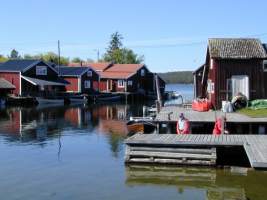
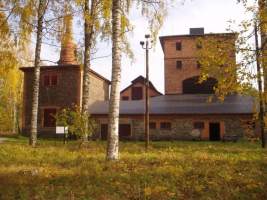 Gävleborg has particularly remarkable cultural sites in very diverse places: along the coast and watercourses, in the forest, the industrial environments, and in the cultural landscape. The European Year of Cultural Heritage is a unique opportunity for Gävleborg to invest in the cultural heritage on its entire territory. This project, therefore aims to make full use of the attractiveness and amenity value of the cultural heritage. Furthermore, it contributes to increasing the knowledge of and pride of citizens of the cultural heritage of the county. The European Year of Cultural Heritage is seen as a catalyst for exchanging and developing considerations with regards to cultural heritage, and to demonstrate the relationship between culture and cultural heritage.
 The three-year project will be implemented around three main approaches:
 The Gävleborg’s project is a good example of how to use a Europe-wide initiative to derive concrete impacts on region’s territory.