• Home
  • About
    • Governance & Structure
      • The AER Executive Board
      • The AER General Assembly
      • The AER Political Bureau
      • Statute & strategies
        • AER Election Committee
        • AER Monitoring & Evaluation Group (MEG)
        • AER Procedures
      • The AER Secretariat
    • The History of AER
  • Members
    • Who are AER’s members?
    • Member Directory
    • AER stands with Ukraine
    • Join AER!
  • Mutual Learning
    • About Mutual Learning
    • Working Groups
    • Knowledge Transfer Events
  • Advocacy
    • About Our Advocacy Work
    • The Bureau
    • The 2030 Agenda for Sustainable Development
    • AER Political Priorities 2025-2030
  • Projects
    • About Our Projects
    • Ongoing Projects
    • Look for Partners
    • Completed Projects
  • AER Programmes
    • AER Summer Academy
    • Eurodyssey – Paid traineeships in European regions
    • Intercultural Regions Network
    • AER Youth Regional Network (YRN)
  • Events
    • AER events
    • Other events

Assembly of European Regions

Connecting regions, inspiring Europe since 1985

You are here: Home / Search for "mental health"

Search Results for: mental health

AER’s Youth Regional Network is back! Highlights from the YRN General Assembly 2023

20 March, 2023 By Lorène Weber

It’s official: AER’s Youth Regional Network is back! After a couple of years of YRN inactivity, the Assembly of European Regions started a revival process after the Summer Academy 2022, building from the feedback and willingness to be involved from the event’s youth delegates, and from our members’ eagerness to see the YRN coming back.

A successful YRN General Assembly

After a few months of preparations, statutory work, communication and outreach to young people in our member regions (and beyond!) and in youth organisations, we could convene the YRN General Assembly on the 10th of March 2023.

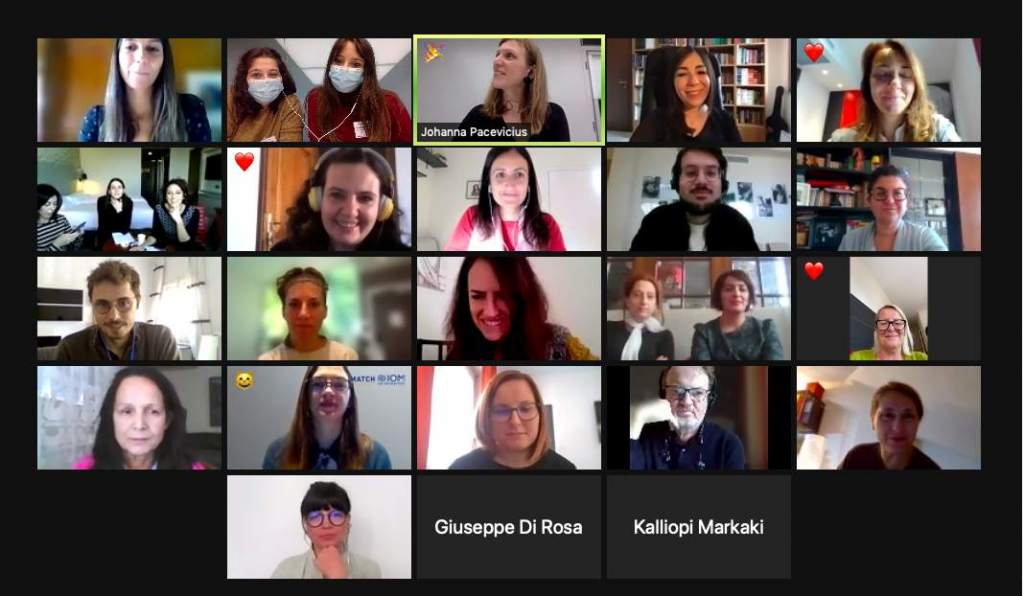
The event gathered around 50 participants, in person in AER’s Brussels office, and online. Most participants were young people joining the new YRN, and we also want to thank Ms Kari Anne Bøkestad Andreassen, Mayor of Nordland County Council and the Youth Coordinators from our member regions in Norway for their attendance, as well as the Youth Coordinators in other member regions for supporting us throughout the process and for appointing youth delegates in the new YRN.

The General Assembly allowed for fruitful presentations and discussions between the YRN members, the candidates to the YRN Presidium, and the AER Secretariat. The young participants already shared a lot of ideas and foreseen activities for the new YRN, and paved the way for co-conducting activities with the AER Secretariat (from participation to youth events to co-organisation of EU projects activities).

We now look forward to the upcoming activities and policy work of the new YRN! The AER Secretariat will engage with the YRN on a regular basis, present them opportunities, and make sure that their work is included in AER’s wider policy work, exchange of best practices and mutual learning activities. Through our institutional work, we will also ensure that the YRN policy recommendations will be advocated for, in front of policy-makers at both regional and European level.

Congratulations to the newly elected YRN Presidium!
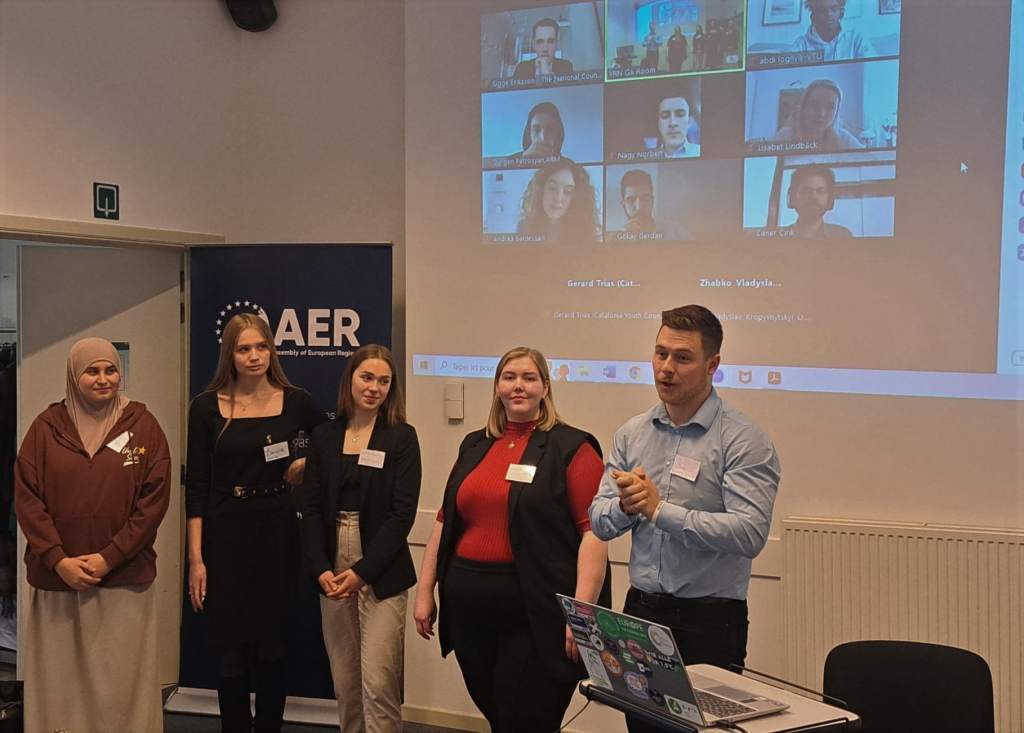
The newly elected YRN Presidium. From right to left: Jim, Anette, Sigrun, Daria, Maylinda. Online: Norbert.

The YRN is youth-led, meaning that they develop their own policy recommendations, Thematic Committees (TCs) and capacity-building activities, and that YRN members (aged between 16 and 30 years old) directly elect their own Presidium, equivalent to a Steering Committee. The election of the YRN Presidium took place as part of the YRN General Assembly, and the following candidates were elected:

  • President: Jim Simonsen Jenssen (Nordland, NO)
  • 1st Vice-President: Anette Amalie Bang (Nordland, NO)
  • 2nd Vice-President: Norbert Nagy (Salaj, RO)
  • Chair of the TC on Youth Participation & Governance: Sigrun Myrvang (Innlandet, NO)
  • Chair of the TC on Mental Health & Wellbeing: Daria Sustrietova (Kirovohrad, UA)
  • Chair of the TC on Gender Equality & Women Empowerment: Maylinda Bajrami (Tirana, AL)

Contact the YRN!

You can contact the YRN Presidium at [email protected].

To reach out to specific members of the YRN Presidium:

  • President: [email protected]
  • 1st Vice-President: [email protected]
  • 2nd Vice-President: [email protected]
  • Chair of the TC on Youth Participation & Governance: [email protected]
  • Chair of the TC on Mental Health & Wellbeing: [email protected]
  • Chair of the TC on Gender Equality & Women Empowerment: [email protected]

To reach out the the YRN Contact Person at the AER Secretariat, you can write to AER Programmes Coordinator Lorène Weber, [email protected].

Follow AER!
Facebooktwitterlinkedinrss

Wrap-up: Highlights of the AER Autumn Bureau 2022

15 December, 2022 By Barbara Polin

Wrap-up: Highlights of the AER Autumn Bureau 2022

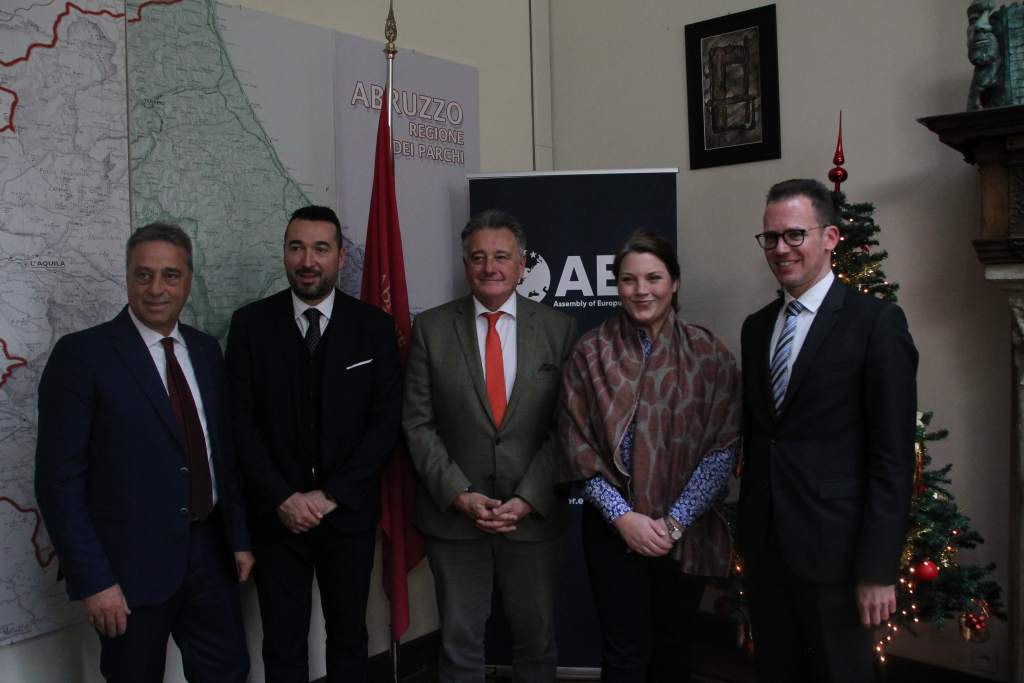
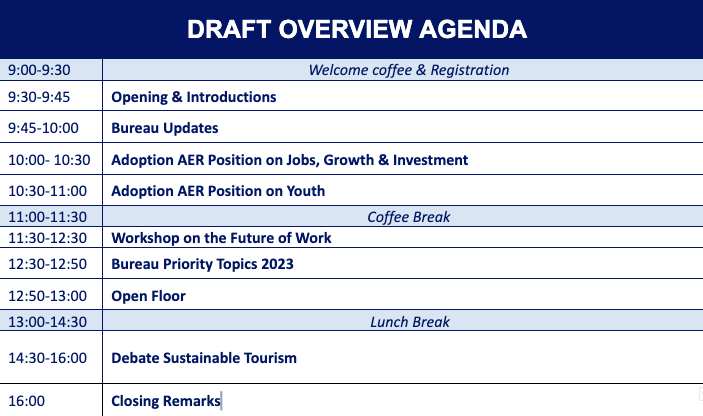
On 6 and 7 December 2022, AER convened its Autumn Bureau at the Abruzzo EU Regional Office in partnership with the Autonomous Government of Sardinia. It was an opportunity to highlight the 2022 achievements and discuss AER political priorities for 2023.

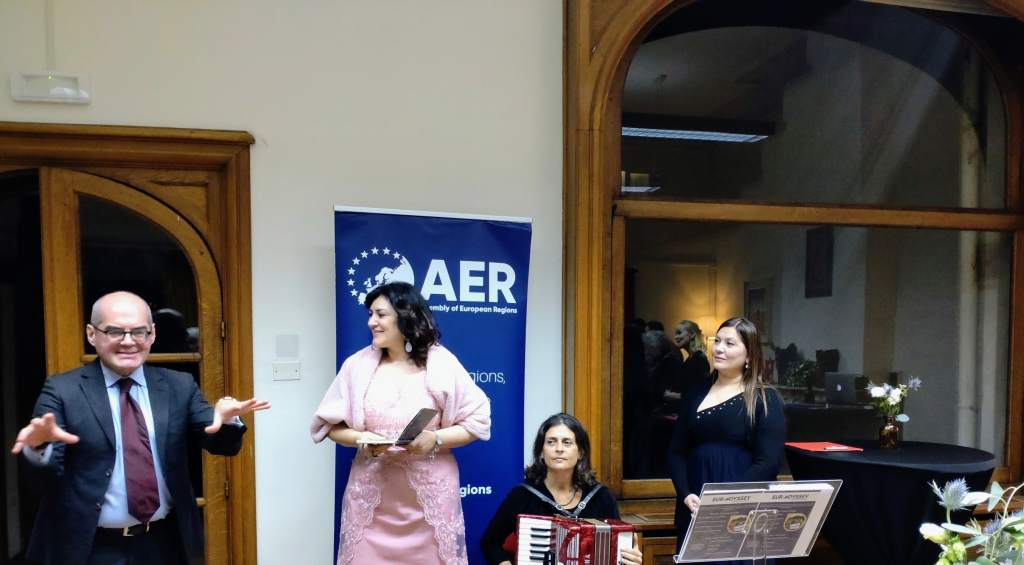
On 6 December, the AER Autumn Bureau opened with a welcome reception celebrating the tradition and heritage of Abruzzo and Sardinia, the Italian regions co-hosting the Bureau. Participants could taste Sardinian wines and food while enjoying a permanent art exhibition of artists from Abruzzo.

Later in the evening, regional heritage had an actual voice with the live classical music performance of Italian artists who sang about local legends of Abruzzo and Sardinia and recited poems in regional dialects. The artists were Tania Di Giorgio (soprano), Adele Filomena (photographer), Tonia Filomena (reader), and Desiree Infascelli (accordion).

From L to R: Leo Grassi, Senior EU Affairs officer of Abruzzo, Tania Di Giorgio, Desiree Infascelli, Tonia Filomena

AER in 2022: high-level advocacy initiatives and policy work on democracy, sustainable mobility, jobs & youth

On the 7th of December, the Autumn Bureau started with the presentation of updates about the AER advocacy work in 2022 by Vice-President Jean-Luc Vanraes. From the Conference on the Future of Europe to the Cohesion Alliance, to the Alliance for the Reconstruction of Ukraine, the AER joined high-level advocacy initiatives to strengthen the governance of regional authorities within and outside the EU and the Council of Europe, especially for what concerns humanitarian and political support to Ukraine.

Vice-President Vanraes also highlighted the successful work of Bureau Task Forces on Democracy (read HERE) and on Sustainable Mobility and Connectivity (read HERE) which were discussed and approved during the Spring Bureau meeting in March 2022.

The floor then passed to Adil Murat Val, Adana (TR), a member of the Task Force on Jobs, Growth and Investment, who presented the relevant draft position paper expressing AER recommendations on the post-COVID economic recovery.

The paper emphasises the need for jobs-driven economic growth allowing the labour force to up-skill its competencies to participate in the digital and green transition. It also calls upon European governments and Institutions to further invest in local and regional digital infrastructure and consequently enable Small and Medium Enterprises to access easily international markets (read more HERE).

Shortly after, Mícheál Ó hÉanaigh, AER Vice President for Youth, Culture and for Tourism, presented the draft AER position paper on Youth. The paper acknowledges the diversity of the group “youth”, and addresses the lack of access to affordable housing, employment opportunities, lifelong learning, and involvement in policy-making and community spaces (read more HERE).

Both papers were approved by Bureau members.

AER workshop on the impact of digital technology on the future of work and young people

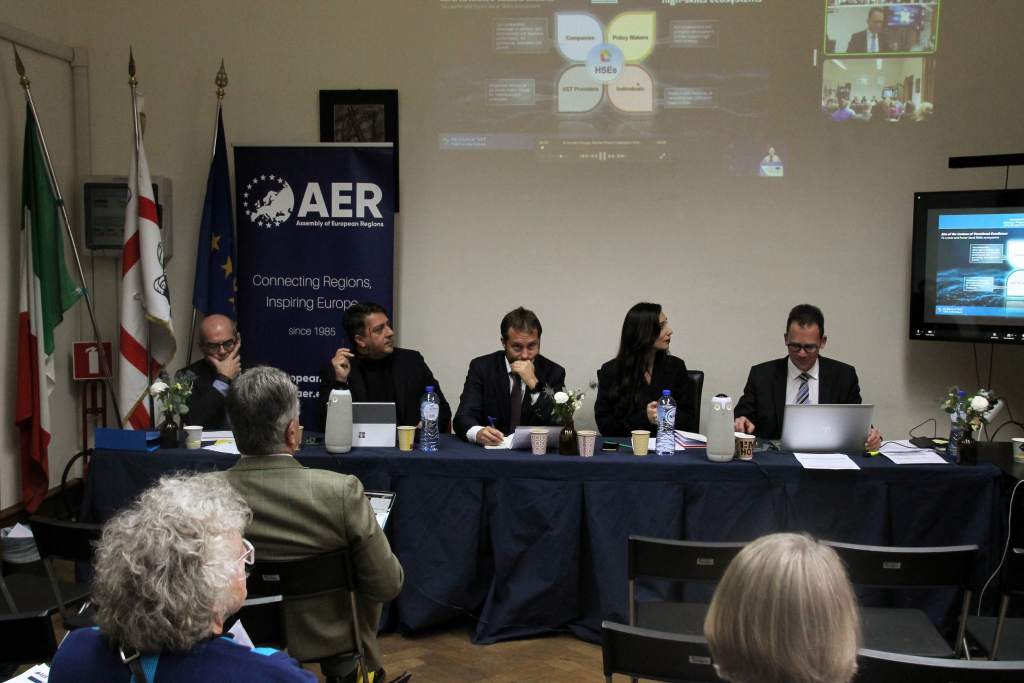
From L to R: Leo Grassi, senior EU affairs officer of Abruzzo, Massimo Temussi, Managing Director of Sardegna, Lucrezia Ioannoni Fiore of DG EMPL, Christian Spahr, Secretary-General of AER

After the approval of the position papers, the Autumn Bureau zoomed in on the issue of up-skilling digital competences and the future of work with a workshop attended by Sebastiano Toffaletti, Secretary General of European Digital SMEs Alliance, Lucrezia Ioannoni Fiore, Policy Assistant at Directorate-General for Employment, Social Affairs & Inclusion (European Commission), Massimo Temussi, Managing Director, Region of Sardinia, and Leo Grassi, Senior EU Affairs Officers of Abruzzo region.

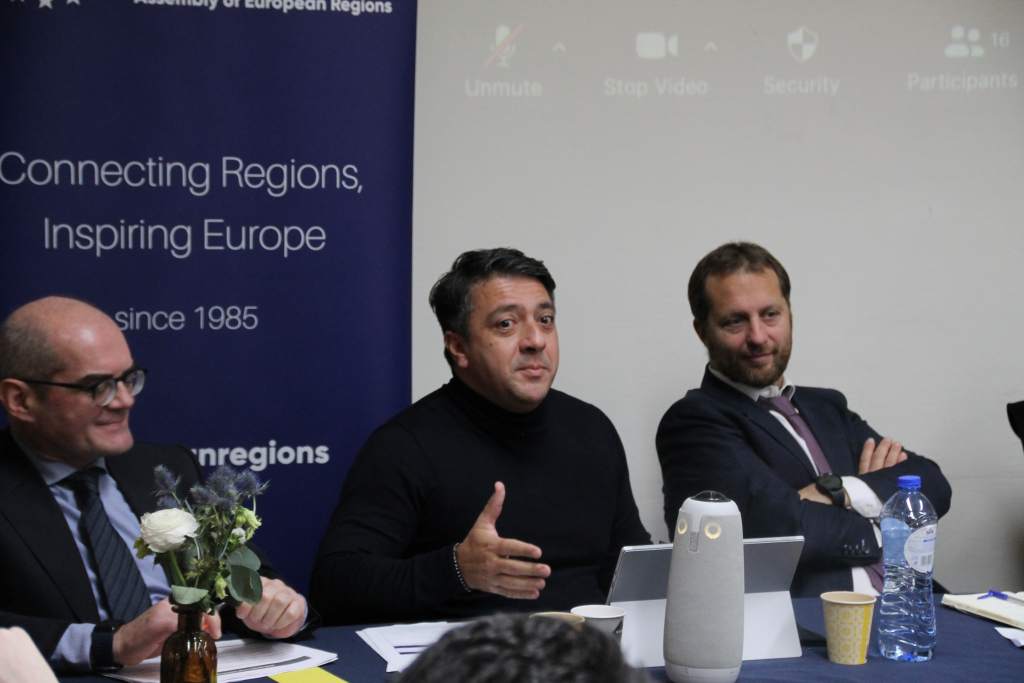
During the workshop, panellists identified the main challenges ahead of the digital transition in European regions. For example, Toffaletti (European Digital SMEs Alliance) brought up the challenge of ensuring an acceptable degree of replicability of innovative initiatives, which often start off within large companies from wealthy metropolitan areas. To be socially relevant, groundbreaking initiatives need to be replicable by actors such as SMEs.

Toffaletti (European Digital SMEs Alliance) brought up the challenge of ensuring an acceptable degree of replicability of innovative initiatives, which often start off within large companies from wealthy metropolitan areas.

From L to R: Leo Grassi, Senior EU Affairs officer of Abruzzo, Massimo Temussi, Managing Director of Sardinia, Sebastiano Toffaletti, Secretary-General of Digital SMEs Alliance

The conversation touched upon also examples of best practices. Ioannoni Fiore brought the example of ALMA, an EU-funded mobility scheme for young jobseekers that aims to empower the most disadvantaged NEETs ( young people neither in employment nor in education or training).

On the regions’ side, Temussi of the Sardinia region talked about the different components of the future of work, mentioning the transition from gig economy to a passion economy, where earnings are less predictable and there is a wide range of options for a single digital service (Read here his presentation). Grassi from Abruzzo described the ongoing process of smart specialisation of Abruzzo’s regional public administration, a transition that aims to improve its accessibility to citizens and businesses. (Read here his presentation)

Gearing up for the European Year of Skills with two new Task Forces on the Future of Work and Active Citizenship

The AER Bureau proceeded with a discussion on political priorities for 2023. As announced during the State of the Union speech in September 2022, 2023 will be the European Year of Skills, and AER’s multiple workstreams put it in the position to develop meaningful contributions for different policy fields. To ensure a meaningful contribution, the Bureau approved the continuation of the work of the Task Forces on Youth, Jobs, Growth and Investment, and Tourism.

2023 will be the European Year of Skills. AER’s multiple workstreams put it in the position to develop meaningful contributions for different policy fields.

Their output and knowledge will help structure the work of two new Task Forces focusing on the Future of Work and on Active Citizenship. The first will explore how remote working can create benefits for rural areas, addressing the divide between urban and remote regions and reverting the brain drain. The second will capitalise on the public awareness fuelled by the Conference on the Future of Europe and reflect on how regions can contribute to the development of new forms of deliberative democracy.

Should these topics be of interest to your region, you may want to read more about the objectives of these new Taskforces and how to join their work.

After approving the set-up of two new Task Forces, Bureau members discussed the possibility of an AER engagement on the topic of mental health. To ensure meaningful work, members agreed that it should be mainstreamed as a cross-cutting aspect to be included in the upcoming position papers and work of the Task Forces.

Sustainable, local and smart: the tourism of tomorrow

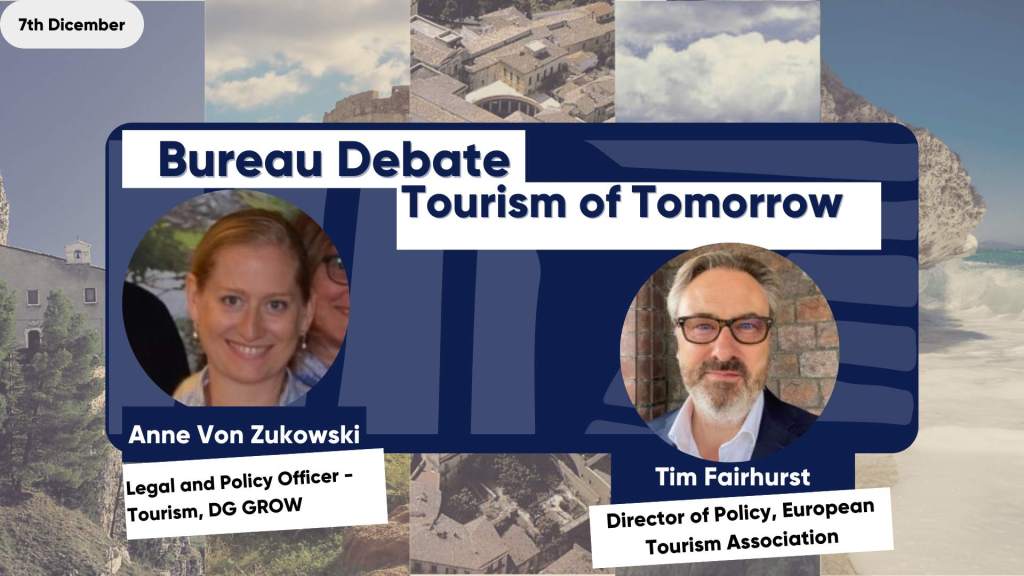
The Bureau Debate on Sustainable Tourism concluded the Autumn Bureau 2022. The pandemic shrunk the revenues and resources of the tourism sector, pushing it to rethink its business model. During the Bureau debate, Anne Von Zukowski from DG GROW and Tim Fairhurst of the European Tourism Association offered the perspective of EU institutions (presentation HERE) and the private sector on how to consolidate the recovery of a vital sector for regional economies.

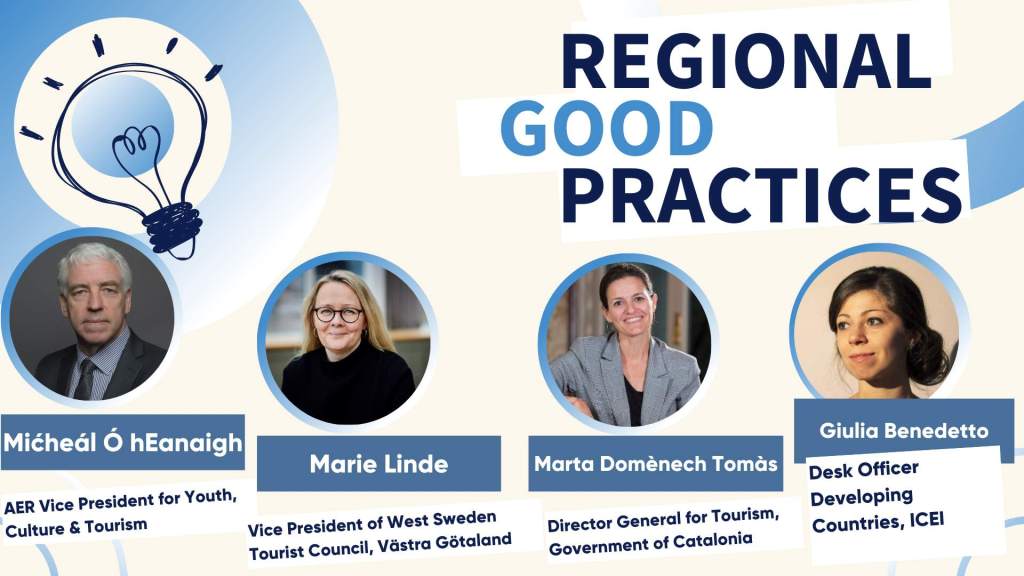
The debate then continued with examples of best practices from regional ecosystems as explained by Mićheál Ó hEanaigh, AER Vice President for Youth, Culture & Tourism; Marta Domènech Tomàs, Director General for Tourism, Government of Catalonia (presentation here); Marie Linde, Vice President of West Sweden Tourism Council, Västra Götaland; Giulia Benedetto, Istituto Cooperazione Economica Internazionale (presentation here).

The commitment of the Catalonian government to a new model of tourism is transversal, transformative and transitional.

Marta Domènech Tomàs, Director general for Tourism, Government of Catalonia

As noted by Marta Domènech Tomàs, tourism must be the solution, not the problem. During the panel, Domènech Tomàs described how Catalonia is committed to a systematic transition on three levels.

The commitment of the Catalonian government to a new model of tourism is transversal, transformative and transitional. This means that tourism has to be connected to other economic sectors, undergo a systematic transformation and facilitate the transition to new and sustainable economic models.

Call to action: Join AER Task Forces on Future of Work & Active Citizenship

As reiterated by the Autumn Bureau, the voice of AER is the voice of its members. So are its actions. If the topics of remote working in rural areas and fostering active participation trigger your interest, discover here how to join the new AER task forces.

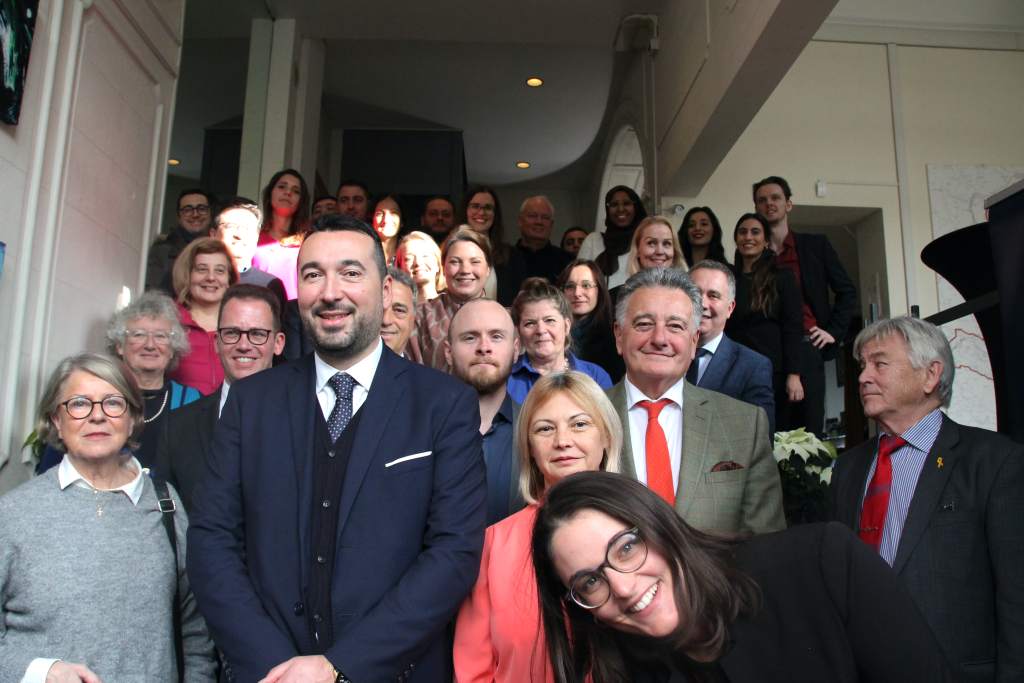
Group pictures from the AER Autumn Bureau 2022. More pictures HERE.
Follow AER!
Facebooktwitterlinkedinrss

AER Position on Youth – Call for Amendments

11 October, 2022 By Lorène Weber

AER is inviting members to offer their amendment proposals to the Draft Position on Youth. This includes the regional youth councils in our member regions: the AER is very much attached to including youth voices in the process, make sure to spread the word among youth councils and youth organisations in your regions!

The closing date for submitting amendments is the 14th of November 2022. Amendment proposals can be submitted using the online form below:

Submit amendments HERE

About this Amending Process

This consultation aims to invite all AER members to offer their amendment proposals to the Draft Position on Youth.

At the Bureau meeting in December 2021, Bureau Members made Youth a priority topic for its political work in 2022, designated European Year of Youth by the European Commission – and decided to set up a Task Force on Youth. Co-Chaired by Vice President for Youth, Culture and Tourism Mícheál Ó hÉanaigh (Donegal, IE), the Task Force produced a common Position with a set of recommendations, advocating “for tailor-made youth policies addressing the challenges of the next generation”. This paper aims to provide a comprehensive position advocating for a better future of youth in Europe. It addresses various topics, from the development of socio-economic opportunities for young people, to the several and diverse inequalities faced by the youth, to the future of work and skills in the context of the green and digital transition, to the inclusion of young people in decision-making processes, to the development of political and civic education, to supporting young people’s mental health.

To make these proposals stronger, the Task Force is inviting AER member regions to share their inputs about the Draft Position.

The amendment proposals can be submitted until the 14th of November 2022.

Suggested amendments will be discussed and voted by Bureau Members at the Autumn Bureau Meeting on the 7th of December 2022.

How to Submit Amendments?

  1. Please, read the Draft Position Paper HERE.
  2. Submit your amendment proposals using this online form before the 14th of November 2022.
  3. Try to make the amendments as clear and concise as possible, indicating which number line you wish to amend and the type of amendment you use to make (add, delete, or replace parts of the text). Look at the examples provided HERE.
  4. If you are unable to use the online system, we will be happy to provide you with the form in other formats. To request one, please contact the AER Secretariat.

Should you have any questions, please contact the AER Secretariat – Lorène Weber at [email protected].

Follow AER!
Facebooktwitterlinkedinrss

REGISTER NOW! – 2022 Autumn Bureau Meeting

21 September, 2022 By Gisela Guari Cañada

You are invited to register for the Autumn edition of the AER Political Bureau on 7 December in Brussels. The Bureau Meeting will be hosted by the regions of Sardinia & Abruzzo (IT).


NEW DEADLINE: 30 NOVEMBER 2022


We highly encourage you to participate in person in Brussels in the AER Autumn Bureau as the planned web streaming will offer limited interaction possibilities.

Working Documents

  • Detailed Agenda
  • Position Paper on Youth – to be adopted
  • Position Paper on Jobs, Growth & Investment – to be adopted

7 December – Autumn Bureau Meeting Programme

Adoption & Discussion AER Position Papers

  • Position Paper on Jobs, Growth & Investment

AER members are invited to propose their amendments to the Draft Position Paper on Jobs, Growth and Investment.

This draft paper sets recommendations on how regions can boost growth, drive investment and create jobs that will accelerate Europe’s economic recovery. This position will be discussed and voted upon by Bureau members at our Autumn Bureau meeting on 7 December 2022.

More information is available in our article. Call for amendments CLOSED.

  • Position Paper on Youth

This paper aims to provide a comprehensive position advocating for a better future for European youth. It addresses various topics, from the development of socio-economic opportunities for young people to the several diverse inequalities faced by the youth, to the future of work and skills in the context of the green and digital transition, to the inclusion of young people in decision-making processes, to the development of political and civic education, to supporting young people’s mental health.

To make these proposals stronger, the Task Force is inviting AER member regions to share their inputs about the Draft Position.

More information is available in our article. Call for amendments CLOSED.

Bureau debate on Sustainable Tourism

In an interdisciplinary debate, panellists will highlight how the post-pandemic recovery of tourism is key to revitalising regional economies and nourishing their cultures.

This debate will bring together representatives of local and regional authorities, European Institutions and other relevant stakeholders to answer the following questions:

  • What are the key priorities for a sustainable, resilient, inclusive recovery of tourism in Europe that effectively builds on the opportunities from the green and digital transitions?
  • How can local and regional governments best contribute to the relaunch of the European tourism sector?
  • What synergies and cooperation can be exploited among all involved actors and how can this best support recovery of tourism that is resilient, sustainable and inclusive?

6 December – Workshop on the Bieoconomy & the New European Bauhaus

Prior to the Autumn Bureau Meeting, the AER Working Group on the Bioeconomy is organising a workshop on “The Bioeconomy & the New European Bauhaus” at the Oslo Region European Office, on 6 December, 09:00-13:00, which will look at

  • The European strategies supporting the decarbonisation of the construction sector
  • The link with societal challenges, the territorial approach
  • Technical innovations in bio-based constructions materials

Click here for more information.

Summer Academy Bureau Debate – Recovering together: youth policy in Europe

8 July, 2022 By AER Communications

AER-SA-Debate-Youth-post

REGISTER HERE

PRACTICAL INFORMATION

According to the OECD, the COVID-19 crisis has taken a toll on the education, employment, mental health and disposable income of youth all across Europe, most notably due to public health restrictions. As this report from the European Parliament show, lower and unequal access to education and training, higher unemployment and a reversal of many positive social and economic trends for young people in Europe and beyond.

These new difficulties must be addressed to ensure a brighter future for all. One, in particular, stands out: the rise of mental health afflictions like depression and anxiety among the youth. For instance, almost two-thirds of people (64%) in the age group 18–34 years were at risk of depression in spring 2021. The pandemic brought to light the sheer number of people who are in need of support and how much work there is to do in that regard.

Discussing youth policy in Europe

With every challenge comes an equally important opportunity. Local and regional authorities have a critical role to play in supporting post-pandemic recovery, especially in regard to youth policy and programmes. The key to a more equitable and lasting recovery lies in finding new ways to support youth in their projects, harness their energy and passion and foster cross-generational and intercultural integration and cohesion.

This is why the AER is organising a Bureau debate on youth policy in Europe as part of our flagship youth event, the AER Summer academy.

This debate will bring together representatives of local and regional authorities, European Institutions and other relevant stakeholders to answer the following questions:

  • What should the focus of youth policy be in our post-pandemic European societies?
  • How can youth contribute to building more resilient and strengthened European regions? 
  • What can public actors do to avoid facing a “lockdown generation” and maximise the well-being of European youth?

The debate will take place on 31 August 2022 in County Donegal (IE).

This interactive debate will bring together regional and European policymakers and experts. It includes an extended thirty-minute Q & A where participants will have the opportunity to share their views and insights with our panellists. Don’t miss the chance to help shape AER’s work on youth policy in Europe!

The speakers have been announced!

Invited speakers to the panel debate will include:

  • Maria Koleva, Deputy Head of Cabinet; Commissioner for Innovation, Research, Culture, Education and Youth – European Commission
  • Sabine Verheyen, chair of the Committee on Culture and Education (CULT) – European Parliament
  • Anne Karjalainen, Chair of the Commission for Social Policy, Education, Employment, Research and Culture (SEDEC) and Chair of Kerava City Council – European Committee of the Regions
  • Frederic Piccavet, Vice-president – European Youth Forum
  • Clementina Barbaro, Head of Youth Policies Division – Council of Europe

Photo source: Getty Images

Follow AER!
Facebooktwitterlinkedinrss

ANNOUNCEMENT: Bureau Debate on Youth, August 31 2022

4 July, 2022 By AER Communications


The COVID-19 crisis has taken a toll on the education, employment, mental health and disposable income of youth all across Europe. Young people used to work in sectors most affected by lockdowns, like retail, consequently those about to enter the job market faced dwindling employment opportunities.

This is why, as part of our Summer Academy on 31 August, we will bring together representatives of local and regional authorities, European Institutions and other relevant stakeholders to debate the opportunities and challenges of youth policy in the context of post-pandemic recovery.

During the last Spring Bureau Meeting, the AER Bureau members set up a new Task Force on Youth, chaired by Údarás (IE), which aims at promoting youth inclusion, participation and well-being in the context of the European Year of Youth and post-pandemic recovery, with a particular focus on the key role of regional and local governments. This debate will be hosted during the AER Summer Academy in Donegal County Council, Ireland, and chaired by Mícheál Ó hÉanaigh, Chair of the Task Force on Youth.

The debate will address three key questions:

  • What should the focus of youth policy be in our post-pandemic European societies?
  • How can youth contribute to building more resilient and strengthened European regions?
  • What can public actors do to avoid facing a “lockdown generation” and maximise the well-being of European youth?

For further information on the content of the debate, please, go to this article.

Panel:

  • Anne Karjalainen, Chair of the Commission for Social Policy, Education, Employment, Research and Culture (SEDEC) and Chair of Kerava City Council – European Committee of the Regions
  • Chougher Doughramajian, Member of the Advisory Council on Youth – Council of Europe
  • Tom Matthew, Board member – European Youth Forum
  • Maylinda Bajrami, Member Youth Panel – European Youth Card Association

With insights, unique regional contexts and recovery experiences from the Task Force on Youth member regions.

Includ-EU and the Agenda 2030- Two Days of Exchange at the Heart of Europe

26 November, 2021 By Anna Comacchio

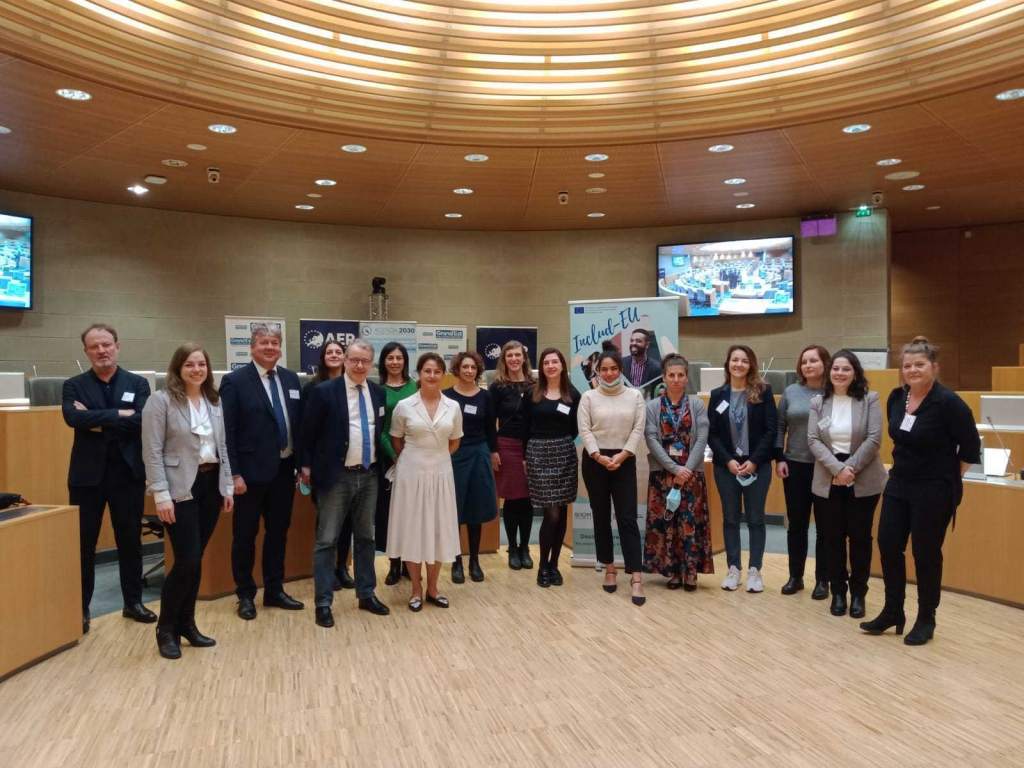
On 28-29 October, the INCLUD-EU Project held its Second Regional Workshop in a series of 5 thematic sessions facilitating knowledge sharing and discussing the design of Includ-EU pilot projects, as well as other integration policies and projects carried out across Europe. 

The Workshop happened in a hybrid format within the framework of the Agenda 2030 Conference, which took place in Strasbourg and online, and in partnership with Region Grand Est and the City of Strasbourg.

On the morning of the 29, after the opening of Ms Rabab Ahmad, Policy and Programme Analyst (IOM), participants were welcomed by our facilitator, Mr Abram el-Sabagh (Design for Impact) and encouraged to share a picture telling the story of why they got into migration and integration, as a way of breaking the ice and setting a cosy atmosphere for the rest of the dy.

The focus of the Includ- EU project workshop –Day 1- was “Rethinking services & raising awareness on design in shaping more sustainable services”

Consortium partners from SocioLab, represented by Ms Silvia Givone and supported by Anci Toscana (National Association of Italian Municipalities-Tuscany) held a presentation of how Service Design methods helped them Co-design workshops for the mutual re-definition of pathways and networking models among Job Centers and managing organizations of reception centers.  In particular, the  Identification with a “typical-user” and the modelling the process through which the user comes into contact with the services allow them to carry out an analysis and confrontation on difficulties/emotions of front line workers and service providers.

In the second half of the morning, Ms Johanna Pacevicius (AER) introduced a revamped “marketplace”, which put the focus not so much on the presentations of the good practices as such but rather on the collective intelligence for mutual learning that could be capitalised from all the expert participants in the workshop. In other words, all participants were actively involved in the discussion of challenges encountered by the two presenters and offered their counsel, expertise and help to answer questions raised by Ms Sofia Luis (IOM), who introduced us “The Migrant Women & Girls Toolbox, City of Luxembourg (Equalcity Project)”; and  Ms Alessia Rochira (Unisalento), who spoke about their research project on “Culture Brokers: when integration is made by the youngest” (Regin Project).  As a way of example, in the second scenario, questions such as “What are the possible effects of this linguistic and cultural mediation activity for young immigrants and for the reciprocal relationships they establish with their families and schools?” and “What are the possible effects on family relationships?” were lively discussed by participants who had at times contrasting ideas on whether ​​young immigrants can carry out a more formal activity of linguistic and cultural mediation on behalf of their parents. Eventually, many tips and resources were shared, thus certainly enriching the base for the research project carried out by Alessia and her team.

The afternoon study visit of the urban project Deux-Rives was very interesting for participants.  “In the EcoQuartier Danube, we appreciated not only the architectural form of the complex and the connection with the river, but also the functional mix: the homes (for sale or rent), the co-designed cohousing, the residence for vulnerable groups (senior housing, supported housing for mental health patient), the beautiful wooden playground, the common vegetables garden  (with farm animals!), schools and spaces for social activities.”, shared Ms Giulia Maraviglia, an onsite participant from Social Lab in Tuscany.

She went on explaining how in the nearby Presqu’île Malraux the contemporary architecture dialogues with the industrial heritage to form a suggestive water landscape. “The docks, buildings in search of a new identity, have been transformed in a lively media library and a fablab/coworking.” In Strasbourg, Giulia saw the materialization of the housing community-building processes that are being similarly developed in the metropolitan area of Florence, her city in Italy, through the project “Abito in community“.

On Day 2, a much more concise but still very practical workshop was held. For this occasion, the IncludEU project partnered up with the Council of Europe. The subject was one raised and felt by many, in previous webinars of the project, namely how to counteract hate speech,  which is an increasing threat to human rights and democracy.

The workshop dealt with important questions such as: How can we define and tackle Hate Speech and what can we do to stop it? Can regional authorities help to protect the most vulnerable groups of society such as the migrant population? 

At first, Ms Irena Guidikova, Head of Inclusion and Anti discrimination programmes at the Council of Europe introduced the complexities of defining hate speech and finding the right and effective response. Then, our guest speaker, Ms Julia Mozer, Communication & Policy Officer at CEJI office, gave a brilliant overview on tools to counterstrike Hate Speech and “drive out the hate out with a positive message that is constructive and can engage the audience”.

She additionally provided useful links and online resources such as: http://facingfacts.eu, http://facingfactsonline.eu, and https://coe.int/en/web/inclusion-and-antidiscrimination/wecan4hrs, and concluded with a hope of further collaboration with the project, perhaps in form of more in-depth training.

As the objective of the Agenda 2030 Conference was to show and reiterate the key role that regions play alongside cities, in facilitating the transformation required to realistically implement and achieve the 17 Sustainable Development Goals, our workshop was successful in demonstrating how inclusion and integration have to be indeed understood as integrated and mainstreamed into many (if not all) of other goals, in particular gender equality, affordable housing, quality education and reduce inequalities.

With Includ-EU, we are looking forward to the next workshop and we encourage you all to follow Facebook and Twitter page, as well as to visit the newly launched website at includeu.eu. We would also like to thank those of you who participated and made the workshop possible (at last also in person!), and we are always happy to hear suggestions for the next content focus and presentations!

Please contact a.comacchio@aer for any question/request.

Includ-EU, financed by the AMIF Programme (DG Home, European Commission), aims to contribute to building more inclusive and cohesive European societies by enhancing transnational knowledge and experience sharing, cooperation and partnerships between local and regional authorities from Greece, Italy, the Netherlands, Romania, Slovenia and Spain.


Follow AER!

Facebooktwitterlinkedinrss

Y-FED: AER Poll Finds Young People are Optimistic About the Future but Lacking Awareness on the CoFoE

28 October, 2021 By Bianca Basílio Silva

Under the scope of the European Project, ‘Y-FED: Europe is what we make of it’, the Assembly of European Regions (AER) ran a poll gathering data on citizens’ expectations and priorities on the future of Europe, with a focus on young people. The results were presented at the Y-FED Final Conference in Brussels and announced in our press release, which can be read here. 

About the poll

The representative poll was conducted by Savanta in June 2021 and included six EU countries (Germany, France, Italy, Poland, Romania and Sweden), with a sample over 1,000 participants per country. 

On the Y-FED Project

This poll aimed to gauge the state of young people’s active citizenship in the European project, something that the AER and our partners, the Young European Federalists (JEF) set out to achieve over the last two years with our project, ‘Y-FED: Europe is what we make of it’.

By developing a proposal for an improved institutional framework of the EU in line with the European Youth Goals (EYGs), Y-FED provided young people with the opportunity to learn about the work of the European institutions, to participate in the design of more representative and accountable institutions, and to promote the developed model through policy dialogue and political advocacy. 

Simultaneously, Y-FED raised awareness on the EYGs among young Europeans and local decision-makers, encouraging dialogue between them and prompting policy reform and implementation actions at the local and regional levels.

How politically active and aware are young Europeans?

Overall, respondents shared the belief that young people will have more opportunities to play an active role in society and politics, reflecting optimism for the future. Nevertheless, when asked about the Conference on the Future of Europe (CoFoE) young people showed a lack of awareness, with over half 46.8%) not having heard about the CoFoE. Despite this, the AER survey found that young people want a greater role in the political process.

Moreover, regional and local governments showed to enjoy a higher level of trust among young Europeans than national governments do (46% versus 38%), proving to be the level of government best-placed to introduce novel, non-bureaucratic channels for young citizens to engage in the decision-making process through and beyond the CoFoE.

Respondents were also asked about future opportunities in five different areas (​​Education, Jobs, Equal Rights, Civic Participation and Mental Health) for the next generation of young people in their region and split into two age groups (18-24 and 25-34). You can read more information in our Press Release or…

Click here to read our full technical report!

This poll was organised in the context of the European Project “Y-FED: Europe is what we make of it”. Y-FED aims to bring the EU closer to its young citizens by developing a proposal for an improved institutional framework of the Union in line with the European Youth Goals. The initiative, supported by an Erasmus+ “European Youth Together” grant, is implemented through a series of capacity-building training courses, public policy hackathons, a large-scale simulation of a reformed EU and advocacy actions.

Follow AER!
Facebooktwitterlinkedinrss

AER discussing Next (Talent) Generation EU

12 January, 2021 By Editor

On 17 December 2020, AER took part in Finnova Foundation‘s webinar Next Talent Generation EU: COVID-19 Challenge, training in European Affairs for young people abroad. The webinar addressed the challenges that the COVID-19 crisis is posing to European mobility programmes, which are vital for upgrading the education and training of young professionals.

A European Marshall Plan to invest in Youth Talent

There are currently 1.8 billion young people between the ages of 15 and 35 in the world; the largest youth population in history. With 25 million jobs expected to be lost due to the health crisis, this cohort accounting for one-third of the world’s population is at a higher risk of exclusion amid the pandemic. At EU level, it is hoped that the Next Generation EU (NGEU), which will supplement the MFF by €750 billion, will help Member States to mitigate the enormous socio-economic impact of the epidemic on young people through reinforced funding such as the European Social Fund+, the Youth Guarantee system or the Erasmus programme.

Beautiful news! The EU 🇪🇺 got it right; with #COVID19 disproportionally hitting young people, the increase in funding of the Erasmus+ programme represents a ray of hope for many! @europeanregions
#Europe #youthrights #youthmobility https://t.co/esB3lL1izg

— Eurodyssey (@eurodyssey) December 18, 2020

Next Talent Generation EU: COVID-19 Challenge, training in European Affairs for young people abroad set about addressing these challenges by bringing together representatives from public administrations, those responsible for youth matters, training in European Affairs and professionals in charge of mobility programmes to share their perspectives, experiences and good practices.

Discussion highlights

The webinar, moderated by Juanma Revuelta, Director of the Finnova Foundation, consisted of four parts: An opening address by Ms Romy Karier, Member of the Committee of Regions’ Commission for Social Policy, Education, Employment and Culture; Panel 1 – Mobility and training challenges in the era of COVID 19 and the EU economic recovery programmes 2021-2027; Panel 2 – The vision of the different European mobility programmes and how to face the new normal; and Panel 3 – Success stories and personal experiences.

During the second panel, AER Programmes Coordinator, Andrés Muñoz had the chance to elaborate the Eurodyssey experience and explain the benefits of learning mobility for youth development. The second part of his presentation set out the challenges ahead for youth policy-making in light of the gaps that the pandemic will prompt across generations in terms of unemployment, education, inequality and mental health.

AER Programmes Coordinator, Andrés Muñoz Rojo speaks with @FinnovaEU this morning about how AER's @Eurodyssey programme boosts youth mobility and employability! 👏👏👏 https://t.co/MEpyGKNbg4

— AER (@europeanregions) December 17, 2020
View presentation

There were also presentations from speakers like Sara Corres Armendáriz, Deputy Director-General of Legal System of the Spanish Government’s Directorate-General for Migration, who underlined that “over the last few years, important steps have been taken towards the consolidation of a European labour market“. César Plá, Head of Service of the Public Function Department of the Permanent Representation of Spain to the EU, highlighted that “despite the current pandemic situation, the employment prspects in the EU institutions are encouraging, along with many windows of job opportunities for young people“.

The event closed with the launch of the Next Talent Generation EU website, a job portal which hosts a wide variety of stakeholders (NGOs, companies, universities, European institutions, national administrative authorities, etc.) aimed at building a European alliance for employing and training young talent.

If you missed our contribution to this webinar, you can rewatch it at the link below:

Rewatch the webinar!

Featured picture by Maria Teneva on Unsplash

Follow AER!

Facebooktwitterlinkedinrss

To another 35 years of Eurodyssey regions on the move!

21 October, 2020 By Editor

For the very first time, the AER-Eurodyssey programme was featured in the European Week of Regions and Cities in partnership with the Public Employment Service of Catalonia – SOC (es), Bureau International Jeunesse – Wallonia (be), Varazdin County (hr), Brussels Public Employment Service – Actiris (be) and the Sardinian Agency for Active Labour Policies – ASPAL (it).

A celebratory event marking 35 years of Eurodyssey

The Eurodyssey virtual lab Eurodyssey35: Regions on the move (14/10/2020), moderated by Hrvoje Kovaç, Chair of the AER Subcommittee on Youth, was joined by two inspiring panellists in the field of youth: Jovana Majstorovic, Board Member of the European Youth Forum, and Floor Van Houdt, Head of Unit for Youth policy and Volunteer Solidarity at the European Commission’s DG for Education, Youth, Sport and Culture.

Kicking-off the discussion, Hrvoje Kovaç set out that mobility is at the core of European integration and that the AER has been actively promoting this principle through its flagship #Eurodyssey traineeship programme for over 35 years. Since its inception in 1985, this scheme has allowed over 10,000 people to benefit from work placements. Following these introductory remarks, the teaser of the Eurodyssey 35th Anniversary video was premiered.

Our moderator @Najdeblji sets out the key role that Eurodyssey has played in creating "inclusive, open and equitable" mobility for over 10,000 young people since it began 35 years ago. ✈️ 🌍 pic.twitter.com/vJ1EjdgaPL

— AER (@europeanregions) October 14, 2020

Hrvoje Kovaç subsequently invited a round of questions from Slido addressed both to the speakers and the audience; challenging them to dig into the links between learning, mobility, social inclusion, active citizenship and territorial cohesion.

Mobility in times of COVID-19

Jovana Majstorovic, European Youth Forum, drew attention to the negative impact of COVID-19 on youth development, noting outcomes such as high unemployment, precarious work conditions, lack of access to social protection, restrictions on mobility and deteriorating mental health among young people.

Floor Van Houdt added that the Commission’s immediate concern when COVID-19 broke out was the young people on mobility programmes abroad who ended up stuck in another country. The first measure the Commission took was to cover administrative costs for affected organisations and participants by activating force majeure clauses. In spite of the crisis, she noted that young people refused to end their participation in these programmes; choosing instead to adapt to the situation and lead from the front. For instance, the vast majority of the European Solidarity Corps projects were transformed into emergency initiatives led by young people to deliver medical equipment, help the elderly or assist school teachers.

What can be done at the regional level to encourage youth participation and inclusive mobility?

Floor Van Houdt called upon regional and local authorities to fully exploit large European funds (e.g. European Social Fund) and the Reinforced Youth Guarantee which are concrete instruments to help young people access the labour market. In addition, Floor mentioned the “Europe goes local” project carried out by the Erasmus+ National Agencies, which provides specific tools to municipalities to support youth work and co-management structures. The European Solidarity Corps is another good example of how young people can help themselves by helping others.

In her view, equality and inclusion can only be safeguarded through an ambitious, collective effort involving all stakeholders: the EU, the member states, regions, NGOs, youth associations and civil society. As for inclusive mobility, EU programmes have together with the national agencies developed diversity strategies with funding support to identify target groups and their needs when they engage with mobility schemes.

Floor van Houdt, head of unit for youth policy @EU_Commission underlines that "it's important for regions to listen to young people, because they know best what their needs are."

Don't forget to submit your questions on slido using #eurodyssey 💻💬 pic.twitter.com/V0fYo7Olb0

— AER (@europeanregions) October 14, 2020

In this regard, Hrvoje pointed out that in order to tackle youth unemployment and other issues affecting young people, regions have a duty to make young people’s voices heard in decision-making processes.

Jovana explained that the European Youth Forum is focusing more and more on consolidating youth participation in regional public life. She welcomed the Reinforced Youth Guarantee as a key instrument to encourage youth autonomy in times of COVID-19, and urged the EU institutions to extend this funding to non-EU countries for better cohesion. Jovana stressed the importance of including youth-led associations, particularly those representing disadvantaged groups in regional policy-making. She noted the European Youth Capitals initiative as a best practice example of how to develop youth inclusion policies between local/regional authorities and young people.

According to Jovana, the COVID-19 crisis is leaving young people behind, while democratic norms are increasingly eroding. In this context, young people are falling into poverty and marginalisation, and COVID-19 cannot be an excuse to neglect their needs. On a more positive note, responding to a question from the moderator regarding the European Parliament’s resolution to ban unpaid internships, Jovana answered: “it is indeed a great victory and proves that youth participation has tangible outcomes and is vital to uphold youth rights”.

Jovana Majstorovic, Board Member of @Youth_Forum stresses that regions "must involve young people in the creation of youth policies." 👫🤝

What do you think? 🤔

Join the conversation on https://t.co/Vi9XP0UwZs using the #eurodyssey! pic.twitter.com/ASLxuqZDaI

— AER (@europeanregions) October 14, 2020

What are the benefits of learning mobility and volunteering?

As a former Erasmus participant, Floor Van Houdt strongly believes that any mobility or volunteering experience abroad is enriching in many different ways. Besides learning a new language, becoming immersed in a culture and becoming more tolerant, mobility encourages young people to acquire a set of personal and professional competencies that are in high demand from employers, such as autonomy, self-confidence and a sense of initiative. Additionally, exchange programmes of this kind make for better-informed citizens, and to the internationalisation of companies and organisations.

What are the benefits of taking part in youth programmes like @eurodyssey ?

🗣️Stronger language skills;

🙋‍♀️Greater independence;

🇪🇺 More active citizens;

🤔 Challenging ideas.

What would you add to this list? Tell us on slido with #eurodyssey pic.twitter.com/reh3imej6P

— AER (@europeanregions) October 14, 2020

Jovana also shared her reflections on mobility programmes based on her personal experiences as a non-EU citizen. In her opinion, the opportunity to take part in a mobility programme abroad fosters intercultural sensitivity in young people, especially in the Balkan region where some long-standing prejudices remain. Thanks to these experiences, she became a strong advocate of inclusiveness and understanding in her community, which has been negatively influenced by a biased and politically motivated media. She underlined that volunteering significantly influences one’s personal development and brings people of different opinions and backgrounds together.

Hrvoje pointed out that mobility has an extraordinary potential to spread European active citizenship and, most importantly, to break down prejudices and preconceptions in a given community when it is introduced to foreign people, particularly in remote and rural areas. What is more, Eurodyssey proves that mobility schemes enable “brain-circulation”, as opposed to “brain-drain”, as it brings benefits to both the sending region and hosting regions.

Curious to find out more?

Rewatch the webinar!

Follow AER!
Facebooktwitterlinkedinrss

COVID-19: What is at stake for youth development?

24 June, 2020 By Editor

Undeniably, youth play a crucial role in the action plans to limit the spread of the COVID-19 and its adverse impact on public health, society and the economy at large. Young people are also among the most vulnerable groups who suffer from the pernicious consequences derived from this crisis.

Labour turmoils

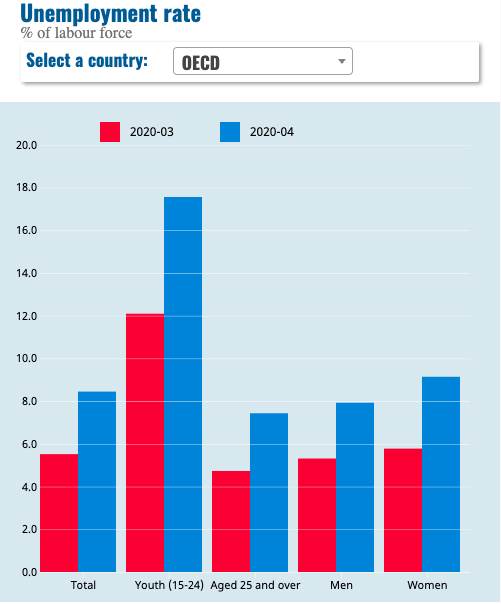
The pandemic is admittedly making young people the main victims of labour market shocks. According to Eurostat, in April 2020 while the general unemployment rate increased by 0.2%, from 6.4% to 6.6%, the youth unemployment rate increased by 0.8%, from 14.6% to 15.4%. In OECD countries, the unemployment rate rose faster among women and young people aged 15 to 24 as reflected in the graphic below:  

Source: OECD Statistics

Over 1 in 6 young people worldwide have stopped working since the start of the crisis, according to ILO. This disproportionate escalation of youth unemployment can only be attributed to the fact that young people are overrepresented in informal employment –77% of employed young people hold informal jobs worldwide [1]– and in job sectors most at risk (ex. tourism, retail trades, personal services) from the COVID-19 shutdown. In light of these negative developments, the quality of jobs for young people will severely deteriorate and temporary contracts will become more prominent.

Socio-economic gaps

As unemployment grows, the socio-economic gaps between young people, and across generations, become more profound amid the economic and health crisis. Access to social protection is one of the major concerns and significantly varies depending on a person’s background (including age). As many welfare programmes are linked to formal employment, that leaves many young people unprotected, especially young women, and more exposed to health-related hazards [2].

In Education, the COVID-19 pandemic is altering learning, compromising nutrition and increasing the drop-out rates as a result of the nationwide closures of educational institutions. In this context, disadvantaged children and youth who have fewer economic or educational opportunities outside of school, limited access to e-learning tools and depend on free or discounted school meals are at risk of falling further behind [3].

Not to mention the young migrants and refugees. Given that 70% of all international migrants are below 30 years of age globally [4], epidemics like the COVID-19 will hit this concrete population group the hardest. What is more, the pandemic will limit even more their access to healthcare and livelihood provisions while exacerbating the social stigmas towards any minority group.

Building mental resilience

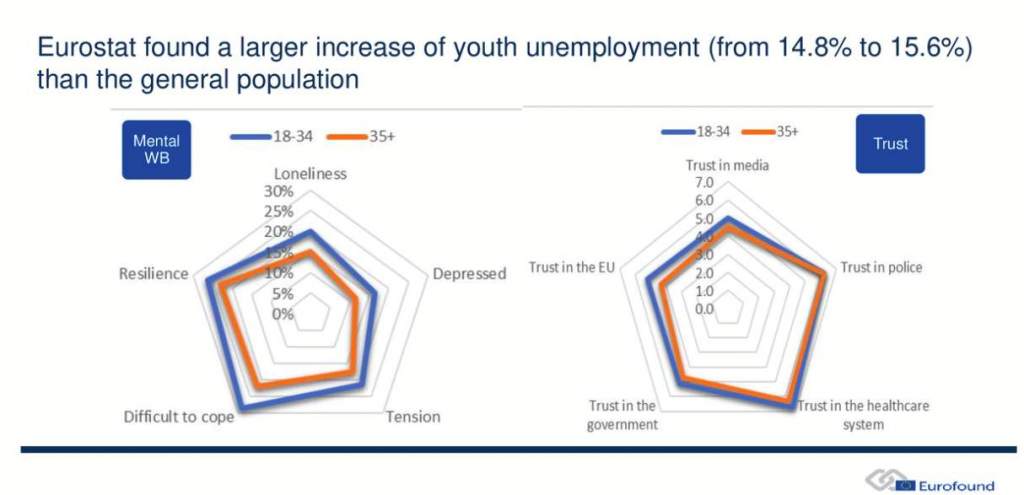
The COVID-19 outbreak has triggered detrimental effects on the wellness and mental health of children and young people. The short-term quarantine measures and social distancing turn out to have greater psychological implications for the young population and contribute to exacerbating other household and individual circumstances: personal safety, prospects of job and income losses, medical conditions in the household, social connectedness or trust in other people and in institutions [5].

According to an OECD survey, more than half of young people express great concerns about their mental health. This requires immediate policy responses and long-term solutions to mitigate harm and proactively improve systems of support for young people and children. These measures may include: providing online resources; advice to general practitioners and youth workers; inclusive telemedicine consultations; and, overall, reinforcing resources for mental health services in the aftermath of the pandemic.

Source: Eurofund

The WHO or Voices of Youth have published a compilation of resources such as guidance documents and Q&As in the area of COVID-19 & youth mental health. Furthermore, initiatives such as the Global survey on youth rights and COVID-19, a joint effort of the Global Initiative on Decent Jobs for Youth (DJY) and its partners, will shed further light, among various areas, on the psychological implications of COVID-19 for young individuals.

A call for intergenerational solidarity!

It is more imperative than ever that every administration level across Europe and beyond include young people in the recovery strategies and cooperates with every economic and social player to safeguard their rights and wellbeing. The Sustainable Development Goals are paramount in accelerating a vigorous response to overcome the epidemic as well as build resilience and “social immunity” that the world needs to prevent the next pandemic.

References

[1] UN DESA, World Economic Situation and Prospects, April 2019 briefing, no 123.

[2] Special issue on COVID-19 and Youth (27 March 2020). Programme on Youth Unit, Division for Inclusive Social Development (DISD), Department of Economic and Social Affairs (DESA), United Nations.

[3] UNESCO ”COVID-19 Educational Disruption and Response”: https://en.unesco.org/themes/education-emergencies/coronavirus-schoolclosures

[4] 2019 International Migration and Displacement Trends and Policies Report to the G20: https://www.oecd.org/migration/mig/G20-migrationand-displacement-trends-and-policies-report-2019.pdf

[5] “The impact of COVID-19 on children and young people”. March 2020 The Children’s Society – United Kingdom. Policy and Research team.

Photo credits: Mathias Jensen on Unsplash

Follow AER!
Facebooktwitterlinkedinrss

Committee 3 Annual Report June 2018 – May 2019

20 May, 2019 By Johanna Pacevicius

The General Assembly is the highest authority of AER and convenes representatives of all its full members at least once a year. The General Assembly adopts among other things, the annual reports of the Thematic Committees.

This report is the compilation of actions developed and implemented within Committee 3 between the 2018 General Assembly in Lillehammer, Oppland (NO) and the 2019 General in Larnaka (CY).

Activities are organised in 3 categories:

  • Projects
  • Good practice sharing
  • Advocacy/ Lobbying

The AER Action plan, which brings together all the activities carried out within AER, is constantly updated.

Projects

“Road to the Future”: ongoing

“Road to the Future” is a project submitted under the Erasmus+ programme, within the Key Action 3 – Support for Policy Reform, designed around the 2019 European Parliament Elections.

  • First, it encouraged debate among young European on the European elections and increase young voters turnout
    -The I Choose Europe campaign was launched in Paris on 16 March, as part of a large-scale youth event: Quartier Général, le festival des jeunes engagé.e.s en Europe
    -The campaign included a youth mobility exchange programme for youth activists and leaders
    –I Choose Europe was also represented at the Democracy Alive Festival, where AER had a pavilion and organised several debates
    -The project also organised trainings for youth activists and leaders
    -Road to the Future also developed tools and resources for youth activists and leaders to help them encourage young people to vote in the European elections.
  • After the elections, the project will continue the training for trainers and mentors, based on the ideas collected during the first phase. This will ensure that young people gain the knowledge, skills, and tools necessary to be engaged for the future of Europe at the local level.

The lead partner is JEF Europe – Young European Federalist. AER represents local and regional authorities. AER is responsible to connect young people and decision makers, especially via the involvement of the YRN. “Road to the Future” will last 16 months, from September/October 2018 to February 2020.

Together for Cohesion: let’s rEUnite! project: ongoing

This project is funded by DG REGIO. It will:

  • raise awareness on the importance of programmes, projects and services funded by Cohesion Policy funds
  • encourage the participation of citizens and stakeholders to ensure they are active players in the dialogue on cohesion policy.

The project officially started on 1st of April 2019 and will last for 12 months. The following regions, which have sent a letter of support for this project will be involved in different actions funded by the project to engage citizens and communicate about Cohesion Policy in their territories:
Trento (IT), Alba (RO), Timis (RO), Catalonia (ES), Varazdin (HR) and potentially Csongrad (HU).
All AER members are invited to share examples of communication campaigns on Cohesion Policy and to participate in the launching event of the project on 5 June 2019 in Larnaka on the occasion of the AER General Assembly.

The project is led by AER with the international communication agency MC Group (DE). The application was submitted to the DG Regio on the media calls for proposals. The project is part of AER’s work on Cohesion Policy.

Bridging the gap project: canceled

Dialogue between elected politicians and Youth representatives to promote the active participation of young people in democratic life and foster debate around the major issues affecting youth. After several exchanges, the project initiator, the Province of Vojvodina (RS), and the potential coordinator, Timis County Council (RO), agreed that there the conditions to finalise the submission were not met.

Silver Economy Awards (SEED): finished

The Silver Economy Awards aimed to catalyse a sustainable European digital Silver Economy movement by promoting and rewarding innovative solutions to improve the quality of life for over 50s. The Awards were an opportunity to raise awareness around the lesser-known notion of the Silver Economy. They illustrate the breadth of the consumer markets and the public spending involved and the size of the opportunities available for entrepreneurs, investors, public authorities and civil society. Last year the Silver Economy Awards replaced the traditional AER Regional Innovation Award. The first Awards Ceremony took place on May 2018 in Brussels. SEED was a two-year project: 10/2016 to 09/2018

Event: EU funding for Croatian & Albanian regions: finished

The event on EU funding for Croatian regions, hosted by Varaždin (HR) and Committee 3 President Radimir Čačić, and the event on EU funding for Albanian regions, hosted by Korcë (AL) and MEG member Ana Verushi brought together about 70 participants, both members and non members of AER to:

-hear about AER’s activities
-learn more on AER services for projects and services
-obtain information on the areas of cooperation with EU
-get a relevant update on the current and forthcoming EU funding opportunities
-become aware of the successful experiences of project applicants

Good Practice Sharing

Civil servants exchange programme: ongoing

This programme is a follow-up programme of the former Centurio programme, which was implemented for several years in AER and was very successful. The programme supports innovation in the public sector & capacity building by allowing civil servants to be placed in another region for a few months, learn processes and practices there and share their experience when they come back. The action is led by Committee 3 President Radimir Čačić, Varaždin (HR)

  • In September 2018, at the Autumn plenaries in Vojvodina a working group, which brought together Radimir Čačić President of the AER Committee on Culture, Education and Youth, Larisa Križan Breljak Seconded Officer for the AER Committee on Culture, Education and Youth, Simon Johnsen Chair of the Subcommittee on Education, Ivana Prikratki Expert Associate for Project Management at the Public Institution for the Regional Development of Varazdin County,  Agnese Pantaloni AER Coordinator for European Projects & Private Partnerships, Esther Esthany President of the AER Eurodyssey Programme, Mathieu Mori AER Secretary General, validated the survey developed to specify needs in order to be able to start a pilot project
  • Varaždin County developed the survey as a starting point for development of the programme
  • In October 2018 the survey was sent to Eurodyssey correspondents, AER single points of contact and published on the AER website. Eurodyssey correspondents have already a wealth of experience in the coordination of international exchanges, which is why their support will be instrumental for the development of the programme. The feedback from the respondents will be used for preparation of the exchange programme.
  • In March 2019, Radimir Čačić President of the AER Committee on Culture, Education and Youth visited the European College of Cluny to better understand and discuss how the two initiatives could be articulated: the European College of Cluny will offer a post-masters degree, including a seminar developed by AER on interregional cooperation, networks, territorial innovation. The AER exchange programme could be part of this wider programme. This has yet to be further specified.
  • 26-30 August 2019 a pilot training seminar will take place in Cluny (see description below)
  • In 2020, a full-fledged programme will begin, with a one-week introductory seminar at the College of Cluny, the traineeship in one of the regional authorities for a month, and a one-week restitution seminar.

AER Training at European College of Cluny: ongoing

In the framework of the cooperation with the European College of Cluny, AER agreed to offer a training for regional policy makers in the first year the College would be operating. This initiative is now fully integrated with the civil servants exchange programme (see above). The idea in 2017 was to organise a training on youth mobility together with the Eurodyssey Steering Committee. This has now evolved and the AER Seminar in Cluny will focus on interregional cooperation, networks, territorial innovation. The aim is to further support regions to engage in interregional cooperation. With this training, AER will help regions to encourage the flow of knowledge and practices, support innovation and foster the resilience of territories through integrated interregional cooperation.

  • Regular meetings have been taking place between the AER Secretary General and the Cluny Steering Committee.
  • AER is teaming up with Experts from the AER Observatory on regionalisation as well as European Institutions for high level and meaningful contributions
  • The goal of this seminar is to provide participants with actionable knowledge:
    -Clarify the purpose and basis on which to develop interregional cooperation: what regions want to share/ get; Identify allies in their own organisations and territories
    -Identify which resources and frameworks could be used for cooperation: EU projects, programmes, institutions, networks
    –Further explore how to use the different institutions & organisations and meet representatives

Identify best practices on Youth entrepreneurship: ongoing

Committee 3 would like to exchange good practices on youth entrepreneurship and identify best practices in Europe. The idea is to develop curricula, which could be applied in different regions.

EMAX, a Swedish organisation, which organises innovation camps presented their work on the occasion of the Autumn Committee 3 plenary meeting. They organised a Breakfast Debate on youth entrepreneurship on the occasion of the Spring 2019 plenary meetings in Örebro (SE).

Equal opportunities Committee 3: ongoing

Members expressed the intention to follow up on activities on culture and health as well as wellbeing, education and culture to fight obesity.
The AER Transversal Group on Equal Opportunities held regular phone calls to identify joint actions on the topics identified by the Group.

Raise awareness on added value for members of Eurodyssey programme: ongoing

Promote youth mobility for all across wider Europe via the Eurodyssey programme & ensure all AER members are aware of the opportunities the programme offers. This will be lead by the Programme President and will be supported by the Eurodyssey Steering Committee and Eurodyssey members will participate as well. The Eurodyssey programme was presented on the occasion of the Autumn Committee Plenaries by Esther Esthany President of the AER Eurodyssey Programme and Massimo Tenussi from the Sardinian Labour Agency, ASPAL (IT) explained how the Eurodyssey youth mobility programme incentivated the region to join AER.

International Migrants Day: Promoting Diversity in Regions: finished

The three AER committees and the AER Task Force on Migration worked closely together to develop messaging ahead of the International Migrants Day: Promoting Diversity in Regions event in Barcelona on Tuesday 18 December 2018.
Participants shared their experiences and good practices in diversity management at regional level, including examples of policies, programmes and projects promoting inclusion, participation in civic, economic and political life, positive intercultural interaction and the sense of belonging.

Spring plenary meeting Committee for Culture, Education and Youth : finished

On the occasion of the 2019 Spring Committee Plenaries, Committee 3 gathered to assess progress, elect new representatives and define their work programme. The results of the elections are the following:

  • Committee President : Radimir Čačić, Varazdin (HR)
  • Vice-President : Aleksandra Djankovic, Vojvodina (RS)
  • Chair of the Sub-Committee on Youth : Hrvoje Kovač, Varazdin (HR)
  • Chair of the Sub-Committee on Culture: Fereshteh Jalayer, Värmland (SE)

Autumn plenary meeting Committee for Culture, Education and Youth : finished

On the occasion of the 2018 Autumn the Committees Plenary meetings in Vojvodina, the Committee on Culture, Education and Youth a discussion took place on the launch of the Civil Servant Exchange Programme, an initiative proposed by Radimir Čačić, President of this Committee. Members involved in the Centurio programme shared insights on the elements of success of such a programme and insisted on the high value of this experience.

Panel discussion at the Vojvodina plenaries on Open data for regional development: finished

On the occasion of the Autumn plenaries in Vojvodina, the panel discussion “Open data for regional development: governance, start-ups and innovation” took place. The discussion focused on how public institutions collect and generate enormous quantities of data in areas as varied as unemployment, air pollution, hospital consultations etc and how this data can best be re-used to create or improve both public and private services. There is a need to change the political perception of Open Data and instead view it as opportunity for policy-making.

Mutual learning event on the Sharing Economy: finished

Each year Brussels Capital proposes a mutual learning event on a current and transversal topic. On December 4th 2018, Brussels Capital organised a mutual learning event on the sharing Economy together with Catalonia, in Brussels, Brussels Capital Region (BE). This event organised upon the invitation of Committee 1 President Jean Luc Vanraes, aimed to gather experiences from all three AER Committees and regions were welcome to share inputs and regional examples.

The event brought together policymakers, entrepreneurs, academics and representatives of the third sector for vivid exchanges. A follow up article with updates on what happened in Brussels was published.

AER Summer Academy 2018 – Cultural Heritage for Regional Attractiveness: finished

This aim was to create opportunities for inter-cultural exchanges & debates among people from European regions, supporting citizens understanding of the relevance of culture & cultural heritage as a means of promoting social inclusion, equality, combating discrimination as well as increasing the attractiveness of their regions.

Virtual reality: planned

Creation of an informal network of regions with a focus on immersion and visualisation of world heritage and cultural heritage. Best practices, exchange of methods and exchange of “products”, I.E. VR, AR & MR visualisations of different cultural heritages, museums and schools. Gävleborg (SE) will lead the action, other supporting regions are Västragötaland (SE) and Västernorrland (SE).

Cooperation around Cultural Routes: finished

Västra Götland is particularly interested in developing cooperations around walking and hiking paths along cultural routes through the path of St Olov. Västra Götland is a “missing link” in the path from Santiago de Compostela to Nidaros and is developing this path. The path should be completed by 2031 for the big celebration of St Olov.
Members have been made aware of initiatives around cultural routes. So far no additional activities were planned. In case this topic is still relevant to members steps for implementation need to be defined at the Spring 2019 plenary meeting.

Activities around youth mental health: finished

On the occasion of the 2018 Spring plenaries in Arad members decided to refocus the cooperation, which initially was oriented on project development (see here the 2017-2018 action on youth mental health) activity on good practice sharing and awareness raising through

-workshops
-webinars
-data collection
-gathering of prevention resources
-potential topic for a future Summer Academy
-advocacy activities

These activities have yet to be organised, regions are welcome to take the lead.

Youth Mental Health: participation in “Young Carers in a Changing World” event: canceled

Over the Summer the AER Secretariat has been in touch with the President of the Greek Carer Network (EPIONI), who is also a board member of EUFAMI – European Federation of Associations of Families of People with Mental Illness, and of the World Federation for Mental Health.

EPIONI is organising an event at the Office of European Parliament on Mental Health in Athene (GR) the 28 September 2018: “Young Carers in a Changing World” and invited AER members working on youth mental health to speak at this conference. Members involved in youth mental health were not available to contribute to this event.

LGBTIQ rights: canceled

Members at the Committee 3 plenary meeting expressed interest in working on LGTBIQ rights and sexual identity in education systems. After the 2018 Spring plenaries no concrete initiatives were identified. In case this topic is still relevant to members steps for implementation need to be defined at the Spring 2019 plenary meeting.

Sex and relationship education in schools: canceled

Members at the Spring 2018 meeting expressed interest in exchanging experiences on sex and relationship education in schools. After the 2018 Spring plenaries no concrete initiatives were identified. In case this topic is still relevant to members steps for implementation need to be defined at the Spring 2019 plenary meeting.

Digitalisation in education: finished

Nordland (NO) expressed interest in working around the topic of digitalisation in education. The AER Secretariat disseminated information via the website and mail on opportunities in this field, in particular a project development workshop held in Brussels, which was attended by Varazdin (HR). Other opportunities which were shared on the AER website included:
–An update on Erasmus+ calls
–Information about an Erasmus + partner search with Madrid
–Information about a partner search on youth & technology

Advocacy/ Lobbying

Cohesion Policy Activities: ongoing

Members agreed in September 2018 that the Task Force on Cohesion will now be under the responsibility of the Bureau, which is also in charge of the other Task Forces. Joint actions include:
– Convene joint advocacy: Bureau Members adopted an updated position on the European Commission legislative proposals for the future EU cohesion policy, setting out the specific changes European regions propose to make to the new framework.
– Advocate towards the European Union and Member States
– Work in alliance with other relevant stakeholders and European associations
Flevoland (NL) is coordinating the implementation of the action and the cohesion policy task force help implement the action.

AER Bureau Task Forces

The 2018 Spring Bureau established the creation of Task Forces on dedicated topics. These Task Forces will gather examples, identify and formulate policy messages which will be brought together in position papers which will then be used for advocacy. Members who would like to contribute to one of the below Task Forces should contact AER Coordinator for Advocacy & Institutionnal Relations Vania Freitas

-Task Force on Food

-Task Force on Cohesion Policy

-Task force on Digitalisation

-Task Force on Migration

-Task Force on Social Innovation

Joint initiatives for advocacy

Member regions can decide to initiate joint actions and find partners among AER members. Regions can get support from the Secretariat to connect with other regions, get an overview of existing legal framework and identify relevant actions, target institutions. The AER Secretariat will also organise Breakfast Briefings to help regions organise their advocacy activities.

The Committees’ work programmes and the AER action Plan

The developement of the Action Plan is a collective process to enable all participants to specify needs and decide to initiate activities which add value for their region. The principle is the following: as long as an action fits with the AER values, is in line with the AER priorities and has support from other regions, it can be included in the Committees work programmes. The work programmes are developped in Spring each year.

The AER action plan is the consolidation of the three Committees’ work programmes with all other activities led by the Bureau and the Executive Board. It is adopted at the General Assembly.

Members can propose new joint initiatives at any time during the year, these are then approved by the Executive Board and included in the Committees work programmes and the AER action plan.

Committee 3 Coordination & implementation of the work programme

The new Presidium of the AER Committee on Education, Culture and Youth will meet met on 4 June 2019 in Larnaka, to discuss the implementation of the Committee’s work programme for 2019-2020. They will agree on a series of actions to support the actions proposed by members on the occasion of the Spring Plenaries. This work is coordinated by Larisa Krizan-Breljac and Maja Zuber, the seconded officers for Committee 3 President Radimir Čačić , Varaždin (HR).

Photo by Ricardo Gomez Angel on Unsplash

Follow AER!
Facebooktwitterlinkedinrss

Committee 2 Annual Report June 2018 – May 2019

17 May, 2019 By Johanna Pacevicius

The General Assembly is the highest authority of AER and convenes representatives of all its full members at least once a year. The General Assembly adopts among other things, the annual reports of the Thematic Committees.

This report is the compilation of actions developed and implemented within Committee 2 between the 2018 General Assembly in Lillehammer, Oppland (NO) and the 2019 General in Larnaka (CY).

Activities are organised in 3 categories:

  • Projects
  • Good practice sharing
  • Advocacy/ Lobbying

The AER Action plan, which brings together all the activities carried out within AER, is constantly updated.

Projects

SCIROCCO Exchange project – Personalised knowledge transfer and access to tailored evidence-based assets on integrated care: ongoing

The SCIROCCO Exchange project, under the 3rd Health Programme, is based on the SCIROCCO project, which has resulted in the development of an online self-assessment tool for integrated care. The project will run from end 2018 to end 2020. It will support regions, mainly health and social care authorities for the adoption and the scaling-up of integrated care. The maturity matrix, at the core of the project, offers a tool for regions to better deliver integrated care for their citizens while at the same time empowering citizens. With this tool regions can assess their current status, revealing areas of strengths and also gaps in their capability managing the many activities needed in order to deliver integrated care.

The lead partner is the Scottish Government Health Agency Service, a new AER member. The consortium is composed by 14 organisations.

AER is leading the Working Package on knowledge transfer, helping the regions in preparing the local environment for implementation and scaling-up integrated care. This article on SCIROCCO Exchange explains how Regions can share expertise and examples and how they can use the tools developed by the project

Together for Cohesion: let’s rEUnite! project: ongoing

This project is funded by DG REGIO. It will:

  • raise awareness on the importance of programmes, projects and services funded by Cohesion Policy funds
  • encourage the participation of citizens and stakeholders to ensure they are active players in the dialogue on cohesion policy.

The project officially started on 1st of April 2019 and will last for 12 months. The following regions, which have sent a letter of support for this project will be involved in different actions funded by the project to engage citizens and communicate about Cohesion Policy in their territories:
Trento (IT), Alba (RO), Timis (RO), Catalonia (ES), Varazdin (HR) and potentially Csongrad (HU).
All AER members are invited to share examples of communication campaigns on Cohesion Policy and to participate in the launching event of the project on 5 June 2019 in Larnaka on the occasion of the AER General Assembly.

The project is led by AER with the international communication agency MC Group (DE). The application was submitted to the DG Regio on the media calls for proposals. The project is part of AER’s work on Cohesion Policy.

AMiD project for the inclusion of migrants with disabilities: ongoing

This project is led by the European Association of Service Providers for Persons with Disabilities and aims to improve the access to services for migrants with disabilities. AER is a partner and Valencia, Timis and Värmland are all members of the Advisory Board. The AMiD project will provide opportunities for experience sharing and capacity building in this area for all AER members.

  • The project co-organised the event on migrants inclusion in Barcelona
  • facilitated a workshop at Committee Plenaries
  • and will organise 2 intense workshops at the AER General Assembly in Larnaka.

Silver Economy Awards (SEED): finished

The Silver Economy Awards aimed to catalyse a sustainable European digital Silver Economy movement by promoting and rewarding innovative solutions to improve the quality of life for over 50s. The Awards were an opportunity to raise awareness around the lesser-known notion of the Silver Economy. They illustrate the breadth of the consumer markets and the public spending involved and the size of the opportunities available for entrepreneurs, investors, public authorities and civil society. SEED was a two-year project: 10/2016 to 09/2018. Last year the Silver Economy Awards replaced the traditional AER Regional Innovation Award.

Models of Child Health Appraised (MOCHA): finished

The MOCHA team is led by the Imperial College London and involves 19 scientific partners from ten European countries and 30 country agents from each European Member State and EEA country. MOCHA appraises the differing models of child health that are used across Europe. The project identified gaps in knowledge, on surveillance of children’s primary care and children’s specific needs in primary care, lack of coordination of care, models of care that are not based on current child health epidemiology, and low prioritisation of children’s needs in e-health strategies. AER is a member of the Advisory Board. AER is benefitting from the connection with the MOCHA experts, which have been invited at AER events (workshop on health innovation ecosystems in Izmir, workshop on social capital for integrated care in Norrbotten) and also shared expertise and advice for the development of the project on youth mental health led by Catalonia and Norrbotten. The project is now in the final year where results will be published. The final conference took place on 15-16 November in The Hague.

Event: EU funding for Croatian & Albanian regions: finished

The event on EU funding for Croatian regions, hosted by Varaždin (HR) and Committee 3 President Radimir Čačić, and the event on EU funding for Albanian regions, hosted by Korcë (AL) and MEG member Ana Verushi brought together about 70 participants, both members and non members of AER to:

-hear about AER’s activities
-learn more on AER services for projects and services
-obtain information on the areas of cooperation with EU
-get a relevant update on the current and forthcoming EU funding opportunities
-become aware of the successful experiences of project applicants

HOME4LIFE – Certified smart and integrated living environments for ageing well: pending approval

AER joined this project as supporting partner, upon the request of AGE Platform which is partner in the consortium. No budget or specific tasks assigned. This project has been submitted within Horizon 2020 – CSA on “Supporting investment in smart living environments for ageing well through certification” and aims at the development of a European certification scheme fostering safe investments and supporting physical and technological retrofitting for what concerns age-friendly environments and accommodation.

INTEGRATE PERMED project – The inter-regional linking infrastructure for implementation in personalised medicine:project rejected

The INTEGRATE PERMED has been submitted under the Horizon 2020 Programme. It aims at linking the efforts in personalised medicine across European Regions by mapping them and then exchange of experiences between selected regions. The project will focus on breast cancer as a launching pathology to maintain focus. After validation, the approach will be replicated to other pathologies.

PATHWAY project – Pathway to social entrepreneurship: project rejected

The PATHWAY project, under the Erasmus+ Programme, aims at providing learners with a training programme which meet their needs in the sector of social entrepreneurship. It also aims to raise awareness on the role social entrepreneurship can play in local development, fostering also be the establishment of links and cooperation between different stakeholders.

The multiplier event will be a collateral activity of the AER Summer Academy. Submitted within the Erasmus+ Programme, the Social Entrepreneurship Key competences (SEK) project strives for providing learners with specialized training in the sector of social entrepreneurship with a special focus on tourism.

Social Entrepreneur Key competencies – SEK project: project rejected

Within this project, AER is in charge of organising an international information day, which will be the opportunity to share the project outcomes and to foster networking. AER is also in charge of a training session to test training course for social entrepreneurs. On top of that, AER will perform advocacy work in order to raise the attention on the project findings at regional and EU level.

The activities realised by the AER will take place in the scope of the Eurodyssey and the AER Youth Regional Network.

PIKTOGRAMA project – Visual thinking for social innovation: project rejected

PIKTOGRAMA is a project submitted within Erasmus+ Programme. It focuses on design thinking approach as a method to empower non-profit organisation and implement original visual thinking tools to face new EU societal challenges (e.g. climate change). The project aims at raising awareness on this approach and the advantages it has in the social innovation context as well as stimulating its use by training the youths.

The project will provide regions with recommendations regarding design thinking, which can be an interesting method for non-profit organisations to approach social challenges.

The multiplier event will be a collateral activity within the Youth Regional Network General Assembly, thus creating synergies between AER programmes and the project.

Good Practice Sharing

Equal access to healthcare: ongoing

The AER Group on Equal Opportunities has identified equal access to health as the main topic to be addressed in Committee 2. This includes:

-vulnerable groups: meet them where they are & help them
– exchange good practices on reducing barriers to care & access to services. The AER Transversal Group on Equal Opportunities held regular phone calls to identify joint actions on the topics identified by the Group.

Spring Plenary meeting Committee for Social Policy & Public Health: finished

Committee 2 gathered in Örebro (SE) on the occasion of the Spring Committee Plenaries to assess progress, elect new representatives and define its new work programme. The results of the elections are the following:

  • Committee President : Mihai Ritivoiu, Timis (RO)
  • Vice-President for Health Innovation : Kenneth Johannesson, Värmland (SE)
  • Chair of the E-Health Network : Donna Henderson, Scotland (UK)

Autumn Plenary meeting Committee for Social Policy & Public Health: finished

The 2018 Autumn Committee Plenaries were hosted by the region of Vojvodina in Serbia from 25 – 27 September 2018. A detailed recap of all the meetings that took place is available here. The Committee on Social Policy and Public Health members said farewell to Agneta Granström, Vice President of the Committee and Chair of the AER e-Health network. Albert Castellanos, Catalonia (ES) was elected Vice-President for Health Innovation, other positions were left open for future candidacies.
On the occasion of Committee 2 plenary meeting in Novi Sad, Vojvodina (RS), members decide to focus on social entrepreneurship & inclusion
Good practices from Umbria (IT) and Maramures (RO) were presented

Breakfast Briefing on welcoming unaccompanied migrant children: finished

Committee 2 members decided to share experiences on welcoming unaccompanied migrant children. In this context a Breakfast Briefing was organised on welcoming unaccompanied migrant children in Novi Sad on 27 September 2018, which was led by the European Programme for Integration and Migration, an initiative of currently 25 private foundations, which has the goal of strengthening the role played by civil society in advocating for constructive approaches to migration in Europe.
A background article on youth on the move was published by the AER Secretariat.

Panel discussion at the Vojvodina plenaries on Open data for regional development: finished

On the occasion of the Autumn plenaries in Vojvodina, the panel discussion “Open data for regional development: governance, start-ups and innovation” took place.

The discussion focused on how public institutions collect and generate enormous quantities of data in areas as varied as unemployment, air pollution, hospital consultations etc and how this data can best be re-used to create or improve both public and private services. There is a need to change the political perception of Open Data and instead view it as opportunity for policy-making.

Meeting of the Working Group for Equal Opportunities: finished

The AER Group on Equal opportunities has regular phone meetings and met as well in Novi Sad to discuss the development of a Code of Conduct for AER.

Mutual learning event on the Sharing Economy: finished

Each year Brussels Capital proposes a mutual learning event on a current and transversal topic. On December 4th 2018, Brussels Capital organised a mutual learning event on the sharing Economy together with Catalonia, in Brussels, Brussels Capital Region (BE). This event organised upon the invitation of Committee 1 President Jean Luc Vanraes, aimed to gather experiences from all three AER Committees and regions were welcome to share inputs and regional examples.

The event brought together policymakers, entrepreneurs, academics and representatives of the third sector for vivid exchanges. A follow up article with updates on what happened in Brussels was published.

International Migrants Day: Promoting Diversity in Regions: finished

The three AER committees and the AER Task Force on Migration worked closely together to develop messaging ahead of the International Migrants Day: Promoting Diversity in Regions event in Barcelona on Tuesday 18 December 2018.
Participants shared their experiences and good practices in diversity management at regional level, including examples of policies, programmes and projects promoting inclusion, participation in civic, economic and political life, positive intercultural interaction and the sense of belonging.

AER e-health network activities: planned

The AER e-health network has achieved the objectives it had set at its creation. The plenary meeting in Arad was the opportunity to set new objectives. These include good practice sharing on

-risks of digital exclusion
-business models
-data protection, profiling & mass surveillance
-Artificial intelligence, bots
After the 2018 Spring plenaries, no concrete initiatives were identified. This was mainly due to the fact the AER e-health network didn’t have a chair to give impulse to its activities. At the Spring 2019 Committee 2 plenary meeting, members will elect a new chair and get an opportunity to define new actions they would like to implement jointly.

Under a new leadership from Scotland, the e-health network will focus on digital health and explore synergies with fellow networks

Leadership programme for policymakers on e-health, integrated care systems and health innovation: cancelled

The AER e-health network wants to share good practices on leadership for the deployment of integrated care systems. After the 2018 Spring plenaries, no concrete initiatives were identified. New opportunities may arise with the implementation of the Scirocco Exchange knowledge hub which will be developed and will also provide tools to improve readiness to change, leadership and governance in general.

Advocacy/ Lobbying

Cohesion Policy Activities: ongoing

Members agreed in September 2018 that the Task Force on Cohesion will now be under the responsibility of the Bureau, which is also in charge of the other Task Forces. Joint actions include:
– Convene joint advocacy: Bureau Members adopted an updated position on the European Commission legislative proposals for the future EU cohesion policy, setting out the specific changes European regions propose to make to the new framework.
– Advocate towards the European Union and Member States
– Work in alliance with other relevant stakeholders and European associations
Flevoland (NL) is coordinating the implementation of the action and the cohesion policy task force help implement the action.

AER Bureau Task Forces

The 2018 Spring Bureau established the creation of Task Forces on dedicated topics. These Task Forces will gather examples, identify and formulate policy messages which will be brought together in position papers which will then be used for advocacy. Members who would like to contribute to one of the below Task Forces should contact AER Coordinator for Advocacy & Institutionnal Relations Vania Freitas

-Task Force on Food

-Task force on Digitalisation

-Task Force on Migration

-Task Force on Social Innovation

Joint initiatives for advocacy

Member regions can decide to initiate joint actions and find partners among AER members. Regions can get support from the Secretariat to connect with other regions, get an overview of existing legal framework and identify relevant actions, target institutions. The AER Secretariat will also organise Breakfast Briefings to help regions organise their advocacy activities.

The Committees’ work programmes and the AER action Plan

The developement of the Action Plan is a collective process to enable all participants to specify needs and decide to initiate activities which add value for their region. The principle is the following: as long as an action fits with the AER values, is in line with the AER priorities and has support from other regions, it can be included in the Committees work programmes. The work programmes are developped in Spring each year.

The AER action plan is the consolidation of the three Committees’ work programmes with all other activities led by the Bureau and the Executive Board. It is adopted at the General Assembly.

Members can propose new joint initiatives at any time during the year, these are then approved by the Executive Board and included in the Committees work programmes and the AER action plan.

Committee 2 Coordination & implementation of the work programme

The new Presidium of the AER Committee on Social Policy & Public health will meet met on 4 June 2019 in Larnaka, to discuss the implementation of the Committee’s work programme for 2019-2020. They will agree on a series of actions to support the actions proposed by members on the occasion of the Spring Plenaries. This work is coordinated by Agneta Kardos, the seconded officer for Committee 2 President Mihai Ritivoiu, Timis (RO)

Photo by Alessia Cocconi on Unsplash

Follow AER!
Facebooktwitterlinkedinrss

Food in Focus at Spring Plenaries in Örebro

1 April, 2019 By Erica Lee

The AER Spring Committee Plenaries, which took place from 26-28 March 2019 in Örebro County, Sweden, revolved around food, innovation and health.

The seminar ‘Food for Action!’ A regional approach to innovating food systems, was an exemplary opportunity for regions to share how they innovate food systems to achieve nutrition for healthy and sustainable diets, climate and environmental sustainability, circularity and resource efficiency, and innovation and empowering communities.

Moderated by Tina Wu, Member Relations Coordinator the seminar saw participants engage in a multisensory activity on Sensory research within the field of Gastronomy – a multisensory perspective in order to promote healthy eating” delivered by Åsa Öström, from Örebro. This delightful and delicious experience was followed by inputs on nutrition & mental health by Robert Jan Brummer, another expert from Örebro County. AER members Olimpia Neagoe, Dolj (RO), Peter Medved, Eastern Slovenia (SI), Erik Lagethon, Oppland (NO), Thomas Norrby, from the European Network for Rural Development (ENRD), were among the participants who then shared insights from their regions and networks on the all-encompassing issue of food, nutrition and innovation.

Keeping with the theme of food a Breakfast Debate was organised on youth entrepreneurship, and all participants to the Joint Plenary had the opportunity to join a dinner reception at Örebro Castle where they were greeted by Governor of Örebro, Maria Larsson and President of the Regional Executive Board Andreas Svahn, and treated to a vast menu of local specialities including Hjalmaren Pikeperch.

A number of other successful workshops that took place at the Plenaries included:

  • Energy and Climate Change: the SDGs as a policy framework
  • Transports & Mobility: Open Data & Blockchain
  • The AMID workshop on multilevel cooperation for migration policies
  • Available opportunities for AER members in current projects

As always, the three AER Committees

  • Economy and Regional Development
  • Social Policy and Public Health
  • Culture, Education and Youth

held their dedicated plenary sessions and outlined achievements made over the last six months and spent some quality time reflecting on the work programmes for the upcoming year. More on this to follow!

Follow AER!
Facebooktwitterlinkedinrss

Committee 2 Progress Report Spring 2019

8 March, 2019 By Editor

Twice a year the members of the AER Committee on Social Policy and Public Health gather in plenary meeting. This is the opportunity to set goals for cooperation through the elaboration of a joint work programme and to evaluate progress every six months.

On the occasion of the Spring 2018 Committees’ plenaries in Arad, AER members identified joint actions they wanted to implement with fellow regions. A year later it is time to evaluate progress, celebrate achievements and share experiences!

Evaluating progress

During the elaboration of the work programme in Arad, planned activities were organised in 3 categories:

Projects
Good practice sharing
Lobbying

The below progress report was compiled for the spring 2019 plenary meeting in Örebro. It gives an overview of the situation, 1 year after the adoption of the work programme.

Projects

SCIROCCO Exchange project – Personalised knowledge transfer and access to tailored evidence-based assets on integrated care: ongoing

The SCIROCCO Exchange project, under the 3rd Health Programme, is based on the SCIROCCO project, which has resulted in the development of an online self-assessment tool for integrated care. The project will run from end 2018 to end 2020. It will support regions, mainly health and social care authorities for the adoption and the scaling-up of integrated care. The maturity matrix, at the core of the project, offers a tool for regions to better deliver integrated care for their citizens while at the same time empowering citizens. With this tool regions can assess their current status, revealing areas of strengths and also gaps in their capability managing the many activities needed in order to deliver integrated care.

The lead partner is the Scottish Government Health Agency Service, a new AER member. The consortium is composed by 14 organisations.

AER is leading the Working Package on knowledge transfer, helping the regions in preparing the local environment for implementation and scaling-up integrated care.

Together for Cohesion: let’s rEUnite! project: ongoing

The project will launch an integrated campaign “Together for Cohesion: let’s rEUnite!” with ongoing press functions and an activity mix which will allow us to achieve indirect and direct reach of the target audience.
The campaign centers on the stories of locals in regions in each of the five selected countries (Croatia, Hungary, Romania, Italy and Spain), as a highly-relatable focal points to convey the positive impact of Cohesion policy in people’s everyday lives.

The project is led by AER with the international communication agency MC Group (DE). The application was submitted to the DG Regio on the media calls for proposals.

The project is part of AER’s work on Cohesion Policy.

AMiD project for the inclusion of migrants with disabilities: ongoing

This project is led by the European Association of Service Providers  for Persons with Disabilities and aims to improve the access to services for migrants with disabilities. AER is a partner and Valencia, Timis and Värmland are all members of the Advisory Board. The AMiD project will provide opportunities for experience sharing and capacity building in this area for all AER members.

Silver Economy Awards (SEED): finished

The Silver Economy Awards aim to catalyse a sustainable European digital Silver Economy movement by promoting and rewarding innovative solutions to improve the quality of life for over 50s. The Awards are an opportunity to raise awareness around the lesser-known notion of the Silver Economy. They illustrate the breadth of the consumer markets and the public spending involved and the size of the opportunities available for entrepreneurs, investors, public authorities and civil society.

Last year the Silver Economy Awards replaced the traditional AER Regional Innovation Award. The first Awards Ceremony took place on May 2018 in Brussels.

SEED is a two-year project: 10/2016 to 09/2018.
After two years of dedicated work, the SEED project has met its objectives and is wrapping up its activities.

Models of Child Health Appraised (MOCHA): finished

The MOCHA team is led by the Imperial College London and involves 19 scientific partners from ten European countries and 30 country agents from each European Member State and EEA country. MOCHA appraises the differing models of child health that are used across Europe. The project identified gaps in knowledge, on surveillance of children’s primary care and children’s specific needs in primary care, lack of coordination of care, models of care that are not based on current child health epidemiology, and low prioritisation of children’s needs in e-health strategies. AER is a member of the Advisory Board. AER is benefitting from the connection with the MOCHA experts, which have been invited at AER events (workshop on health innovation ecosystems in Izmir, workshop on social capital for integrated care in Norrbotten) and also shared expertise and advice for the development of the project on youth mental health led by Catalonia and Norrbotten. The project is now in the final year where results will be published. The final conference took place on 15-16 November in The Hague.

Event: EU funding for Croatian & Albanian regions: finished

The event on EU funding for Croatian regions, hosted by Varaždin (HR) and Committee 3 President Radimir Čačić, and the event on EU funding for Albanian regions, hosted by Korcë (AL) and MEG member Ana Verushi brought together about 70 participants, both members and non members of AER to:

-hear about AER’s activities
-learn more on AER services for projects and services
-obtain information on the areas of cooperation with EU
-get a relevant update on the current and forthcoming EU funding opportunities
-become aware of the successful experiences of project applicants

HOME4LIFE – Certified smart and integrated living environments for ageing well: pending approval

AER joined this project as supporting partner, upon the request of AGE Platform which is partner in the consortium. No budget or specific tasks assigned.

This project has been submitted within Horizon 2020 – CSA on “Supporting investment in smart living environments for ageing well through certification” and aims at the development of a European certification scheme fostering safe investments and supporting physical and technological retrofitting for what concerns age-friendly environments and accomodation.

The results of the evaluation should be known in 2018.

INTEGRATE PERMED project – The inter-regional linking infrastructure for implementation in personalised medicine:project rejected

The INTEGRATE PERMED has been submitted under the Horizon 2020 Programme. It aims at linking the efforts in personalised medicine across European Regions by mapping them and then exchange of experiences between selected regions. The project will focus on breast cancer as a launching pathology to maintain focus. After validation, the approach will be replicated to other pathologies.

PATHWAY project – Pathway to social entrepreneurship: project rejected

The PATHWAY project, under the Erasmus+ Programme, aims at providing learners with a training programme which meet their needs in the sector of social entrepreneurship. It also aims to raise awareness on the role social entrepreneurship can play in local development, fostering also be the establishment of links and cooperation between different stakeholders.

The multiplier event will be a collateral activity of the AER Summer Academy

Submitted within the Erasmus+ Programme, the Social Entrepreneurship Key competences (SEK) project strives for providing learners with specialized training in the sector of social entrepreneurship with a special focus on tourism.

Social Entrepreneur Key competencies – SEK project: project rejected

Within this project, AER is in charge of organising an international information day, which will be the opportunity to share the project outcomes and to foster networking. AER is also in charge of a training session to test training course for social entrepreneurs. On top of that, AER will perform advocacy work in order to raise the attention on the project findings at regional and EU level.

The activities realised by the AER will take place in the scope of the Eurodyssey and the AER Youth Regional Network.

PIKTOGRAMA project – Visual thinking for social innovation: project rejected

PIKTOGRAMA is a project submitted within Erasmus+ Programme. It focuses on design thinking approach as a method to empower non-profit organisation and implement original visual thinking tools to face new EU societal challenges (e.g. climate change). The project aims at raising awareness on this approach and the advantages it has in the social innovation context as well as stimulating its use by training the youths.

The project will provide regions with recommendations regarding design thinking, which can be an interesting method for non-profit organisations to approach social challenges.

The multiplier event will be a collateral activity within the Youth Regional Network General Assembly, thus creating synergies between AER programmes and the project.


Good Practice Sharing

Equal access to healthcare: ongoing

The AER Group on Equal Opportunities has identified equal access to health as the main topic to be addressed in Committee 2. This includes:

-vulnerable groups: meet them where they are & help them
– exchange good practices on reducing barriers to care & access to servicesThe AER Transversal Group on Equal Opportunities held regular phone calls to identify joint actions on the topics identified by the Group.

Autumn Plenary, Vojvodina: finished

The 2018 Autumn Committee Plenaries were hosted by the region of Vojvodina in Serbia from 25 – 27 September 2018. A detailed recap of all the meetings that took place is available here.

Breakfast Briefing on welcoming unaccompanied migrant children: finished

Committee 2 members decided to share experiences on welcoming unaccompanied migrant children. In this context a Breakfast Briefing was organised on welcoming unaccompanied migrant children in Novi Sad on 27 September 2018, which was led by the European Programme for Integration and Migration, an initiative of currently 25 private foundations, which has the goal of strengthening the role played by civil society in advocating for constructive approaches to migration in Europe.
A background article on youth on the move was published by the AER Secretariat.

Plenary meeting: Committee for Social Policy and Public Health: finished

On the occasion of the 2018 Autumn the Committees Plenary meetings in Vojvodina, the Committee on Social Policy and Public Health members said farewell to Agneta Granström, Vice President of the Committee and Chair of the AER e-Health network. Albert Castellanos, Catalonia (ES) was elected Vice-President for Health Innovation, other positions were left open for future candidacies.
On the occasion of Committee 2 plenary meeting in Novi Sad, Vojvodina (RS), members decide to focus on social entrepreneurship & inclusion
Good practices from Umbria (IT) and Maramures (RO) were presented.

Panel discussion at the Vojvodina plenaries on Open data for regional development: finished

On the occasion of the Autumn plenaries in Vojvodina, the panel discussion “Open data for regional development: governance, start-ups and innovation” took place.

The discussion focused on how public institutions collect and generate enormous quantities of data in areas as varied as unemployment, air pollution, hospital consultations etc and how this data can best be re-used to create or improve both public and private services. There is a need to change the political perception of Open Data and instead view it as opportunity for policy-making.

Meeting of the Working Group for Equal Opportunities: finished

The AER Group on Equal opportunities has regular phone meetings and met as well in Novi Sad to discuss the development of a Code of Conduct for AER.

Mutual learning event on the Sharing Economy: finished

Each year Brussels Capital proposes a mutual learning event on a current and transversal topic. On December 4th 2018, Brussels Capital organised a mutual learning event on the sharing Economy together with Catalonia, in Brussels, Brussels Capital Region (BE). This event organised upon the invitation of Committee 1 President Jean Luc Vanraes, aimed to gather experiences from all three AER Committees and regions were welcome to share inputs and regional examples.

The event brought together policymakers, entrepreneurs, academics and representatives of the third sector for vivid exchanges. A follow up article with updates on what happened in Brussels was published.

International Migrants Day: Promoting Diversity in Regions: finished

The three AER committees and the AER Task Force on Migration worked closely together to develop messaging ahead of the International Migrants Day: Promoting Diversity in Regions event in Barcelona on Tuesday 18 December 2018.
Participants shared their experiences and good practices in diversity management at regional level, including examples of policies, programmes and projects promoting inclusion, participation in civic, economic and political life, positive intercultural interaction and the sense of belonging.

AER e-health network activities: planned

The AER e-health network has achieved the objectives it had set at its creation. The plenary meeting in Arad was the opportunity to set new objectives. These include good practice sharing on

-risks of digital exclusion
-business models
-data protection, profiling & mass surveillance
-Artificial intelligence, bots
After the 2018 Spring plenaries, no concrete initiatives were identified. This was mainly due to the fact the AER e-health network didn’t have a chair to give impulse to its activities. At the Spring 2019 Committee 2 plenary meeting, members will elect a new chair and get an opportunity to define new actions they would like to implement jointly.

Leadership programme for policymakers on e-health, integrated care systems and health innovation: cancelled

The AER e-health network wants to share good practices on leadership for the deployment of integrated care systems. After the 2018 Spring plenaries, no concrete initiatives were identified. New opportunities may arise with the implementation of the Scirocco Exchange knowledge hub which will be developed and will also provide tools to improve readiness to change, leadership and governance in general.

Advocacy/ Lobbying

Cohesion Policy Activities: ongoing

Members agreed in September 2018 that the Task Force on Cohesion will now be under the responsibility of the Bureau, which is also in charge of the other Task Forces. Joint actions include:
– Convene joint advocacy: Bureau Members adopted an updated position on the European Commission legislative proposals for the future EU cohesion policy, setting out the specific changes European regions propose to make to the new framework.
– Advocate towards the European Union and Member States
– Work in alliance with other relevant stakeholders and European associations
Flevoland (NL) is coordinating the implementation of the action and the cohesion policy task force help implement the action.

AER Bureau Task Forces

The 2018 Spring Bureau established the creation of Task Forces on dedicated topics. These Task Forces will gather examples, identify and formulate policy messages which will be brought together in position papers which will then be used for advocacy. Members who would like to contribute to one of the below Task Forces should contact AER Coordinator for Advocacy & Institutionnal Relations Vania Freitas

-Task Force on Food

-Task force on Digitalisation

-Task Force on Migration

-Task Force on Social Innovation

Joint initiatives for advocacy

Member regions can decide to initiate joint actions and find partners among AER members. Regions can get support from the Secretariat to connect with other regions, get an overview of existing legal framework and identify relevant actions, target institutions. The AER Secretariat will also organise Breakfast Briefings to help regions organise their advocacy activities.

The Committees’ work programmes and the AER action Plan

The developement of the Action Plan is a collective process to enable all participants to specify needs and decide to initiate activities which add value for their region. The principle is the following: as long as an action fits with the AER values, is in line with the AER priorities and has support from other regions, it can be included in the Committees work programmes. The work programmes are developped in Spring each year.

The AER action plan is the consolidation of the three Committees’ work programmes with all other activities led by the Bureau and the Executive Board. It is adopted at the General Assembly.

Members can propose new joint initiatives at any time during the year, these are then approved by the Executive Board and included in the Committees work programmes and the AER action plan.

Photo by sergee bee on Unsplash

Follow AER!
Facebooktwitterlinkedinrss

  • « Previous Page
  • 1
  • …
  • 3
  • 4
  • 5
  • 6
  • 7
  • …
  • 15
  • Next Page »
  • Facebook
  • Instagram
  • LinkedIn
  • Twitter
  • YouTube

AER Projects

  • Ongoing projects
    • EU-BELONG: An Intercultural Approach to Migrant Integration in Europe’s Regions
    • MEET: Mobilise Europe = Engage Together
    • CL-YE | Climbing the Ladder: Fostering a Culture of Youth Engagement
  • Partner search

Library

Statutory Documents
AER Strategies
Minutes
Media Kit
Activity Reports
Newsletters
European Regions Map

Join AER!

Become a Member

Job Opportunities

Sign up for our Newsletter

Website map

Brussels · Strasbourg · Alba Iulia

A Network, a Partner and a Voice of European regions, since 1985 · Copyright © 2025 · Assembly of European Regions · [email protected] · Log in