• Home
  • About
    • Governance & Structure
      • The AER Executive Board
      • The AER General Assembly
      • The AER Political Bureau
      • Statute & strategies
        • AER Election Committee
        • AER Monitoring & Evaluation Group (MEG)
        • AER Procedures
      • The AER Secretariat
    • The History of AER
  • Members
    • Who are AER’s members?
    • Member Directory
    • AER stands with Ukraine
    • Join AER!
  • Mutual Learning
    • About Mutual Learning
    • Working Groups
    • Knowledge Transfer Events
  • Advocacy
    • About Our Advocacy Work
    • The Bureau
    • The 2030 Agenda for Sustainable Development
    • AER Political Priorities 2025-2030
  • Projects
    • About Our Projects
    • Ongoing Projects
    • Look for Partners
    • Completed Projects
  • AER Programmes
    • AER Summer Academy
    • Eurodyssey – Paid traineeships in European regions
    • Intercultural Regions Network
    • AER Youth Regional Network (YRN)
  • Events
    • AER events
    • Other events

Assembly of European Regions

Connecting regions, inspiring Europe since 1985

You are here: Home / Search for "mental health"

Search Results for: mental health

Join the new AER Task Force on Access to Services!

3 September, 2025 By Gisela Guari Cañada

About the Task Force

Building upon the AER Political Priorities for 2025-2030, members of the AER Political Bureau during the Spring meeting in Maribor (June 2025) decided to establish a new Task Force on Access to Services, which will run from 2025 to 2027.

This Task Force seeks to improve the design and delivery of essential services across all European regions, including rural and remote areas. By providing services capable of enhancing quality of life and widening social and economic opportunities, the Task Force aims to help regions retain and attract residents and investment, enabling communities to thrive and contribute to Europe’s shared prosperity and greater social, economic and territorial cohesion. 

The main objective of this Task Force will be to showcase the pivotal role of regions in guaranteeing affordable, high-quality essential services across Europe and contribute to European policy and funding debates to strengthen regions’ ability to improve access to essential services. Regions are closest to citizens and play a central role in designing, financing and delivering services such as healthcare, education, housing, transport, and digital connectivity. By highlighting regional experiences, challenges, and innovations, the Task Force will demonstrate how regions act as key drivers of territorial cohesion, social inclusion and sustainable development, ensuring that service provision is understood not just as a national responsibility, but as a shared European priority where regional authorities are indispensable actors.

Background & Key Issues

Essential services are the fundamental services that fulfil basic human needs, promote well-being and enable full participation in society and economic life. They include water, sanitation, energy, transport, financial services, digital communications, education, childcare, healthcare, housing and employment, among others.

Principle 20 of the European Pillar of Social Rights (EPSR), states that “everyone has the right to access essential services of good quality, including water, sanitation, energy, transport, financial services, and digital communications”, and that “support for access to such services shall be available for those in need”.

Delivering affordable, quality services creates the opportunities that make communities thrive. Access to good schools, reliable healthcare, adequate housing, efficient transport and modern digital connections and other essential services transforms places into attractive communities where people want to live and work. These services do more than meet basic needs, they are essential for strengthening regional communities and attracting talent and investment, creating a cycle of growth and well-being.

Access to essential services remains uneven across Europe, with marked disparities between and within countries and regions. Urban areas often benefit from well-developed infrastructure and a broad range of services, while rural and remote regions frequently face limited availability, higher costs, and greater distances to reach basic facilities.

Rural areas constitute the majority of the EU’s territory and population. Most EU Member States are predominantly rural, with these regions accounting for 75.5% of the EU’s total area and approximately 25% of the EU population (2021, 137 million). This highlights their crucial role as a driving force of Europe’s prosperity. Yet, their full potential can only be unlocked if essential services, such as schools, healthcare, transport, housing and digital connectivity, are guaranteed.

For instance, rural residents face an average 21.5 km journey to access essential services, compared to just 3.5 km for city dwellers. This gap negatively impacts daily life in rural areas and jeopardises citizens’ right to stay, consequently leading to an exodus from rural to urban territories, which, in turn, puts city services under pressure. By 2050, rural populations are projected to decrease by 7.9 million, while urban regions grow by 24.1 million.

In 2021 only 60% of rural households have access to fast broadband internet, significantly lower than the EU average of 86%. Daily internet usage in rural areas stands at 70%, versus 81% in urban areas, creating digital gaps that hinder access to information, education, and employment.

Educational challenges persist in rural regions, with a 19% gap in tertiary education attainment between rural and urban populations. Economically, rural areas fare less favorably, with average GDP per capita reaching only three-quarters of the EU average, underscoring limited economic opportunities and lower income levels. These disparities highlight the urgent need for targeted investment and policy measures to foster rural development and ensure equitable access to opportunities across all regions.

These challenges reflect interconnected barriers to equitable access, shaped by geography, demographics, economy, infrastructure and governance. Remote areas face long travel distances, high delivery costs, and limited transport and digital connectivity, while ageing populations and workforce shortages strain services. Economic constraints and outdated infrastructure further limit quality and reach, and fragmented governance hinders coordination. Addressing these issues requires targeted, place-sensitive solutions, including digital innovation, stronger rural-urban linkages, sustainable funding, and multi-level governance.

Achieving strong growth and cohesion requires a collaborative policy involving national, regional, and local authorities. A place-based approach is essential, ensuring that the specific needs of rural, remote, mountainous, island and sparsely populated regions are fully taken into account.

Sounds interesting? Join now the AER Task Force!

Express your interest

First time in an AER Task Force? 

Read the Terms of Reference

Any further questions?

Contact the AER Secretariat – Gisela Cañada at [email protected]

Follow AER!
Facebooktwitterlinkedinrss

Democracy at the heart of Europe’s sustainable transition | Insights from the MAIA & I-CHANGE Policy Roundtable

21 March, 2025 By Giulia Moretto

On 20 March 2025, the AER as MAIA ambassador was invited to the policy roundtable on behavioural change and civil society knowledge in the European sustainable transition organised by the MAIA & I-CHANGE projects in Brussels.

The event gathered experts, researchers and policymakers to discuss the role of behavioural change and citizen engagement in driving Europe’s sustainable transition and how citizen knowledge and participation are critical levers for systemic change, aligning with the European Green Deal’s ambitious goals and Horizon Europe‘s findings.

Both projects align with the ambition of tackling climate action through practical actions. MAIA, funded by the Horizon Europe programme, strives to make climate research developed within EU-funded projects more accessible and ready to be transformed into commercially viable products, and I-CHANGE, funded by the Horizon 2020 programme, is dedicated to empowering citizens and civil society as key drivers of environmental protection and climate action, fostering direct participation.

Rethinking institutions and policymaking to drive a sustainable green transition: the key role of informed citizens

The event aimed to address the importance of democracy within climate-based policymaking, with the key role of aware citizens in changing their behaviour as a necessary milestone to stand up to the challenges posed by climate change and fully align with the green transition. There is a perceived gap between research and policymaking, and fostering dialogue on how behavioural science can better inform European strategies led to the need to redesign the traditional policymaking approaches. Instead of making space for citizens to sit at the same table with policymakers, challenges posed by climate change are telling us to redesign the table together with citizens. A holistic approach that integrates community-led action and interdisciplinary collaboration is necessary to empower citizens to be active agents in order to achieve a sustainable green transition.

Keynote speaker Dr Theresa Scavenius (Associate Professor at Aalborg University and Member of the Danish Parliament) emphasised that climate change and democracy are interconnected challenges. While citizens need to play a crucial role in shaping policies, there is a growing disconnect between institutional decision-making and public engagement. Complex and highly technical climate policies risk alienating citizens, paradoxically counteracting the core scope of the policies.

The panel discussions further explored these challenges, emphasising the importance of redesigning decision-making processes to be more inclusive and co-creative. Changing citizen behaviour need to go hand-in-hand with institutional reforms that make policies more adaptive and accessible. The concept of “Societal Readiness Level (SRL)”, defined by the Innovation Fund Denmark, was highlighted as a valuable framework for assessing the preparedness of communities to adopt sustainable behaviours.

How to move forward: a green transition led by citizens

Participatory governance needs to move beyond symbolic consultation and embrace true power-sharing with citizens, as remarked by Kamelia Georgieva (Climate and Sustainability Sociologist and co-founder of BehaviorSMART). Strategies such as participatory mapping illustrated by Ami Crowther (Postdoctoral research fellow at the Global Sustainability Institute, Anglia Ruskin University), narrative-driven communication to combat misinformation in different case studies illustrated by Saha Balaganesh (Network Engagement Lead at The Democratic Society – DemSoc) and Dr Anant Jani (Researcher at the University of Oxford and Member of the NNEdPRo Global Centre for Nutrition and Health), co-creation and modification of policies through strategy games by Professor Claude Garcia (Bern University of Applied Science) were presented as powerful tools to enhance citizens’ awareness and participation to policymaking. The discussion touched on the risks of misinformation and polarisation, emphasising the need for continuous knowledge-sharing and community-driven dialogue, as aware citizens are careful citizens.

Enhancing collaboration between researchers, policymakers, and practitioners is crucial for co-designing citizen-centred pathways to sustainability. Horizon Europe projects like MAIA and I-CHANGE play a vital role in bridging scientific research and policy implementation, embedding citizen-driven approaches into EU policies for more inclusive governance. Moreover, acknowledging the role of citizen awareness in driving behavioural change and fostering trust through transparent, participatory policymaking is essential. Ultimately, citizen science and participatory governance are not only beneficial but fundamental to advancing Europe’s green transition.

AER is part of the MAIA Ambassadors program

The AER is proud to be an ambassador of the MAIA project (Maximising Impact and Accessibility of European Climate Research), funded by the Horizon Europe Programme of the European Union.

Follow AER!
Facebooktwitterlinkedinrss

Bioeconomy: resources for policymakers

17 May, 2024 By Assistant Policy & Knowledge Transfer

The ambition of the AER Working Group on the Bioeconomy is to facilitate exchanges among European regions to share challenges and opportunities and prepare for future partnerships and projects. In this context, the AER Secretariat mapped a series of resources to help policymakers navigate the abundance of online resources and information.

Knowledge for policymaking

Various types of knowledge may be useful at the different stages of policymaking, depending on needs and purpose. The below resources encompass policy briefs, reports, interactive tools and peer review services to tackle policy challenges.

The AER Working Group itself will organise a workshop on “Changing perspectives on resources for a sustainable bioeconomy” on the occasion of the AER General Assembly in Ajara.

Interreg Europe Policy Learning Platform

The Interreg Europe Policy Learning Platform aims to facilitate targeted exchanges between European regional policymakers and provides access to thematic expertise. The following two policy briefs could be particularly relevant to regional policymakers:

  • Sustainable and circular construction: an overview of EU initiatives to inspire local and regional authorities and showcase practical examples of stimulating the transition to a circular and sustainable building sector
  • Biowaste challenge: an outlook on EU initiatives that local and regional authorities should refer to for boosting their biowaste collection, prevention and recycling rates in compliance with the EU Directives and to the benefit of a local circular economy, with a series of replicable good practices.

The Interreg Europe peer reviews are a service for public bodies responsible for local or regional development policies. They are organised as a two-day meeting with international experts to resolve a policy challenge with selected peers and experts. The objective is to give advice, recommendations and an action plan to resolve the policy challenge. Practical information about the application process, testimonies of beneficiaries, and peer review reports are available on the Interreg Europe peer reviews webpage.

EC Knowledge Centre for Bioeconomy

Knowledge4Policy (K4P) is the EU Commission’s platform for evidence-based policymaking. The goal is to bridge the science-policy gap by bringing together evidence for policy from scientists across Europe to policymakers across Europe. The Knowledge Centre for Bioeconomy provides access to available evidence tailored to the needs of policymakers. For instance:

  • The Bioeconomy country dashboard provides an interactive map with data at the national and regional level about strategies, specific sectors, bioeconomics, initiatives…
  • Exploring foresight scenarios for the EU bioeconomy: Conclusions from a series of workshops using a scientific game and foresight tool called the Scenario Exploration System, which gathered policy makers, primary producers, consumers and businesses, tasking them with imagining the bioeconomy of the future.
  • Brief on the use of Life Cycle Assessment (LCA) to evaluate environmental impacts of the bioeconomy: Looking at the impacts of a system’s life cycle, from the extraction of raw materials to waste management, helps monitor and predict the environmental impacts of the bioeconomy to ensure that it operates within safe ecological limits.

OECD iLibrary

Policymakers interested in having further information on topics such as the digitalisation in the bio-based industry, carbon management, innovation ecosystems, agriculture and food systems, may find the OECD iLibrary useful to inform their policy processes.

  • Carbon Management: Bioeconomy and Beyond: this report focuses on relieving pressures on land from agriculture and forestry by enlarging the bioeconomy to include alternative sources of bio-based carbon to complement biomass. In climate policy, most attention and resources has gone into energy and transportation, while much less attention has been given to industry. Yet, reaching net-zero greenhouse gas (GHG) emissions by 2050 requires the action of all countries and all sectors.

Other tools and resources

The below resources are examples of tools aggregated on the MainstreamBIO Horizon Europe project website:

  • Bioeconomy Strategy Accelerator Toolkit: an online platform for guiding decision-makers and stakeholders to develop their regional bioeconomy strategies
  • Go-GRASS training resources to implement circular grass-based business models in a region: starter manual, online decision support tool, business plan writer
  • Best Practice Guidelines to design an Integrated Biomass Logistics Centre to help different sectors, such as the feed, grain, olive oil, sugar, vegetable seeds and wine sectors, to implement this concept
  • The Rural toolkit is the go-to guide to EU funding and support opportunities for rural areas in the European Union. It aims to help local authorities, institutions and stakeholders, businesses and individuals to identify and take advantage of existing EU funds, programmes and other funding and support initiatives, and to foster development in rural territories.
  • System Change: A Guidebook for Adopting Portfolio Approaches (UNDP): because a sustainable bioeconomy requires a holistic approach and different ways of collaborating between stakeholders, it is useful to integrate innovative change management methodologies in any policymaker’s set of tools

Open calls for projects

The following open calls may be of interest to AER members who wish to develop the bioeconomy sector in their region:

  • Horizon Europe Framework Programme (HORIZON): Circular Bio-based Europe Joint Undertaking (HORIZON-JU-CBE-2024). Deadline is 18 September
    Examples of topics:
    • Bio-based value chains for valorisation of sustainable oil crops
    • Bio-based value chains for valorisation of sustainable natural fibre feedstock
    • Sustainable microalgae as feedstock for innovative, added-value applications
    • Circular and SSbD bio-based construction & building materials with functional properties
    • Valorisation of polluted/contaminated wood from industrial and post-consumer waste streams
    • Innovative bio-based food/feed ingredients
    • New forms of cooperation in agriculture and the forest-based sector
    • Mobilise inclusive participation in bio-based systems and supporting the CBE JU widening strategy and its action plan
  • Horizon Europe – Cluster 6: “Food, bioeconomy, natural resources, agriculture and environment” Deadline is 8 october 2024
    Soil Mission calls for proposals include topics such as:
    • Living Labs in urban areas for healthy soils
    • Managing forest peatsoils
    • Soil health, pollinators and key ecosystem functions
  • Transforming neighbourhoods, making them beautiful, sustainable, and inclusive (HORIZON-MISS-2024-NEB-01) call. Deadline for submissions is 19 September 2024.
    • Exploiting the potential of secondary bio-based products
    • New governance models for the co-design and co-construction of public spaces in neighbourhoods by communities
    • Setting up a New European Bauhaus hub for results and impact

About the AER working group on the bioeconomy

The AER working group on the bioeconomy gathers representatives from Värmland (SE), Gelderland (NL), Fribourg (CH), Donegal (IE), Údarás na Gaeltachta (IE), Adana (TR), Eastern Slovenia (SI), Lower Austria (AU), West Slovenia (SI), Dolj (RO), Tirana (AL), Umbria (IT), Valencia (ES).

The next workshop and study visit will take place on the occasion of the AER General Assembly in Ajara on “Changing perspectives on resources for a sustainable bioeconomy”. It will be an opportunity to discover regional policies and practices on the bioeconomy, discuss strategies and nominate a new Chair.

Photo by Ochir-Erdene Oyunmedeg sur Unsplash

This article was written by Nicola Miceli, who did an internship on Policy & Knowledge Transfer at the AER Secretariat from January 2024 to June 2024.

Follow AER!
Facebooktwitterlinkedinrss

Access to Quality and Affordable Housing for all

19 February, 2024 By Assistant Policy & Knowledge Transfer

Access to adequate and affordable housing is a crucial determinant of successful integration. Housing conditions have a substantial impact on employment and education opportunities and on the interactions between migrants and host communities. Poor housing conditions and segregation can exacerbate divisions, which undermine social cohesion.

Inclusive housing is, therefore, essential for thriving neighbourhoods.

EU-Belong: Interculturalism and Housing

In the framework of the AMIF-funded EU-Belong project, the AER is facilitating peer learning to foster resource sharing and promote continuous improvement of policies and practices. The EU-Belong project is pioneering the field of inclusion and integration by using an intercultural approach developed by the Council of Europe to innovate regional policymaking.

Interculturalism is a policy model for ensuring equality and cohesion in culturally diverse societies. It encourages mixing and interaction among people of different origins, cultures, and backgrounds to build a collective identity that embraces cultural pluralism, human rights, democracy, gender equality and non-discrimination. It is based on the simultaneous application of the principles of equality of rights and opportunities, diversity as an advantage, and positive interaction as a way to mobilise the contributions of all residents for the development of their society.

Council of Europe, (2019). The intercultural city step by step

EU-Belong showcases how multistakeholder approaches, tailored capacity-building, co-design and transnational mutual learning leverage regional efforts and generate innovation.

To help policymakers connect with peers and find the resources best suited to their needs and interests, peer learning in EU-Belong is divided into four thematic Transfer Clusters. These address common challenges in housing, education, labour, and health.

The below case study about Roma access to housing provides insights for policymakers on the current situation in Europe and is shared as part of the knowledge sharing facilitated in the Transfer Cluster “Where people live”.

The Long-Term Roma Housing Crisis

During 2023, the European Roma Grassroots Organisations (ERGO) Network conducted in-depth national case studies in six countries, looking at the realities of Roma housing and living conditions, as well as at the key barriers the Roma face when trying to access quality and affordable housing in these countries.

The ERGO research report highlights the continued inequalities faced by the Roma community in accessing adequate and affordable housing. It focuses on the countries of Bulgaria, the Czech Republic, Hungary, Romania, Slovakia, and Spain, with additional benchmarking evidence from Albania, Bosnia-Herzegovina, Ireland, Kosovo, North Macedonia, and Türkiye.

Key findings include:

  • Roma living conditions are significantly worse than those of the majority, while most Roma experience de facto homelessness.
  • Most Roma live in segregated communities and/or informal settlements, many exposed to environmental hazards.
  • High costs of housing and overcomplex administrative procedures further reduce Roma access to housing.
  • The Roma continue to face antigypsyism and forced evictions.
  • Social housing holds great potential for Roma housing, but it is currently under-utilised.
  • Roma communities and their civil society organisations must be involved in order to co-create sustainable ways forward.

The study provides case-specific policy recommendations with the potential to inspire actions in similar contexts marked by housing inequality and discrimination, both in Europe and beyond.

Experiment with our tools

EU-Belong developed a series of resources to get started in the development of an intercultural integration strategy such as:

  • Building Intercultural Competences: A Handbook for Regions and Stakeholders: This handbook serves as a toolkit for public authorities and personnel working in local services and intercultural specialists. It provides examples and recommendations for capacity-building activities.
  • A structure and Methodology to implement Multi-Stakeholder Learning Labs: Ahead of the co-design process, this guide helps regions organise meaningful events with stakeholders to listen to their needs, raise awareness on interculturalism and engage them in the co-design of policies
  • Intercultural Integration Self-Assessment Questionnaire: evaluates migrant integration in areas such as labor market mobility, education, and anti-discrimination. It was created by the Region of Catalonia to help regions evaluate their intercultural integration capabilities.
  • Peer-Review of European Replicable Good Practices: The AER reviewed successful intercultural integration strategies at the regional level, selecting 10 good practices. The practices promote equality, non-discrimination, and meaningful interaction and serve as an inspiration for policymakers.
  • Multi-stakeholder model framework and Toolkit for Regional Intercultural Integration Strategies: This framework for intercultural integration strategies at the regional level helps practitioners and policymakers in migration, diversity, and inclusion to develop adaptable integration strategies. The toolkit provides step-by-step guidance on how to get started and how to progress with the co-design of an intercultural strategy together with regional stakeholders.

Join us in learning how to use an intercultural approach!

The AER and Catalonia are facilitating peer learning and cooperation on using an intercultural approach in sectoral policies through the EU-Belong Transfer Clusters. To learn more about implementing interculturalism across policy areas through multistakeholder collaboration and co-design, or to stay informed about EU-Belong’s activities, such as webinars and the development of pilots, register to the EU-Belong Newsletter (scroll down to the bottom of the homepage).

EU-Belong is a 3-year project run by the Assembly of European Regions (AER) and 12 partners, and co-funded by the AMIF Programme of the European Union.

This article was written by Nicola Miceli, who did an internship on Policy & Knowledge Transfer at the AER Secretariat from January 2024 to June 2024.

Photo by Edanur Ağaç on Unsplash

Follow AER!
Facebooktwitterlinkedinrss

Call for YRN members! Join a growing inter-regional and international youth network!

20 November, 2023 By Teodora Nicolaescu

The Youth Regional Network (YRN) is launching a call for committed and motivated young people
from all across Europe.

Created by the Assembly of European Regions in 2008, the Youth Regional Network (YRN) is a
cross-regional youth platform, promoting active youth participation at regional level. Composed of
regional-level youth councils, parliaments and organizations in AER’s network and membership, it
provides young people with an opportunity to express policy recommendations, to foster debate and
capacity-building
, to exchange good practices, to reach out to decision-makers and to influence
policies
. The YRN is a unique forum for young people from diverse regions to raise their voice
collectively, while introducing a European dimension to youth policy in those regions.

The YRN has its own Presidium, structured with: a President, two Vice Presidents and Chairs of the
Thematic Committees
; Youth Participation, Gender Equality & Women’s Empowerment and Mental
Health
. Members contribute to one of the committees mentioned. In the upcoming YRN General
Assembly
, if a member has contributed for at least two months, they have a right to vote or be a
candidate for the Presidium.

Membership in the YRN is a voluntary commitment. It requires a varying time commitment
(approximately around 8-10 hours per month), depending on the plans, assignments, activities and
events at hand. YRN members must be able to dedicate all the necessary efforts and commitment
for the entire duration of their one year mandate.

If you are a young person (18-30 years old), living anywhere in Europe with ideas and motivation to
improve young people’s life and empower them then we encourage you to apply and be one of the
changemakers that will join us.

MANDATE OF A YRN MEMBER

YRN Members shall:
– Identify concerns, needs, challenges, and priorities of youth in their communities, and address
them by proposing possible actions and initiatives to be taken by and with the Youth Regional
Network.
– Support the Presidium in integrating youth perspectives in its programmatic planning
and activities.
– Participate regularly in the committee meetings.
– Promote YRN values, through different communication channels and activities.

APPLICANTS’ PROFILE

The YRN is looking for applicants who fulfil the following criteria:
– The applicant must be a European citizen of 18-30 years old.
– The applicant must be a highly motivated young person with ideas on how youth can
actively participate in the society.
– The applicant must be able to express views effectively in both oral and written forms
in English.
– The applicant must be able to work in a multicultural environment.
– The applicant must possess teamwork skills and be able to collaborate.
– The applicant must possess the necessary time to participate actively in all assignments, activities
and events.

Young people that comply with the criteria and are currently living in rural areas are highly
encouraged to apply.

Individuals from all genders, places of origin/residence, ethnicities, religions, and professional/
academic as well as socio- economic backgrounds
are encouraged to apply.

BENEFITS

– Part of a large network with young people from all over Europe.
– Attend local and international events.
– Have the space to express your voice and ideas to implement initiatives for young people.
– Receive a letter of recommendation by the AER.
– Based on performance, a member may receive the “Most Active YRN member” award.

HOW TO APPLY

All interested candidates should apply online, completing the application form:

APPLY HERE

The application must be completed entirely in English.

Selected applicants will be notified within 15 working days from the application deadline.

If selected, you will receive a membership certificate, which you have to present if needed. The
membership certificate stands as a proof of your membership to the YRN.

For more information about the call not included here, please contact: [email protected]

Follow AER!
Facebooktwitterlinkedinrss

A Whole-of-Society Approach to Inclusion

5 May, 2023 By Johanna Pacevicius

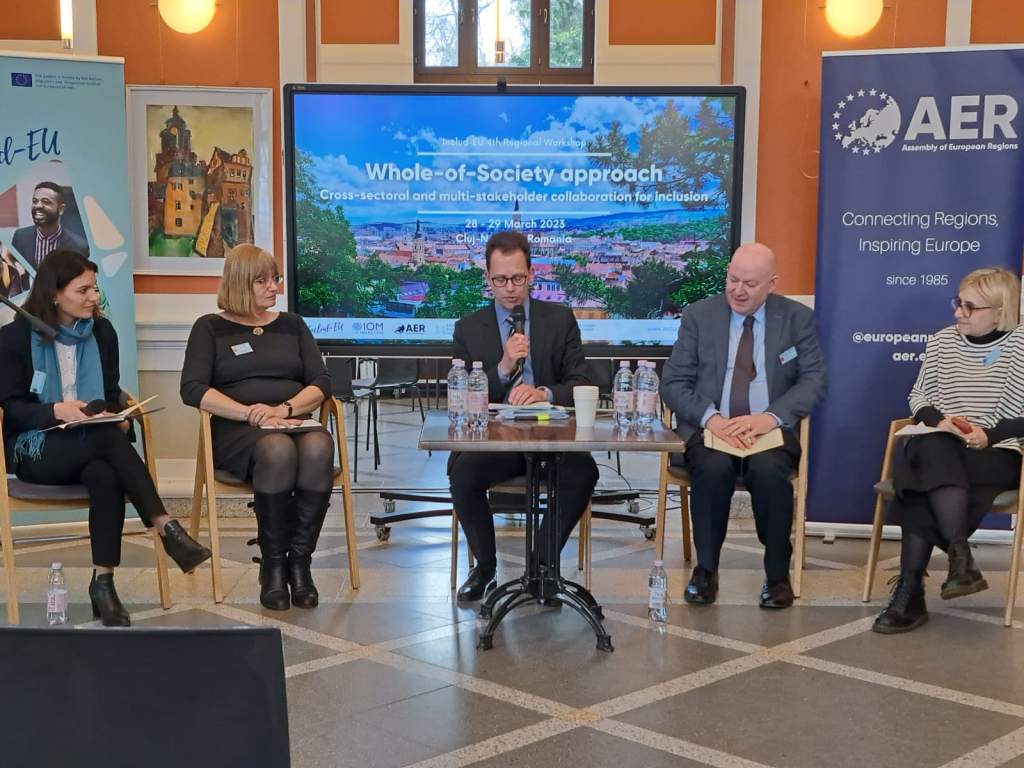
The Includ-EU Workshop “Whole-of-Society Approach: Cross-sectoral and Multistakeholder collaboration for inclusion” in Cluj-Napoca gathered around 70 representatives from the Netherlands, France, Spain, Belgium, Ireland, Greece, Italy, Slovenia, Romania to explore shared challenges, enabling factors for change, and the transferability of experiences. It was also an opportunity for the AER to reconnect with its Romanian members and hear about current stakes.

Includ-EU: learn, build, share… repeat

Includ-EU is an EU-funded project which facilitates capacity building and mutual learning. It also supports the implementation of actions that impact local and regional stakeholders directly, such as:

  • psycho-social mentoring between young girls migrating alone and female university students in Catalonia
  • innovative social housing solutions in Tuscany
  • the implementation of inclusive health services in Crete
  • digital skills, practical knowledge and language programme in Jesenice
  • comprehensive early-stage integration orientation in Tilburg

Through these different activities the Includ-EU project fosters capacity development, exchange and engagement for enhanced social cohesion in Europe. More information on the different pilots can be found on the Includ-EU website.

A need for better information and support

The integration process connects a wide range of practicalities as well as both compulsory and optional administrative procedures in sectors as diverse as health, education, housing, work. Failure to comply with procedures can have dramatic impacts on individuals and families. At the same time, it is often difficult for users to understand how the different procedures connect, which are the most urgent or obligatory ones, and where to find the relevant information.

On the side of administrations or non-governmental organisations, understanding the circumstances and needs of migrants to provide adequate services can prove a daunting exercise. This leads to considerable frustration, both for users and for organisations involved in the integration process.

The one-stop shop model

In Cluj-Napoca, the one-stop shop for migrants emerged as a response to this need for better, more complete and clearer information, expressed both by migrants and authorities. One-stop shops are services designed following a holistic approach: concentrating services in one location can help newcomers understand what services are on offer and improve collaboration between providers.

However, this approach needs to be tailored to the specific context and be interactive. Roadblocks to implementing genuine one-stop shops vary, from different levels of government not seeing eye-to-eye on migration and integration to a lack of funding and limited pre-existing partnerships between very different institutional stakeholders (for example, the police and NGOs). This model may therefore be complicated to implement for cities with a relatively nascent integration infrastructure.[1]

The Includ-EU workshop was an opportunity to deepen and discuss the one-stop shop model and visit the Cluj-Napoca one-stop shop. Participants heard from Emilia Alina Botezan, Head of International Affairs and Foreign Investment Department, Cluj-Napoca City Hall, about the vision and services it aims to deploy, as well as to hear from other authorities how they have been implementing the model, in particular Milan and its WISH-MI wellbeing integrated system, presented by Emanuela Losito from the Milan Municipality.

Cross-sectoral collaboration: the role of local and regional authorities

During the first roundtable discussion, moderated by AER Secretary General Christian Spahr, speakers from the national, regional and local levels presented examples of how they are facilitating cross-sectoral collaboration to better address needs, and iterate in unforeseen circumstances. Recent examples thereof are the COVID-19 pandemic and the war in Ukraine, both of which led to urgent and pressing needs in complex situations, where social infrastructures were both challenged and re-organised thanks to cross-sectoral collaboration. Examples shared in the roundtable included multistakeholder collaborations facilitated from the national level, for instance in Romania or in Slovenia, as well as examples from the regional level from Maramures (RO) and Mayo (IE) and the local level, with the experience from the Milan Municipality (IT). In such contexts, authorities appear more and more to be facilitators and supporters of collaborations, rather than purely top-down organisers.

This implies a change in governance, as well as reflections on resilience and the capacity of systems to learn from what they developed during a crisis. As the knowledge transfer discussions revealed, it may be particularly difficult to address pressing needs, adapt to reality, and develop systems and practices of collaboration that are both resilient and adaptive.

Peer-learning to accelerate change

In complex and changing circumstances, exchanging with peers becomes therefore all the more relevant to:

  • recognise commonalities
  • discuss shared challenges
  • examine ways in which these are being addressed in different regions

The Includ-EU workshop was designed in a way to create a special experience and deepen the connection between participants, be it within the consortium, between project partners and invited experts, or between participants from the same country.

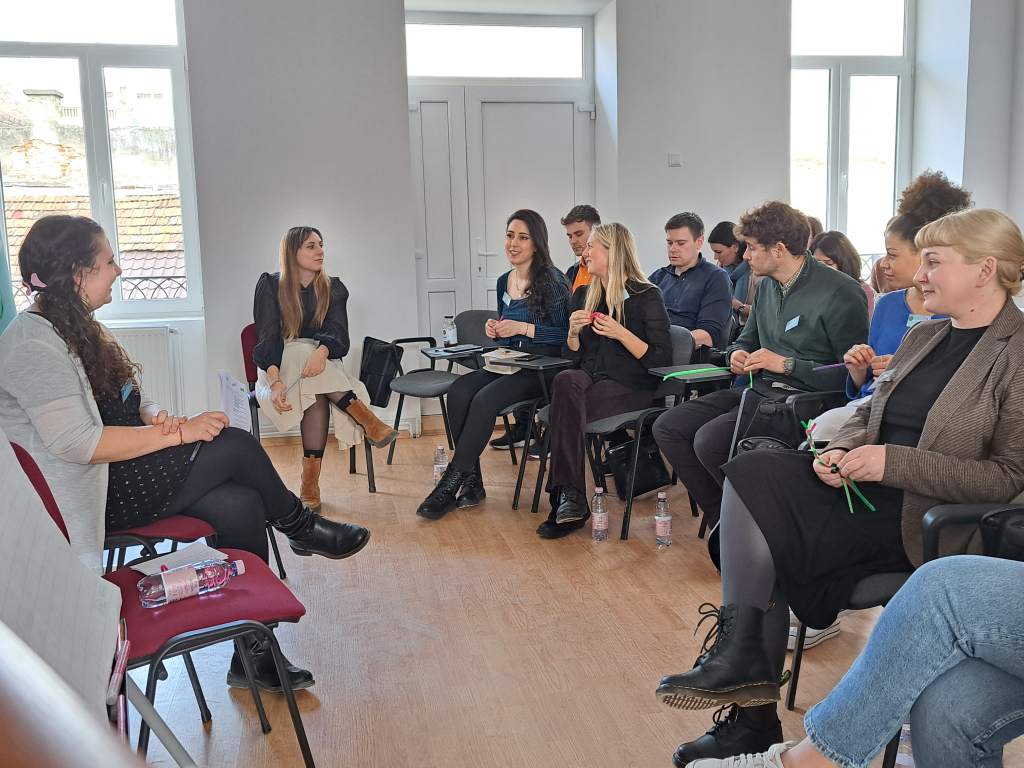
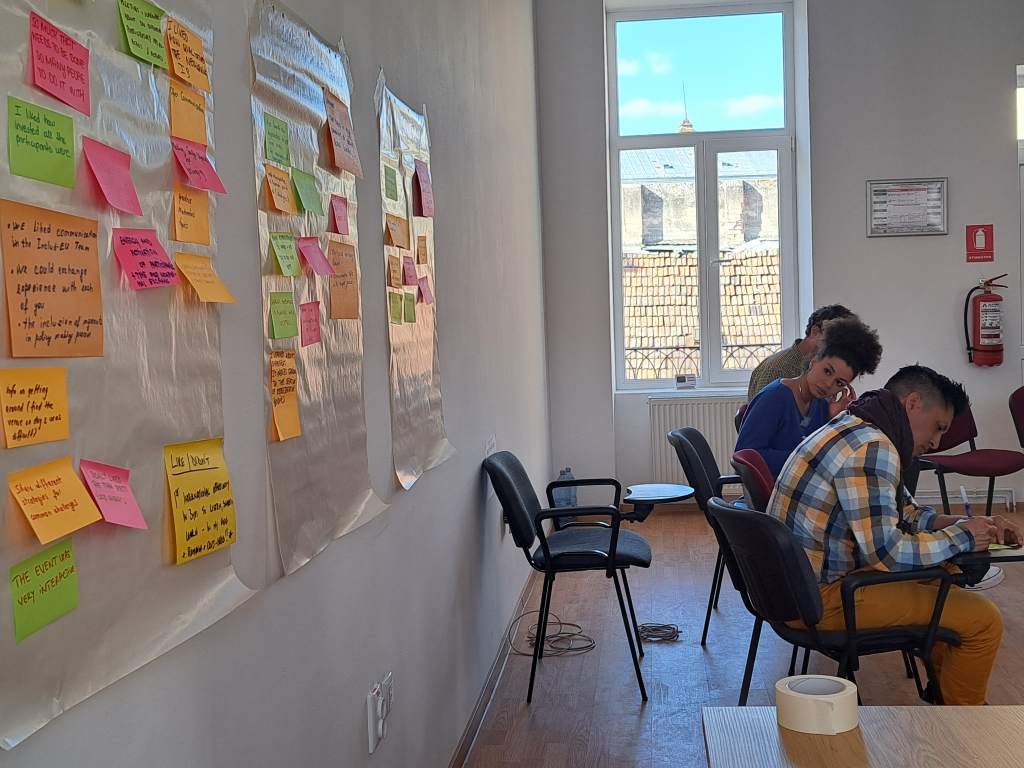
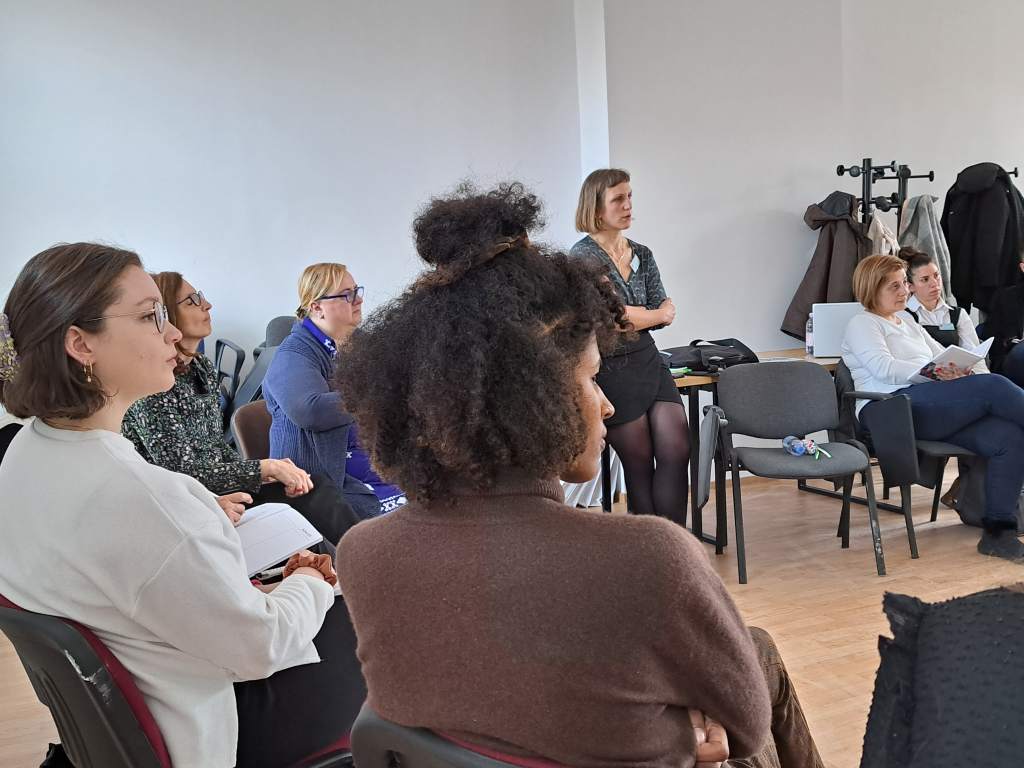
By creating different spaces for smaller group discussions, and encouraging the sharing of experiences including successes, mistakes, or former gaps in understanding, this workshop facilitated the transfer of practices and ideas, generated new knowledge and further consolidated the informal network of peers of regions and local authorities which the Includ-EU project developed.

Effective policymaking involves listening better

The Includ-EU workshop in Cluj-Napoca specifically aimed to facilitate mutual learning around effective multistakeholder collaboration and civic participation. Active civic participation is one of the pillars of the intercultural approach as laid down by the Council of Europe’s ICC Programme:

active citizenship and participation occur when stakeholders (all citizens, including foreign residents where appropriate) have the right, the means, the space, the opportunity and the support to freely express their opinions and influence decision- making on matters that affect them. In some situations, participation may mean those who are directly affected taking the lead and driving the process. Intercultural participation requires an equal and respectful basis, in which everyone feels heard, and involves tackling obstacles that may hinder certain stakeholders’ active participation.

Intercultural Glossary, Intercultural Cities Background documents

Effective multistakeholder collaboration and participation therefore include:

  • identifying which stakeholders are missing in a conversation
  • designing processes to include more diverse voices in policymaking,
  • generating interest in participation,
  • being clear about impact and objectives,
  • revising processes
  • having a reflective practice

Active participation of migrants in policy-making: the role of authorities

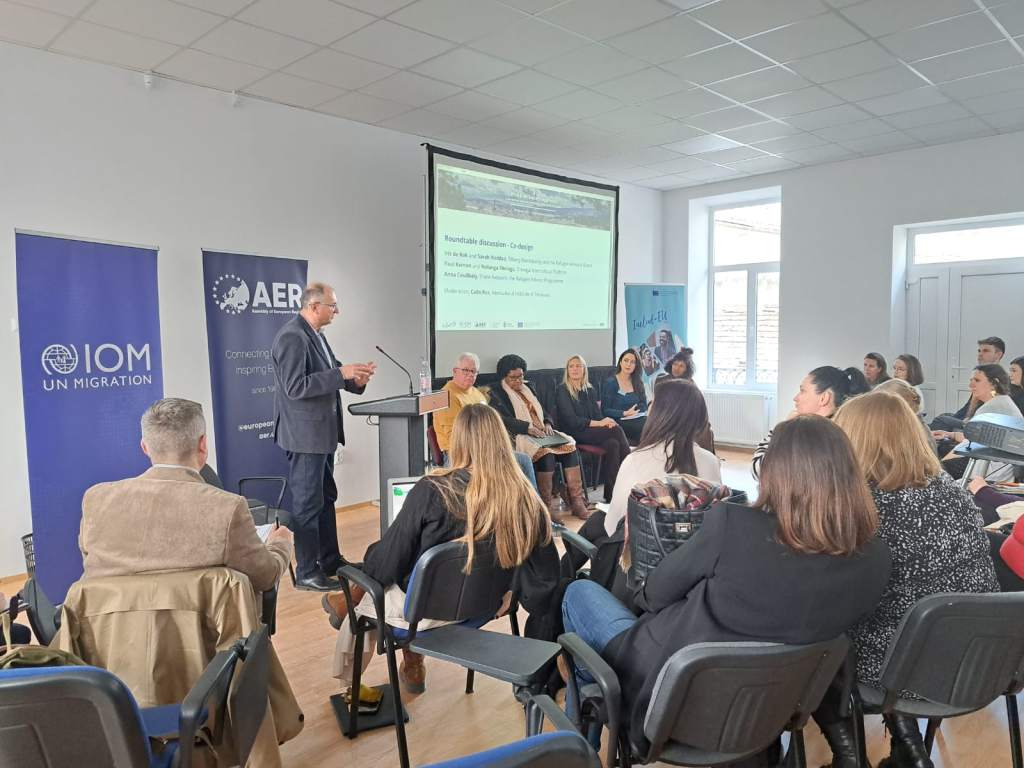
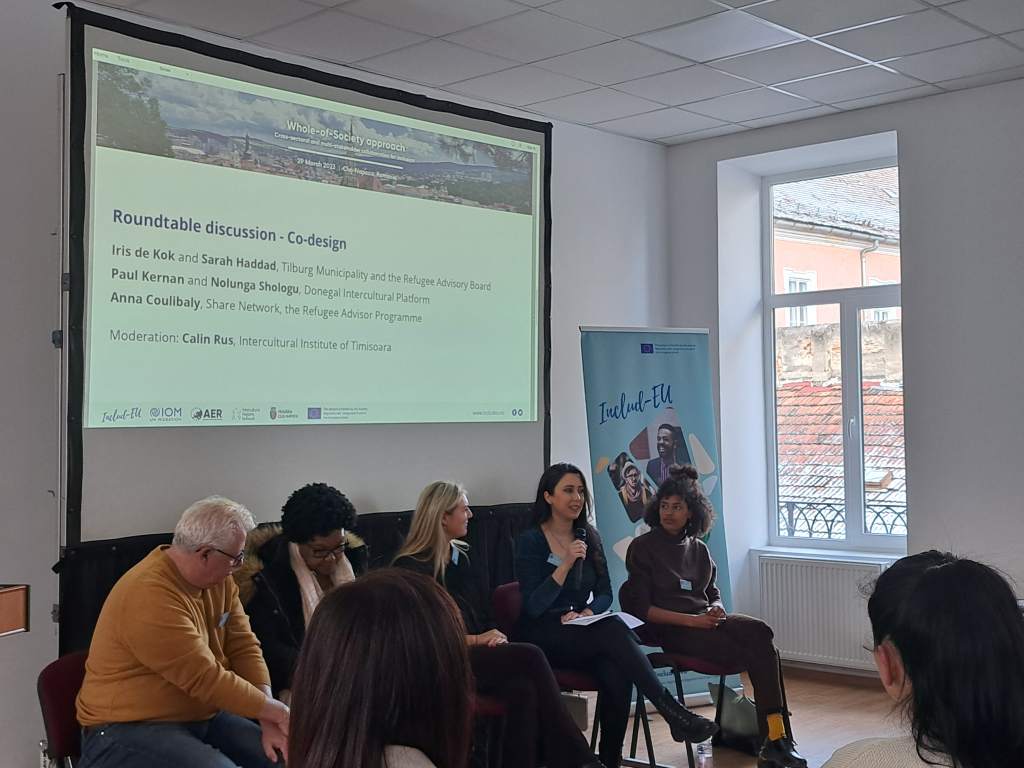
To learn about practices, which support the active participation of people with a migratory background, experts from different regions and organisations, discussed in a panel facilitated by Calin Rus, Director of the Intercultural Institute of Timisoara

The roundtable specifically provided insights into the functioning, achievements, evolution and challenges of:

  • The Tilburg Refugee Advisory Board: Iris de Kok, representing the Tilburg Municipality, and Sarah Haddad from the Refugee advisory board shared how this Board was created, what its purpose is and how it is continuously improved to increase impact.
    • Learning point: test before having a perfect proposal, then incorporate feedback loops to improve processes, capacity of stakeholders, outputs
  • The Donegal Intercultural Platform: Paul Kernan Coordinator, and Nolunga Shologu, Community Worker presented how the Platform is collaborating with Donegal County Council to amplify the voice of minorities and people with a migratory background, fight racism, and support interculturalism
    • Learning point: Community activities, safe spaces are a lever of civic participation. Reflexivity is key.
  • The Refugee Advisor Programme: Anna Coulibaly, representing ICMC Europe/ The Share Network explained how this programme provides an international platform for refugees to share and learn from each other, inform the development & implementation of community sponsorship and engage in joint advocacy actions at EU-level to support safe pathways to Europe.
    • Learning point: connecting local and regional initiatives across Europe makes it possible to facilitate an impactful contribution of refugees to the design and implementation of programmes as well as inform EU policymaking.

Discovering & understanding good practices

To stimulate peer learning, the Includ-EU project features several study visits as well as in-depth discussions around regional and local practices. The workshop in Cluj-Napoca therefore featured

  • A study visit to the Cluj-Napoca Social Directorate, to learn about policies and measures in place, as well as future actions and the potential for international collaboration through projects, which is seen as a tool for leapfrogging in the field of public services
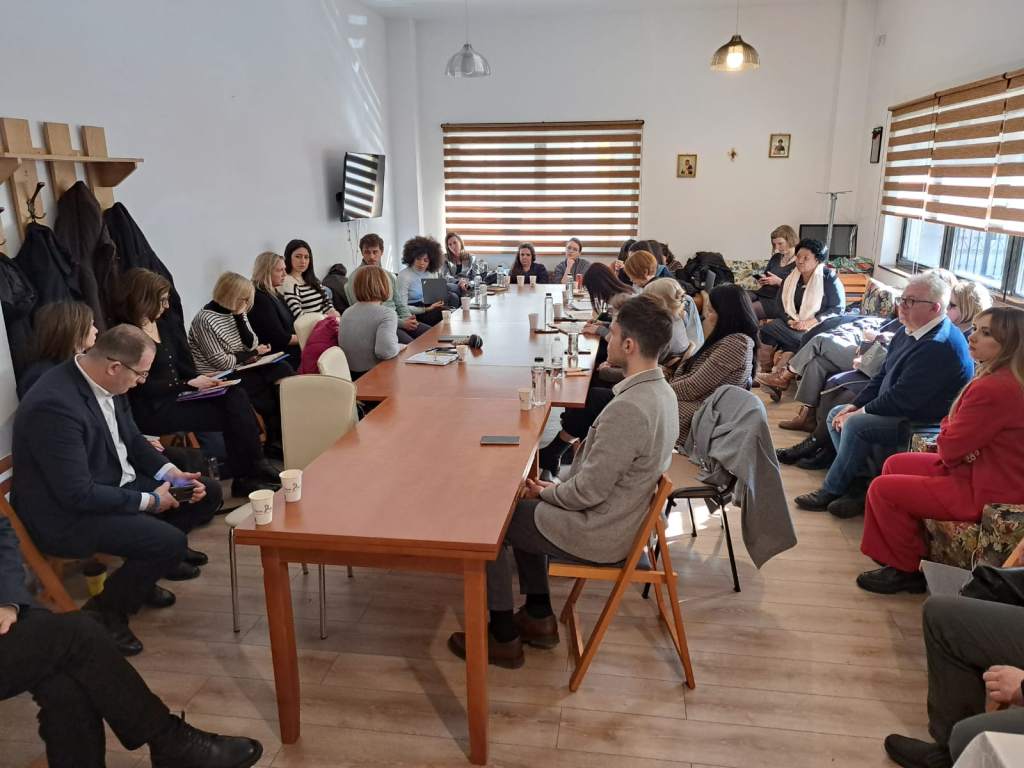
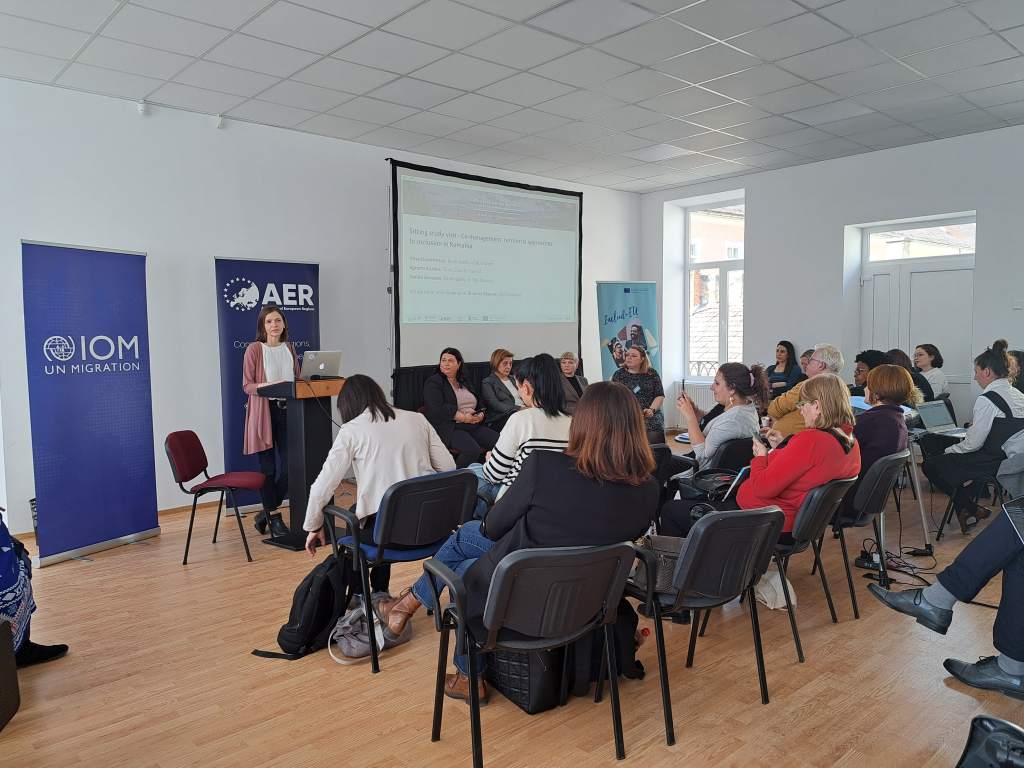
  • A “sitting study visit” at the Cluj Napoca One-Stop Shop, where Simona Boanca, Agneta Kardos, Irina Dumitrescu and Emilia Botezan shared examples from IOM Romania, Timis County Council and the Municipalities of Bucharest and Cluj-Napoca respectively. This was also an opportunity to hear about the work Timis County Council is implementing via the EU-Belong project on intercultural integration

Next steps

While the Includ-EU consortium is still implementing capacity-building and mutual-learning activities (see news here), it is also working on the sustainability of what the project achieved. In particular, a coaching session will be facilitated in June to help the consortium maintain, nurture, and benefit from what they jointly created.

Save the date!

The Includ-EU final event will take place on 6-7 September in Brussels. It will be an opportunity to showcase the project’s achievements, create political momentum with high-level representatives of EU institutions and politicians from different levels of governance, discover yet other good practices, and organise future collaborations. The event will be open to all stakeholders but places are limited.


[1] Patuzzi, Liam. 2020. European Cities on the Front Line: New and emerging governance models for migrant inclusion. Brussels and Geneva: Migration Policy Institute Europe and International Organization for Migration.

Follow AER!
Facebooktwitterlinkedinrss

#HotlineCohesion – European Solidarity Corps: the difference that matters.

30 March, 2023 By Barbara Polin

Local, but European. Practical, but inspiring. #HotlineCohesion brings you the most interesting youth opportunities linked to EU Cohesion Policy. 

Opportunities for youth employment and green transition offered by Cohesion Policy require appropriate visibility, especially amongst the youth. Widespread information makes sure that opportunities reach their target, and that the future is shaped to the needs of those who will live in it. 
Every week the AER will publish its series #HOTLINECOHESION with information concerning new funding opportunities and participatory processes open to youth in your regions!

A Union of Solidarity

The European Solidarity Corps for Youth (ESC4) aggregates solidarity from all Europe, bringing it where it matters the most. From social inclusion to environmental protection to humanitarian aid, the European Solidarity Corps creates a Union of solidarity, project by project, and they make it reach the most vulnerable.

Cross-Border Volunteering and Projects for the Most Vulnerable

The European Solidarity Corps offers volunteering and project opportunities for young people looking for professional experience with social impact on vulnerable communities. As European platform, it offers the opportunity for associations and young candidates to post their profiles, present their aims and discover if there is a match.

In 2023, there are two main types of opportunities for candidates:

  • Volunteering: candidates spend between 2 and 12 months in a hosting organisation which provides food and accommodation. Activities usually take place in a country different than the one of origin of candidates- ‘cross-border volunteering‘- but it is also possible to do ‘in-country’. Volunteers receive pocket money for daily expenses. It is possible to join as individuals or in teams: the latter option is shorter (maximum 2 months) and it is thought for people with less opportunities.
  • Volunteering in Humanitarian Aid: this type of volunteering focuses on providing relief to communities stricken by humanitarian disasters or to ensure their preparedness. Volunteers will be trained by at least two organisations and supported by a third one located in a third country (Iceland, Liechtenstein, Turkey and Republic of North Macedonia)
  • Solidarity Projects: young people can team up and submit a project proposal for funding (500 EUR per month max). The proposal should address local, regional or national issues that affect the local community and are addressed by EU priorities such as inclusion, climate change, democratic engagement, citizenship or gender equality.

Other opportunities such as jobs and traineeship may be possible during 2023, but they will be discontinued as the year ends.

Eligibility

Young people

  • European Solidarity Corps volunteering activities are open to 18-30 year old people who reside in programme and partner countries. The age limit is 35 for those involved in Humanitarian Aid Activities.

Organisations

To be eligible for funding through the European Solidarity Corps, organisations need to be aiming to the greater social good of the communities where they are working. Fields of work may include:

  • encouraging democratic participation
  • fighting social exclusion
  • protecting nature
  • promoting health and wellbeing
  • promoting education and training
  • working with migrant communities. 
  • strengthening the capacity and resilience of vulnerable or disaster-affected communities in those regions of third countries in which humanitarian aid activities and operations take place
  • reinforce disaster preparedness and disaster risk reduction in these regions.

See you next week at #HotlineCohesion!

The Youthopia Project is co-funded by the Directorate General for Regional and Urban policy (DG REGIO) of the European Commission.

Follow AER!
Facebooktwitterlinkedinrss

10 years of Eurodyssey- Discover the stories of Cinta, trainee in 2022, and her tutor Gaëlle, trainee in 2012 

2 March, 2023 By Eurodyssey

The Eurodyssey programme has benefited many young people since 1985, not only by providing quality traineeship opportunities, but also by creating a supportive environment and fostering sense of belonging, where young people are empowered and supported. 

Our two interviewees, Gaëlle and Cinta, represent Eurodyssey’s past and present, and their testimonies are interlinked: Gaëlle was a Eurodyssey trainee in the Valencian Community back in 2012, and is now Cinta’s tutor, working together for the Surfrider Foundation in Brussels. 

Full interview with Cinta & Gaëlle

What is the Surfrider Foundation? 

The Surfrider Foundation is an environmental organisation that has been fighting to protect the world’s oceans for more than 30 years. It is a grassroots community that brings together people from very different backgrounds, including volunteers who take action to protect the ocean in different parts of Europe. Their most important battles are associated with marine litter, plastic pollution, work on water quality and health, and climate change and coastal management. 

Cinta’s Eurodyssey traineeship in Brussels 

“I am expecting that Eurodyssey gives me enough knowledge and experience to be able to start my professional career (..), and I don’t think it will disappoint me.” 

Cinta is a Catalan trainee who decided to apply for Eurodyssey after finishing her postgraduate degree in 2022. She came across Eurodyssey after searching for opportunities to work in Brussels. 

“I wanted to come to Brussels and live the Brussels bubble experience, see how the European institutions work, more from the inside”. 

For Cinta, applying for Eurodyssey was ideal: 

“It’s been a good opportunity to put into practice all the knowledge that I’ve been gaining in my postgraduate studies, and it was actually what I was looking for with a traineeship, so it was kind of a perfect match when I saw the offer.” 

Not only that, she was also impressed to find how easy the whole process was: 

“I just had to do the interview with Eurodyssey and then with the Surfrider Foundation, and when everything was ok, it was literally buying a ticket, coming here and I had two addresses: one for work and one for the apartment. Everything was done! I didn’t have to think about looking for an apartment, paying for expenses or any kind of things, and everything works very easily”. 

By the end of her traineeship, Cinta expects to have enough knowledge and experience to start her professional career and stay in Brussels. A few weeks after the interview, Cinta was informed that she was going to be offered a contract at the Surfrider Foundation.

Gaëlle: a Eurodyssey tutor, and former trainee

“With Eurodyssey, you gain experience and skills, and that is what really makes a difference when you apply for a job.” 

Gaëlle is from the Rhône-Alpes region of France. In 2012, she applied to a Eurodyssey traineeship in the Valencian Community, in Spain. At the time, she found it hard for youngsters to find their first job:  

“When I was in Eurodyssey, the situation was also very difficult for youngsters, you apply for a first job and they ask you to master three languages, to have five year experience and being able to do plenty of things, so it is high competition and it’s very hard to enter and to have a first foot in the professional world, so Eurodyssey helped me a lot.”  

Eurodyssey gave Gaëlle a unique opportunity to enhance her skills and get a hands-on experience, while being abroad, discovering another culture, and improving her Spanish. 

After her traineeship in an international environment, she got hired at the Surfrider Foundation, and believes her Eurodyssey experience played a crucial role in it: 

“Eurodyssey was very decisive and helped me also being here today […] working with the institutions and trying to have more actions done on environmental issues”.  

Eurodyssey is a renowned programme with a reputation for finding highly motivated youngsters 

When Gaëlle needed to find a trainee to help her, she did not think twice and looked for a Eurodyssey trainee:  

“I needed support to carry out an important campaign, I needed support from someone with a different background, so not a French person for example, because this is a European campaign and also because we have some key countries we target.” 

With Eurodyssey, she was confident that the process would be fast and straightforward and that she would find a suitable applicant to join her team: 

“I participated in Eurodyssey, so I knew the programme was excellent. From my experience in Valencia, we were super motivated, so I knew I was going to have an excellent applicant… and I wasn’t disappointed!” 

From previous experiences, Gaëlle knew that Eurodyssey was able to guide and support young people who had no or little professional experience. Now, 10 years later, Gaëlle has not forgotten how important Eurodyssey was for her, and she therefore became a Eurodyssey tutor: 

“I am so grateful for the programme and for having benefited from Eurodyssey, so it’s kind of giving my part (being a Eurodyssey tutor) and saying thanks to the programme as well”. 

Ten years apart, a common conclusion: Eurodyssey brings concrete benefits to its participants 

Ten years apart, it might be expected that Gaëlle and Cinta’s experiences would show certain differences, but they both coincide in stating that most of their time as Eurodyssey trainees was very well spent, and that the programme benefited them, although they participated in different cities and at different times. 

Eurodyssey provides support and fosters social inclusion for youngsters 

One point that does not seem to have varied is the simplicity of enrolling in the programme. As Gaëlle said: “I only had to apply, and it was so easy, and so well organised!”. She particularly remembers her first month in Valencia, calling her friends and parents and telling them: “I don’t understand this. They are giving me free Spanish lessons, I am going to start an internship, and everything is well prepared and it’s so easy!”. 

The main goal of the programme is to help young trainees to get (first) professional experience, adapt to working life, undergo a high-quality traineeship, while providing them with a stipend to cover their living costs.  

Gaëlle also flagged that Eurodyssey would benefit from being known more broadly, by a more diverse range of young people: 

“I also feel privileged because, you know, my parents were always behind me. But I think that there are a lot of people who have fewer opportunities and don’t know about Eurodyssey, and I think it’s a pity”. 

By stating that, Gaëlle actually addressed one of the main historical reasons for the creation of Eurodyssey. Edgar Faure, Founding President of both Eurodyssey and the Assembly of European Regions in 1985, was driven to establish this programme because: 

“He didn’t want that only children from privileged social and intellectual backgrounds could have the opportunity to discover Europe. He wished for working-class children, trained for manual jobs, to benefit from the opportunity too.” 

Source: “Le Tour de la France par deux enfants avait inspiré Edgar Faure”, L’Est Républicain, 15 April 2019. 

Eurodyssey connects youngsters to the regional and cultural diversity that Europe has to offer, without them having to worry about other problems that could potentially affect their training period. 

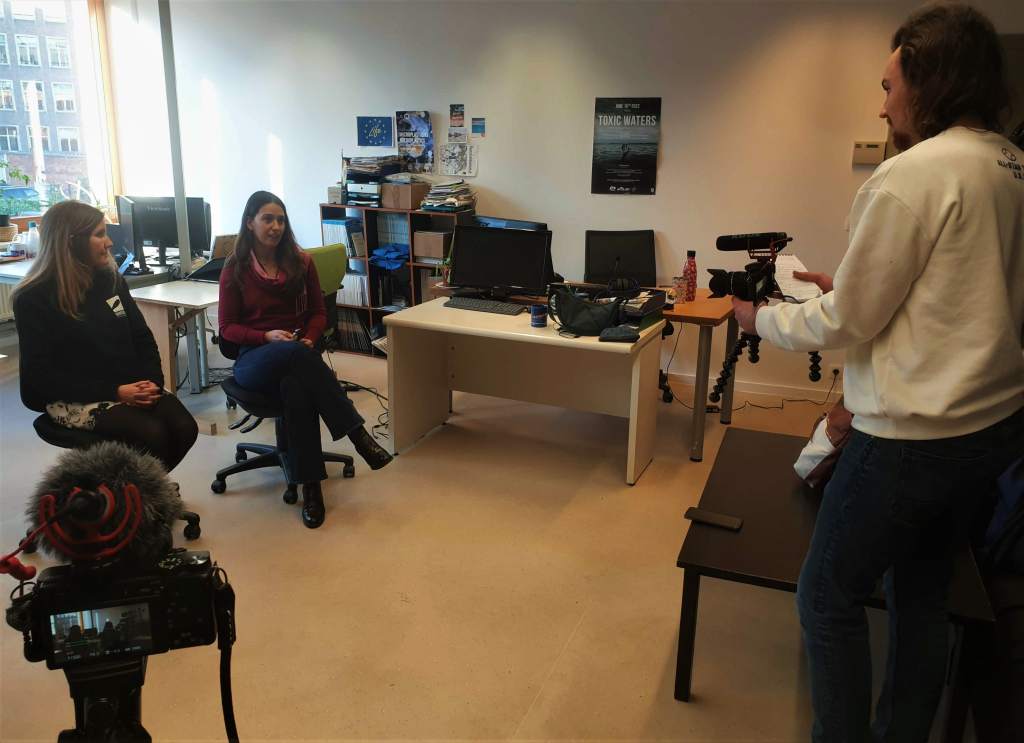
AER’s Eurodyssey trainee Erik interviewing Gaëlle and Cinta at the Surfrider Foundation Europe.

Eurodyssey faces a visibility challenge

At a time when people can search for almost anything on the Internet and can connect with people easily, Eurodyssey seems to struggle to find its way into web searches. A lot of young people are not aware about the programme and about this unique opportunity that the regions are providing to their youth. 

Gaëlle observed: “I am surprised it isn’t that well-known. I would encourage local authorities to spread the word and to share more information about the Eurodyssey programme”.  

From her experience, most trainees discovered Eurodyssey through youth centres or by word of mouth, hearing about it from other young people who had participated in the programme. In fact, finding out about Eurodyssey without previous knowledge of the programme can be quite challenging: 

“Why didn’t I know about Eurodyssey before? It was not until I decided that I wanted to come to Brussels that I found this programme and what it offers. I was surprised that, even at university, no-one used to talk about it”. 

It appears that students and young graduates rarely hear about Eurodyssey in their universities, educational and (vocational) training institutions. Increasing Eurodyssey’s visibility in such institutions would support these young people into finding a paid, quality traineeship, within a programme which proved to increase their skills and employability. 

Hearing this feedback encouraged the Eurodyssey team at the AER to upgrade its social media strategy, for information about the programme to reach out to more (diverse) young people, and to support the communication efforts already conducted by the Eurodyssey participating regions. The regions often communicate about Eurodyssey through their employment agencies and youth centres, in the local press and radio, in their social media and websites, and by advertising the programme at youth mobility and employment fairs.  

As the saying goes: “If the mountain doesn’t come to Mohammed, Mohammed will go to the mountain”. So, if its target audience sometimes struggles to find Eurodyssey, Eurodyssey and its regions will reach out to them.

It’s Bluedy Time Europe 

This interview was made possible thanks to the Surfrider Foundation. At the time of the interview, they were working on a consultation campaign, “It’s Bluedy time, Europe!”: 

“It is a campaign aimed at putting ocean protection at the centre of the agenda, ahead of the European elections of 2024. There is a blue coalition of NGOs behind it. We are giving the opportunity to European citizens to raise their voice on ocean issues, and to participate in a consultation, called it’s Bluedy Time Europe! The idea is for European citizens participate in this consultation and give their ideas and thoughts about what the EU should be doing on these issues”. 

Check out the campaign HERE. 

Follow AER!
Facebooktwitterlinkedinrss

Inclusive Housing: Why And How?

10 June, 2022 By Johanna Pacevicius

Access to adequate and affordable housing is a key determinant of successful integration. Housing conditions have a strong impact on employment and education opportunities and on the interactions between migrants and host communities. Poor housing conditions and segregation can exacerbate divisions, which undermine social cohesion. Inclusive housing is therefore essential for thriving neighbourghoods.

The need for cross-sectoral approaches

In the framework of the Includ-EU project AER organised a webinar on cross-sectoral approaches to inclusive housing. The 4th Includ-EU webinar looked at practices that promote the benefits of intercultural identities of neighbourhoods. Encouraging social interactions via holistic housing policies and reinventing public spaces is of utmost importance to foster integration.

Setting the framework

Rossella Celmi, Project Manager at the IOM Coordination Office for the Mediterranean, opened the webinar by reminding participants that

Beyond its strictly material aspect, upholding the right to housing is considered crucial for human dignity and personal development, as well as a precondition for the enjoyment of other rights

With the war in Ukraine leading to new needs to welcome migrants, mainly women with children, Rossella Celmi shared an overview of the current situation, both in Ukraine, with high numbers of internally displaced persons (for up-to-date numbers: see this UNHCR Ukraine webpage), and in neighboring countries, as well as the IOM response in different countries (see Rossella Celmi‘s presentation here)

Looking at housing through an intercultural lens

Ivana D’Alessandro, Head of the Intercultural cities Unit, Council of Europe started off with the basic principles of intercultural cities: Integration is not only about rights, it is about

  • Promoting real equality
  • Building on the diversity advantage to create a “WE” culture based on shared values
  • Fostering Interaction within and between

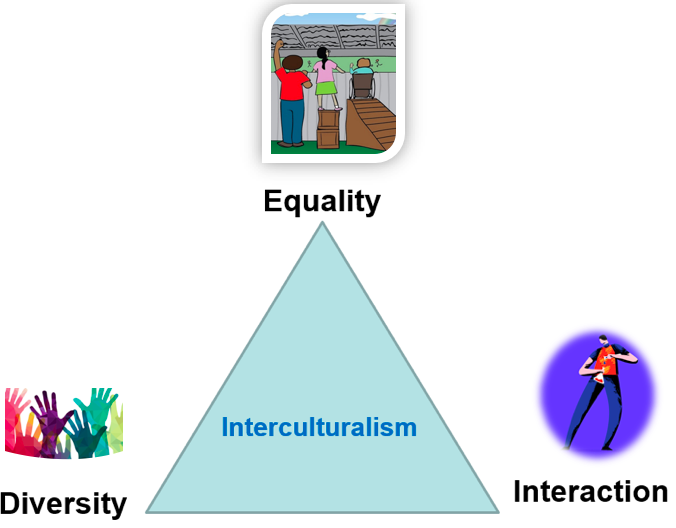
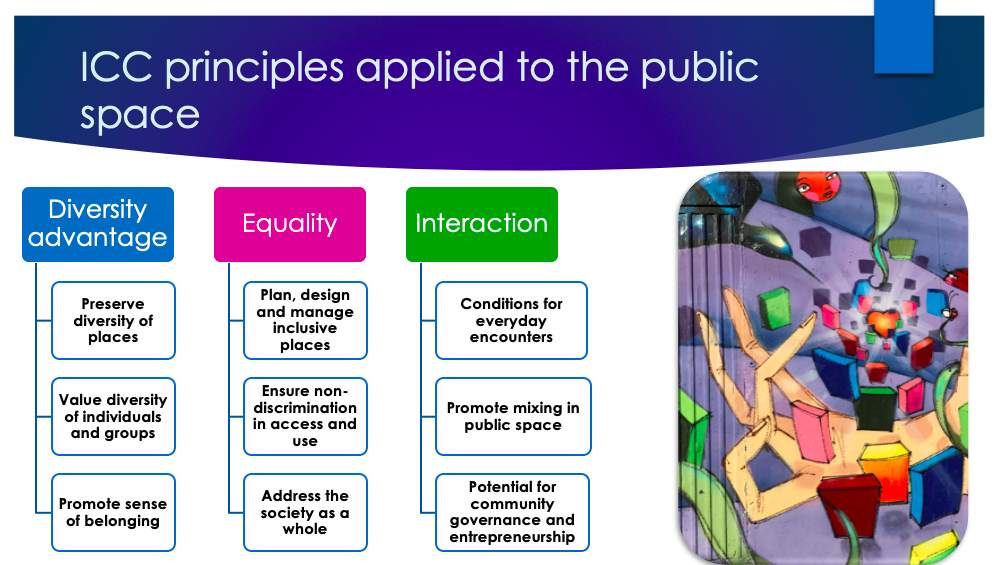
The intercultural model brings together the principles of Diversity, Equality and Interaction.

Intercultural Model by Carlos Jimenez

These three principles lead to a specific role for public space: social trust indeed builds across diversities in the public space. Urban planning is therefore fundamental for authorities that want to develop intercultural cities and regions. To harness the diversity advantage.

Gentrification, a process through which lower income residents are displaced from a neighbourhood due to an influx of new residents, resulting in a change of character of the neighbourhood, results in displacement, and change in social and urban character. Gentrification therefore has negative impacts on all three dimensions of interculturality: equality, diversity, and interaction. Ivana D’Alessandro cited Tom Slater Professor of Urban Geography, at the University of Edinburgh who calls gentrification “the special expression of economic inequality”.

She shared how the intercultural cities’ principles apply to the public space

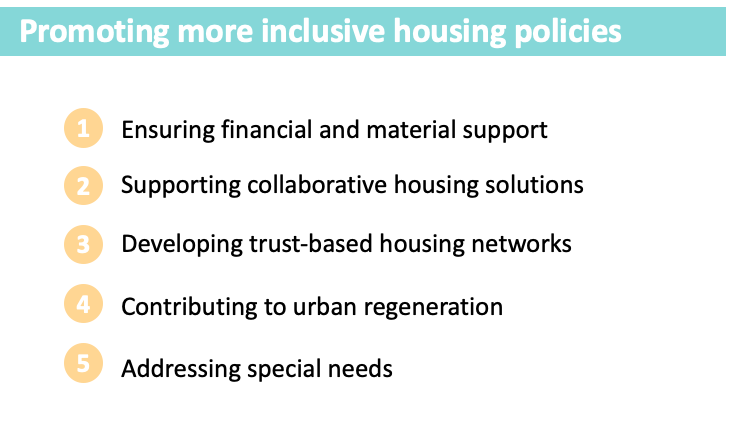
Applying these principles is then reflected in work on the rent gap and affordability, in the prevention of displacement, the strengthening of participatory processes, achieving inclusive public space and the promotion of sustainable tourism… which in turn will have an impact on rent etc. See Ivana D’Alessandro‘s presentation here

Includ-EU briefing on housing

Eleonora Milazzo, PhD, researcher and migration policy consultant at Kings College London shared the findings of the Includ-EU Briefing on Housing, which analysed the housing context for migrants in Greece, Italy, the Netherlands, Romania, Slovenia and Spain. The data lead to a series of recommendations:

The briefing also describes a series of local and regional examples in the 6 countries, which illustrate how these recommendations can be implemented.

In Includ-EU, sharing of examples is seen as an essential tool to improve policies and practices. Eleonora Milazzo‘s presentation is available here, and provides for instance details on

  • how the “A New House” initiative in Cluj-Napoca provides material and medical assistance to vulnerable families and individuals
  • how Lucca’s House Agency in Tuscany matches supply and demand on the housing market
  • how Slovenia provides additional housing support for beneficiaries of international protection
  • and many other examples!

Unleash the potential of migration

Migration is a phenomenon that will remain and is likely to amplify in the future. In this context, rather than “solving” a “migration challenge”, sustainable policies and practices are focused on creating meaningful, equal to equal interactions between newcomers and local citizens. This in turn is deemed to enable cities and regions to benefit from the entrepreneurial spirit, variety of skills and creativity associated with cultural diversity.

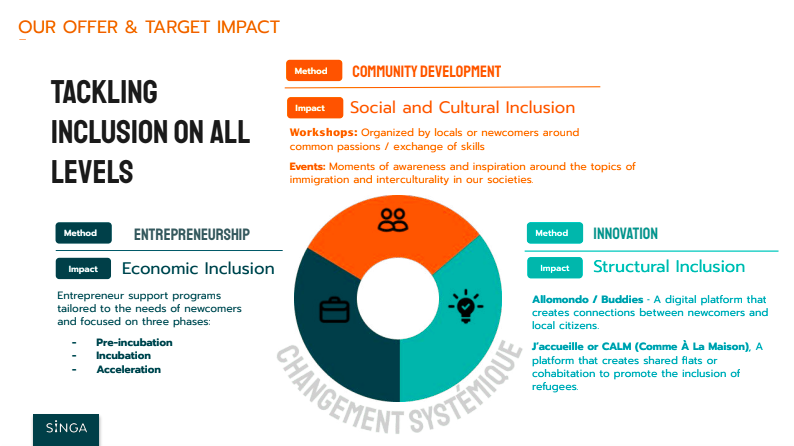
Fatemeh Jailani, COO of SINGA Global, shared insights on SINGA’s “3 weapons of mass cohesion”, which are community organising, entrepreneurship and innovation.

SINGA’s tried and tested citizens hosting methodology fits in the “innovation section”, and is a methodology that ensures a healthy, equal relationship between newcomers and local citizens.

The 7 steps methodology

This methodology ensures the relationship is mutually beneficial and not rooted in a saviour-victim pattern.

  • Registration: aspiring hosts inform about motivation & space available
  • Informational meeting: to explain the programme, methods of intercultural co-housing, check motivation
  • Connection: based on location, motivation & expectations, areas of interest
  • First meeting: in neutral place. Potentially a second meeting to visit
  • Decision making: if both sides agree, then they have access to tools such as agreement, charter of cohabitation, intercultural training
  • Follow-up: the ‘J’accueille’ team will check on cohabiations regularly.
  • Facilitate communication: whenever there is a communication issue hosts and hostees can contact the team. A mediation service is available too.

While in emergency situations, the methodology may seem slow, results show that it is very effective and more sustainable than citizens hosting solutions without knowledgeable support. Safety is indeed a key aspect, both for hosts and hostees.

ANCI Toscana’s new model to tackle temporary housing needs

Additional Resources

Here are some more resources from the Includ-EU project and findings:

  • Video of the webinar on Cross-sectoral approaches to Inclusive Housing
  • Includ-EU Thematic Briefing on Housing
  • Includ-EU website

Videos of the other Includ-EU webinars

  • Webinar on Access to Quality Education and Training- An Intercultural Approach
  • Webinar on Intercultural Regions: Active Participation & Social Inclusion
  • Webinar on Intercultural Regions: Improving Labor Market Inclusion
  • Webinar on Intercultural Regions: Improving Access to Services

Related articles

  • All articles related to the includ-EU webinars and workshops

Avoid FOMO: Follow Us!

If you haven’t yet subscribed to the Includ-EU Newsletter, this is the place to be.

To get regular news about the project, the pilots, resources and upcoming events: follow Includ EU on Twitter @Includ_EU

Follow AER!

Facebooktwitterlinkedinrss

Journey towards the Future of Europe – AER takes part in the Conference on the Future of Europe

9 May, 2022 By AER Communications

Today on Europe Day, the Conference on the Future of Europe ends.

This Conference was a citizen-led series of debates and discussions to enable people from across Europe to share their ideas and help shape our common future. The Conference, as a major pan-European democratic exercise, was the first of its kind and gave European citizens the great opportunity to debate Europe’s challenges and priorities for the years to come. In other words: how to make the Union fit for the 21st century’s next challenges?

The current situation at Europe’s doorstep shows us once again the importance of European cohesion and solidarity between all levels of government. Since 2021, hand-in-hand with other associations and civil society organisations working on the field of youth representation, democracy, and good governance, the AER has endorsed a series of recommendations on the way we envisioned the COFE should take place. According to the EU annual local and regional Eurobarometer: a majority of Europeans in all Member States (58%) think that more influence for regional and local authorities would have a positive impact on the EU’s ability to solve problems. That is why, with the Committee of the Regions and other local and regional associations, the AER has advocated for giving a bigger role to regional representatives at the Conference. As a result, the AER President, Magnus Berntsson, had a seat in the Plenary Sessions of the Conference, and made several contributions within the Working Group on Migration.

In Spring 2022, the Conference reached its conclusions and provided guidelines for Europe’s future. The AER upon the decision of our Vice President on Democracy, Nina Björby, decided to establish a Drafting Group to follow on the work and main outcomes of the COFE and draft a series of recommendations for the future of European regions summarising the main messages from adopted AER position papers. These recommendations have been set around the main policy topics that the Conference has been focusing on, such as:

  • European democracy
  • Climate change
  • Food security & health
  • Digital transformation
  • Migration

AER’s integration in the Conference on the Future of Europe

Despite the disruption caused by the pandemic, the AER has been on the Conference agenda several times since it began, with the overall aim of advocating for a citizen-centred European Union. The journey began on October 2019 when AER joined the Civil Society Organisations Network led by the Union of European Federalists (JEF) as a non-state actor. Together with twelve other Civil Society and NGOs, AER signed a letter of recommendations for the Conference, which was forwarded to the European institutions. In June 2020, and following some meetings and discussions within the network, and in line with the proposal presented by the European Parliament and the European Commission, AER signed a statement wishing the success of this Conference.

At the same time, the AER Secretariat has been monitoring and following the updates on the state of the play of the Conference on the Future of Europe. The AER President has been holding meetings with key representatives from the European institutions that have been leading this process, such as the cabinet of Commissioner Suica, the Croatian Presidency to the Council, and members of the European Parliament. On these occasions, AER has always expressed its support towards a successful Conference and the importance of ensuring the representation and involvement of citizens from all European regions. Having a seat in the plenary sessions of the COFE, together with local association and regional representatives of the Committee of the Regions was a real success for our work on regional and local governance, and allowed us to make recommendations on what we think is important for Europe in the coming years.

Looking Forward—AER’s recommendations for the Conference on the Future of Europe

In Spring 2022, the Conference reached its conclusions and provided guidelines for Europe’s future. Now that the Conference is coming to its end, we can draw the following conclusions. As we bounce back from the pandemic, and in the face of new global challenges, European cooperation at all levels is needed more than ever. There is strong interest in further debate about the future of Europe in the population, for example during election time, but also through initiatives like citizens’ dialogues, etc. These are tools to really put ourselves ‘in the shoes’ of Europeans citizens, and give them a real say in shaping Europe’s political agenda.

Therefore the Assembly of European Regions recommends to:

Promote strong local and regional democracy across Europe

Democracy is a key factor for the promotion of peace and human right. The promotion of good governance is one of AER Political Priorities for 2020-2025. In this regard, AER calls European stakeholders to promote a strong local and regional democracy across Europe. First we are convinced that this requires the participation of all citizens at all levels of governance. Indeed to foster democracy all around Europe, citizens must be educated to counter disinformation, they must be involved regardless of their gender, racial or ethnic background. Local and regional authorities must be involved in the EU structure through the sound application of the principles of subsidiarity, partnership and multi-level governance which are fundamental pillars of European Union.

Engage global efforts to tackle climate change

According to the World Wide Fund for Nature (WFF), we are currently using 74% more than the planet’s ecosystems can regenerate, or the equivalent of the resources that 1.7 planets can produce. Based on this diagnosis, we can say that our mode of production and consumption is not viable for future generations. The theme of sustainable development could not be avoided at the Conference. Although all European countries are concerned by this issue, they do not all approach it in the same way. Decisions are often taken on the basis of national or international interests, but too little on the basis of regional concerns. However, local and regional governments are crucial in accelerating climate action and delivering agreed climate target. The overall goal can only be achieved through their meaningful involvement in the design, implementation and monitoring of climate strategies. EU institution should involve more regional and local governments in the development of territorial just transition plans, in order to build a net-zero economy that is fair for all. To allow this they should provide better funding to local and regional governments under the recovery instruments.

Ensure food security

Food and nutrition security is a focus in AER’s vision for sustainable and inclusive regional development. In this regard, in March 2021 we held a webinar on Innovation and farming that focused on advanced manufacturing solutions in driving sustainable change in the agrifood sector. We believe that regions have an important role in fulfilling EU food challenges since these affect regional development from a variety of angles. Regional authorities have the power to act at different levels in the food system, be it at the level of production, transformation, logistics and transport or distribution and waste management.

Facilitate the digital transition

Cities and regions are the major enablers of digital transformation in Europe, they orchestrate the development of vibrant innovation ecosystems by bringing together local resources and mobilising the participation of stakeholders. As the world becomes increasingly connected, digitalisation is a key differentiator that will allow regions to remain competitive, providing a vital opportunity to prevent depopulation and foster sustainable development and economic growth. Being the world’s second-largest economy, the EU should aim to master the digital challenges while improving regional competitiveness.

Build an inclusive and intercultural Europe

Europe is continent with great diversity and a troubled history. There is no shade of a doubt to the fact that diversity is likely to increase in the years to come, adding to these challenges. The current international situation shows us that peace is never guaranteed, but that it is built through common projects and dialogue.

We believe that our regions are front liners to embrace this diversity, unlock its potential and acknowledge it as a resource for everyone. This is a value AER places at the core of our day-to-day work. For example, our project EU-Belong, aims to improve the socio-economic inclusion and the sense of belonging for migrants through their integration in European regions. With regard to the COFE, to allow us to put forward our main message on diversity, inclusion and equality, President Berntsson set out our priorities in the Plenary Sessions of the Conference in the Working Group on Migration. What came out of these discussions is that migration should take a comprehensive approach. It should always cover respect for human rights, solidarity and equality. The situation in Ukraine was also referenced to show how crucial local and regional authorities are when it comes to protecting and supporting vulnerable refugees. This is why we call on the EU to give regions a real say in migration and integration policies to secure the inclusive Europe and his citizens.

Our final recommendation would be the continuity of the Conference and the establishment of a permanent European consultation structure. Across all the challenges raised about migration, digital transition, climate change, democracy or health, local and regional stakeholders have the power to make an impact. This is why, within the AER, we consider that this Conference should be the precursor of a permanent mechanism of citizen engagement and consultation in the EU. Regional and local authorities must be meaningfully involved in the EU structures of decision-making, especially in view of the post-COVID-19 recovery. In this regard, the Conference on the Future of Europe has been a unique opportunity for regions to advocate for institutional reforms: for enhancing the EU architecture
in a way that it truly delivers on the principles of subsidiarity, partnership and multi-level governance; and for an EU architecture that gives a stronger voice to regional authorities and its citizens by properly engaging them in the EU decision-making process.

Tap the button below to read the AER recommendations for the future of European regions:

AER Recommendations

Follow AER!
Facebooktwitterlinkedinrss

Autumn Digest 2021: Funding Opportunities for EU and Non-EU Member Regions

10 November, 2021 By Mirthe Vogd

Are you in pursuit of some new EU project funding opportunities? Here are some openings worth looking into!

In line with the new Multiannual Financial Framework programme 2021-2027 which aims for more inclusivity and to support green and digital transitions, the AER Project Unit has mapped EU funding opportunities and calls for project proposals that are linked to green issues, digitalisation, and democracy & citizens participation.

Green Transition

Climate change and environmental degradation are an existential threat to Europe and the world. Among the 6 priorities the European Commission proposed for the years 2019-2024 Climate Action is at their top concern. According to the Commission, “EU policy protects the environment and seeks to minimise risks to climate, human health and biodiversity. The European Green Deal aims to make Europe the world’s first climate-neutral continent, in part by developing cleaner sources of energy and green technologies.”

Recovery of coastal and maritime tourism in the Western Mediterranean
Programme: European Maritime, Fisheries and Aquaculture Fund (EMFAF)
Deadline: 12 January 2022
Eligibility: EU and eligible non-EU member states
In line with the priorities of the European Commission, this call topic aims to strengthen the competitiveness and sustainability of the coastal and maritime tourism ecosystem in the Western Mediterranean, as part of a smart and resilient blue economy. Moreover, it aims at preserving the marine and coastal environment and marine cultural heritage and contributing to the attractiveness of coastal areas as a unique asset for competitiveness in the Mediterranean. The action particularly looks at supporting tourism stakeholders to tap into the growing ecotourism niche tourism market and boosting innovation and digitalisation in the tourism sector, thus increasing its contribution to economic growth and jobs in the Mediterranean.

Local Green Deals
Programme: Single Market Programme (SMP)
Deadline: 24 November 2021
Eligibility: EU and eligible non-EU member states
The new The Single Market Programme (SMP) was adopted on 28 April 2021 and provides an integrated package to support and strengthen the governance and functioning of the Single Market. 

The call within this programme contributes to the European Green Deal objectives of climate-neutrality, sustainability, prosperity and inclusiveness and in parallel to develop more sustainable regional or local strategies and resilient business models. The general objective of this topic is to provide support to SMEs, regional and local economic operators to lead the twin green and digital transition and implement actions aiming to direct the local economy towards a sustainable and inclusive pathway, create new jobs, mitigate the socio-economic impact of the COVID-19 crisis and accelerate a new, green and fairer recovery. To achieve this, this call will support projects that boost transnational and cross border cooperation among local administrations and local businesses to co-create, co-design and deliver Local Green Deals.

Integrated Disaster Risk Reduction for extreme climate events: from early warning systems to long term adaptation and resilience building
Programme: Horizon Europe
Deadline: 23 November 2021
Eligibility: EU Member States and eligible non-EU countries
The focus of this call is to improve dialogue and cooperation among scientific and technical communities, stakeholders, policy-makers and local communities in the field of extreme climate events and associated events (e.g. forest fires, droughts, floods, heatwaves and storms) and disaster risk reduction. It aims to enhance community engagement for prevention, preparedness, response, recovery and learning to extreme climate events by strengthening knowledge and involvement of volunteers linked to recognised organisations into the planning, design, and implementation of prevention, including building with nature, preparedness, and emergency response activities.

Sustainability and educational aspects for renewable energy and renewable fuel technologies
Programme: Horizon Europe
Deadline: 5 January 2022
Eligibility: EU Member States and eligible non-EU countries
This funding calls for a framework to be established where sustainability and educational aspects for renewable energy and fuel technologies are addressed in the context of the current climate crisis. In this context, and taking into consideration circularity and sustainability, projects should aim to enhance and promote sustainability by addressing social and environmental aspects (air pollution, waste management, job opportunities, wildlife concerns, etc.) of renewable energy and renewable fuel technologies at a global level, thus ensuring the European Green Deal priorities are met.

Technical support to clean energy transition plans and strategies in municipalities and regions
Programme: Programme for Environment and Climate Action (LIFE)
Deadline: 12 January 2022
Eligibility: EU Member States and eligible non-EU countries (associated with LIFE programme)
The call aims to provide local and regional authorities with the necessary capacity to deliver sustainable plans and strategies for the energy transition. To successfully support the achievement of energy and climate targets, transition strategies and plans need to be institutionalised, cross-sectoral and tailored to the level of innovation, ambition and specific geographic context of the involved authorities. Local and regional authorities are a decisive lever for the EU to achieve its carbon neutrality target by 2050. Policy-makers and administrations at all sub-national levels need to commit to and effectively plan the clean energy transition of their respective territory, energy systems and infrastructures at an unprecedented level of ambition and pace with a long-term time horizon.

Community-driven clean energy transition in coal, peat and oil-shale regions
Programme: Programme for Environment and Climate Action (LIFE)
Deadline: 12 January 2022
Eligibility: EU Member States and eligible non-EU countries (associated with LIFE programme)
This call aims to empower coal, peat and oil-shale regions to advance the clean energy transition in their territories by developing and implementing the sustainable energy-related elements of their territorial just transition plans and effectively combining the support provided by the Just Transition Mechanism and/or and other sources of available funding.

Digital Transition

Over the last years, digital technology has played an increasingly important role in the lives of many around the world. This is why the Commission adopted the EU’s digital strategy as one of its top priorities in the upcoming years. The strategy aims to make this transformation work for people and businesses, while helping to achieve its target of a climate-neutral Europe by 2050.

The Commission is determined to make this Europe’s “Digital Decade”. Europe must now strengthen its digital sovereignty and set standards, rather than following those of others – with a clear focus on data, technology, and infrastructure. Under this priority falls Digital Europe (DIGITAL), a new funding programme adopted by the European Commission and will be focused on bringing digital technology to businesses, citizens and public administrations.

Reinforcing digitalisation related know how of local energy ecosystems
Programme: Horizon Europe
Deadline: 5 January 2022
Eligibility: EU Member States and non-EU countries
This call aims to increase the autonomy of local ecosystems to participate in the decentralisation of energy systems and energy transition and the number of participants in flexibility markets. It also wants to cover the gap on knowledge around digitalisation of energy services and contribute to the reskilling & upskilling of individuals and organizations. Furthermore, it will facilitate the creation of a network of parties interested in joining forces for public procurement of energy related digital services.

Democracy & Citizens Participation

The European elections of 2019 have shown a record-high turnout and with that demonstrate a new vibrancy of European democracy. Yet, the Commission feels that Europeans need a stronger role in the decision-making process and a more active role in setting their priorities. In that light, in order to protect our democracy from external interference, a joint approach is considered necessary to tackle issues such as disinformation and online hate messages. This makes for democracy and citizens participation to go hand in hand regarding the approach of the Commision for the coming years.

Social Economy Missions for community resilience
Programme: Single Market Programme (SMP)
Deadline: 24 November 2021
Eligibility: EU Member States and eligible non-EU countries
The objective of this call within the new SMP programme is to co-fund projects, which will build resilience and increase the capacity of regional or local public administrations, social economy SMEs and civil society to overcome difficulties and crises. The call will support building local resilience through transnational and inter-regional peer-learning and collaboration in the field of social economy, also, developing social economy local action plans with the cooperation of social economy stakeholders and formulating recommendations to be potentially replicable in other parts of Europe.

Smart solutions for smart rural communities: empowering rural communities and smart villages to innovate for societal change
Programme: Horizon Europe
First deadline: 15 February 2022 
Second deadline: 6 September 2022
Eligibility: EU Member States and non-EU countries
The successful proposal will contribute to fostering a sustainable, balanced and inclusive development of rural areas, supporting the implementation of the European Green Deal, in particular its fair and just transition component, the European digital strategy, the European pillar of social rights and the EU long-term vision for rural areas. It will do so by supporting digital, social and community-led innovations and by equipping rural communities with innovative and smarter solutions that increase access to services, opportunities and adequate innovation ecosystems, including for women, youth and the most vulnerable groups, improve attractiveness and reduce the feeling of being left behind, even in the most remote locations.

Support for information measures relating to the EU Cohesion policy
Programme: DG Regio
Deadline: 11 January 2022
Eligibility: EU Member States
The main aim is to provide support for the production and dissemination of information and content linked to EU Cohesion policy, including inter alia the Just Transition Fund and the recovery plan for Europe, while respecting the complete editorial independence of the actors involved. The specific objectives of this call are to promote and foster a better understanding of the role of Cohesion policy in supporting all EU’s regions and to increase awareness of projects funded by the EU – through Cohesion policy in particular – and of their impact on people’s lives. Moreover, it aims to encourage civic participation in matters related to Cohesion policy and to foster citizens’ participation in setting priorities for the future of this policy.

Assessing the socio-politics of nature-based solutions for more inclusive and resilient communities
Programme: Horizon Europe
Deadline: 15 February 2022
Eligibility: EU Member States and non-EU countries
The objective of this call is to contribute to the EU’s goal of leading just digital, economic and ecological transitions that will leave no one behind, supporting, in particular, European Green Deal priorities such as the biodiversity strategy for 2030. R&I will contribute to developing rural, coastal and urban areas in a sustainable, balanced and inclusive manner thanks to the deployment of nature-based solutions and to a better understanding of the environmental, socio-economic, behavioural and cultural drivers of change. R&I will also further support the empowerment of communities to deploy nature-based solutions to adapt to climate change and turn digital and ecological transitions into increased resilience, well-being and positive long-term prospects, such as jobs for all (including for women, young people and vulnerable groups).

Strengthening European coordination and exchange for innovation uptake towards sustainability, quality, circularity and social inclusion in the built environment as a contribution to the new European Bauhaus (Built4People)
Programme: Horizon Europe
Deadline: 25 January 2022
Eligibility: EU Member States and non-EU countries
In line with the New European Bauhaus, this proposal aims to better acknowledgement and integration of quality architecture and design principles, blending design and sustainability in innovative solutions to improve the sustainability of the built environment, including, if appropriate, cultural heritage, also ensuring compliance with the principles of circular economy, with due consideration of relevant aspects such as style, human-centric inclusivity and accessibility for persons with disabilities.

For more information on EU funding programmes and calls for proposals, please take a look at the funding and tender portal of the European Commission. Additionally, you can find further information by consulting our series of webinars “Unboxing the Multiannual Financial Framework” available on the AER website.

If you require any further information or assistance in finding partners or putting together a project proposal, please do not hesitate to contact the AER Project Unit.

Follow AER!
Facebooktwitterlinkedinrss

REGISTER NOW — AER General Assembly & Agenda 2030 Conference: Transforming Regions, Changing the World

1 October, 2021 By Bianca Basílio Silva

Joining the GA & SDG Conference online?

AER General Assembly — Join us in Strasbourg or online.

The General Assembly is organised in tandem with the Agenda 2030 Conference, hosted by the Region of Grand Est (France).

The General Assembly will take place on 28 October from 10:15 to 12:30 CET online and in Strasbourg.

Members are invited to join on-site in Strasbourg or online by registering via the relevant buttons above.

Direct Links:

  • Invitation Letter
  • Draft Agenda
  • Practical Information (transport, accommodation, etc)

Please note: the on-site and online registration forms for the General Assembly and Agenda 2030 Conference are the same. You can find out more information about the Agenda 2030 Conference and all practicalities below.

You have until Friday, 8 October to register for on-site participation, and until Monday, 18 October to register to participate online.

Below, you can find more information about the Agenda 2030 Conference.

***

Online and On-site registrations are open! — AGENDA 2030 CONFERENCE

On-site registrations for our high-level conference ‘Agenda2030: Transforming Regions, Changing the World’ are open until next Friday, 8 October. Can’t make it in-person? Online registrations will remain open until Monday, 18 October!

Our keynote speeches, plenary sessions and panels will be available to stream live via YouTube in English and in French on the day, so there is no need to register in advance.

You can find out more about the keynotes, panels and plenaries by reading the articles in the event Agenda HERE.

Stay updated via the official Regions2030.com website!

More about the Agenda 2030 Conference 🌍

The goal of the Conference is to show that regions play a key role, alongside cities, in facilitating the transformation required to successfully implement and achieve the 17 Goals set out in the 2030 Agenda.

This Conference will take place on 28 and 29 October on-site at the Region of Grand Est in Strasbourg (FR) and online. The AER will hold its Executive Board and General Assembly meetings in tandem with the Conference on-site and remotely.

What can Participants Expect?💡

Hosted at the Region of Grand Est (FR), the AER and our global partners will gather local and regional stakeholders from around the world for two days of discussion, debate and sharing of ideas on how to achieve the 2030 Agenda. Read the programme HERE.

Get insights on the SDGs at our Plenary sessions:

High-Level Panel Debate: Transforming Regions, Changing the World

Thursday, 28 October: 15:00-16:30 CET [Hemicycle Room]: This panel debate will discuss challenges that know no borders, and assess recommendations to increase multi-stakeholder involvement in the development of policy strategies related to the SDGs. President of United Cities and Local Governments and Mayor of Al Hoceima (Morocco), Mohamed Boudra, will join this debate.

Panel Discussion: The Way Forward — Achieving Sustainable and Resilient Regions in a Post-pandemic World

Friday, 29 October: 12:00-13:00 CET [Hemicycle Room]: AER President, Magnus Bertnsson, will lead a discussion on the state of play regarding implementation of the SDGs at local and regional level. The panel will assess the consequences and opportunities that the COVID-19 pandemic has brought about, and set out ideas in order to achieve sustainable and resilient regions in a post-pandemic world. Leen Verbeek, President of the Congress of Local and Regional Authorities, and Ricardo Rio, Mayor of Braga (PT) and Member of the European Committee of the Regions are among the speakers who will take part in the discussion.

Share ideas for transforming regions at our Workshops:

On Friday, 29 October, the AER and our global partners will host hybrid workshops on different themes related to the SDGs. You can find out more about them by clicking the links below, and indicate which workshop(s) you would like to join in person or online via by filling out the on-site or online registration forms in the buttons above. 

Please note that you can only register for two workshops. One taking place from 9:15-10:15, and one from 10:30-11:30. Zoom links will be provided closer to the date. 

Peace: The Future Is Yours — Inclusive and Participatory Institutions for All

Organiser: AER Task Force on Democracy

9:15-10:15 CET: This workshop will focus on the critical role of democratic, inclusive governance in delivering the SDGs. Good practices will also be exchanged on how to foster multi-stakeholder partnerships to bring the voices of the most marginalised and under-represented communities to policy decision-making, in order to promote peaceful and inclusive societies for sustainable development.

Planet: Protecting Biodiversity, Achieving Sustainable Development

Co-organised by AER Task Force on Climate & Regions4

9:15-10:15 CET: This workshop will explore how local and regional governments can drive action toprotect biodiversity, delivering on the SDGs and enabling a green and resilient recovery from the pandemic.

Partnership: How Can Regions Deliver on Voluntary Reviews?

Organiser: Congress of Local and Regional Authorities (CoE)

9:15-10:15 CET: The objective of this workshop is to highlight the importance of regional and local input into national reviews,in the context of the overall need for greater regionalization of SDG implementation.

***

People: Hate speech — Towards a Comprehensive Approach

Co-organised by Intercultural Regions Network, Intercultural Cities Programme (CoE) and Includ-EU Project 

10:30-11:30 CET: Includ-EUhas partnered with the Intercultural Regions Network and the Council of Europe to shed light on the application of theintercultural integration concept at the regional level, focusing on one main topic, hate speech.

Prosperity: Leaving No Youth Behind — Building resilient, sustainable and prosperous cities and regions

Organiser: AER Summer Academy

10:30-11:30 CET: ‘Leaving No Youth Behind’ means that the green and ‘just’ transitions can only be achieved in full partnership with all members of society –regional and local authorities, civil society and young people– so that no one and no territory is left behind. This session will look into good practices of intergenerational governance facilitating youth leadership in the shift to a sustainable and prosperous path.

Getting to Strasbourg 🇫🇷 

Those travelling to Strasbourg are invited to take a look at the Info Pack for information on travel, hotels and Study Visits HERE.

AER members are cordially invited to join the meeting of the General Assembly on 28 October. The agenda for the General Assembly will be available shortly.

It will be possible for those unable to travel to join these meetings remotely. Online-only registration will open closer to the date of the Conference. Registrations for all on-site events will close on 8 October.

Share your ideas for achieving Agenda 2030! 📩

Got a best-practice on one of the Sustainable Development Goals you want to share? Contact us with articles and videos from your region! We’ll give them pride of place on our Agenda 2030 Website and dedicated Twitter page — and don’t forget to follow. Find out all the ways you can get involved HERE.

COVID-19 Rules & Requirements 🔍📝

Please note that all attendees on-site must comply with COVID-19 rules and regulations in France. At the entrance, participants will present a valid health pass, alongside proof of identity (national ID, passport…). Failure to provide the aforementioned documents will prevent the attendees from entering the venue or participating in the events, with no liability to the AER, the Region of Grand Est or its partners.

The rules and regulations can be consulted in English on the French Government’s regularly updated website HERE. In line with these rules, attendees will be required to present an EU-valid COVID-19 pass that provides one of the following:

  • a completed vaccination certificate; 
  • a negative PCR or antigen test no more than 48 hours old;
  • proof of recovery from COVID-19: a positive PCR or antigen test result taken at least 15 days prior to and not longer than six months before the Conference.

Attendees are obliged to abide by the sanitary rules and requirements at all times while in attendance on-site. The AER or Grand Est Region cannot be held responsible for any expenses incurred by persons denied entry or ejected for failure to produce valid COVID-19 documents and/or to adhere to sanitary rules.  

We look forward to welcoming you to the Agenda 2030 Conference.   

Follow AER!
Facebooktwitterlinkedinrss

Technical Vocational Education & Training and Civic Participation

21 September, 2021 By Johanna Pacevicius

Civic participation is a process in which people take collective action to address issues of public concern and can adopt many forms: from individual volunteering, community engagement efforts and organisational involvement to governmental support. With regard to governments, effectively engaging with stakeholders translates into better services, source ideas and knowledge, co-creation solutions and seizing new opportunities.

In the context of its participation in the Skillnet project, AER organised a webinar on the ways in which societies can improve civic participation in a qualitative way, by involving young people from more diverse backgrounds

High-quality civic participation is inclusive by design

To achieve high-quality civic participation, it is crucial to make sure to involve all regional stakeholders. Research shows there is a large participation gap between college students and other young people.

This webinar was facilitated by Aurora Carrasco Minguez, VET programmes Manager at Acción contra el Hambre. The event focused on the factors that can improve the civic participation of people in technical and vocational education.

Civic competences and lifelong learning

To provide insights on how to bridge civic participation and various forms of education Andrei Frank, Policy Officer SOLIDAR Foundation, shared the results of the 2020 Solidar Monitor, a research report on the topic of policy developments in the field of attainment of skills, through lifelong learning, for active participation in society.

This report looked at green and digital citizenship in Europe and beyond. It examined in particular how multistakeholder partnerships are beneficial to develop policies linked to this type of competences. Indeed both green and digital competences imply lifelong and holistic elements. These competences need to be constantly updated.

In order to ensure more inclusive and wider civic participation, multistakeholder partnerships across ministries and across society are needed to ensure this constant updating of civic competences. Partnerships between formal and non-formal education are needed

Good learning environments for all for better participation

Simon Johnson, Chair of the AER Working Group on Education and Acting Mayor of Nordland County (NO) shared the experience of his region. He explained that offering the possibility to all to participate in society is part of the political guidelines underpinning Nordland’s policymaking and which are based on the Universal Declaration of Human Rights.

Simon Johnson presented the way in which politcal goals are translated into strategy making processes and result in practices, which aim to provide all students, apprentices and trainees with a good learning environment. This entails measures aimed at promoting good health, wellbeing and learning and leads to building great life skills. Nordland is specifically targetting young people who are not enrolled in ordinary upper secondary education. One of the ways in which the region does this, is through the development of partnerships with businesses.

In order to foster civic participation skills such as critical thinking and ethical acting together with environmental awareness are embedded in the Norwegian Education Law. This means pupils have the possibility to participate in the classroom, at the level of the school as well as at local and national level. Other measures specifically target bullying.

This practice shows how building inclusive learning environments for all, with an approach that includes health and wellbeing, as well as providing structures for young people to participate in decision making -thus providing a space to build civic participation competences- contribute to foster more inclusive civic participation.

Building the TVET voice through the Peer Learning Clubs

In the context of the Skillnet project, TVET stakeholders are invited to share their views and experiences in the Peer Learning Clubs, in order to shape policy recommendations.

Maria Elena Romanini, Project Manager for the Skillnet project presented the Peer Learning Clubs. These four focus groups bring together experts from different backgrounds (TVET providers, companies, government representatives, and individuals) who engage regularly in the discussion of four TVET-related topics through online and on-site activities, with a bottom-up approach.

The four topics are:

PLC1 – Advanced Manufacturing Sector (sectoral dimension)
PLC2 – Advocacy & Policy Influencing (empowerment and social equity dimension)
PLC3 – Work-based learning and standards (QA and curricular dimension)
PLC4 – Train the trainers (operational dimension)

These Peer Learning Clubs are open to all interested stakeholders (see Skillnet website to join)

EU opportunities related to multistakeholder partnerships, civic participation and TVET

Get involved in the Conference on the Future of Europe!

Register to the European Week of Regions and Cities (11-14 October 2021)

Join the 2021 SKILLMAN INTERNATIONAL FORUM (15-18 November 2021)

The EU Youth Strategy: https://europa.eu/youth/strategy_en

The European Training calendar (ETC): Trainings within the Erasmus+ Youth in Action Programme, European Solidarity Corps and beyond: https://www.salto-youth.net/tools/european-training-calendar/

SALTO-Youth, Support, Advanced Learning and Training Opportunities for Youth: https://www.salto-youth.net/about/

European Solidarity Corps: https://europa.eu/youth/solidarity

Erasmus+ Programme Guide: https://ec.europa.eu/programmes/erasmus-plus/node_en

Erasmus+ Programme Guide, Youth Participation Activities: https://ec.europa.eu/programmes/erasmus-plus/programme-guide/part-b/key-action-1/youth-participation-activities_en

[FORTHCOMING – January 2022] HORIZON EUROPE Call for Grants ‘The Future of Democracy and Civic Participation‘

Follow AER!
Facebooktwitterlinkedinrss

Register Now: AER General Assembly & Agenda 2030 Conference

3 September, 2021 By Justin Sammon

Joining the AER GA & SDG Conference online?

AER General Assembly

The General Assembly is organised in tandem with the Agenda 2030 Conference, hosted by the Region of Grand Est (France).

The General Assembly will take place on 28 October from 10:15 to 12:30 CET online and on-site at Maison de la Région, 1 place Adrien Zeller, F 67000, Strasbourg. 

Members are invited to join on-site or online by registering via the relevant links above. Registration for on-site participants will close on Friday, 8 October, online registrations will remain open until Monday, 18 October.

Overview Agenda:

Thursday, 2 December (all times CET)
9:00-11:00Executive Board Meeting
11:00-11:15Coffee Break
11:15-12:00CoFoE Drafting Group
12:00-13:00Lunch
13:00-15:30Autumn Bureau Meeting
15:30-16:00Coffee Break
16:00-17:30Eurodyssey Forum

Direct Links:

  • Invitation Letter
  • Draft Agenda
  • Practical Information (transport, accommodation, etc)

Wherever you are, we hope you can join us. You can find more information on the Agenda 2030 Conference below and on the dedicated website HERE.

Online registrations are still open! — AGENDA 2030 CONFERENCE

On-site registrations are now closed. Online registrations for our high-level conference ‘Agenda2030: Transforming Regions, Changing the World’ are open until  until 21 October!

Our keynote speeches, plenary sessions and panels will be available to stream live via YouTube in English and in French on the day, so there is no need to register in advance.

You can find out more about the keynotes, panels and plenaries by reading the articles in the event Agenda HERE.

Stay updated via the official Regions2030.com website!

What is the Agenda 2030 Conference? 🌍

The goal of the Conference is to show that regions play a key role, alongside cities, in facilitating the transformation required to successfully implement and achieve the 17 Goals set out in the 2030 Agenda.

This Conference will take place on 28 and 29 October on-site at the Region of Grand Est in Strasbourg (FR) and online. The AER will hold its Executive Board and General Assembly meetings in tandem with the Conference on-site and remotely.

What can Participants Expect?💡

Hosted at the Region of Grand Est (FR), the AER and our global partners will gather local and regional stakeholders from around the world for two days of discussion, debate and sharing of ideas on how to achieve the 2030 Agenda. Read the programme HERE.

Get insights on the SDGs at our Plenary sessions:

High-Level Panel Debate: Transforming Regions, Changing the World

Thursday, 28 October: 15:00-16:30 CET [Hemicycle Room]: This panel debate will discuss challenges that know no borders, and assess recommendations to increase multi-stakeholder involvement in the development of policy strategies related to the SDGs. President of United Cities and Local Governments and Mayor of Al Hoceima (Morocco), Mohamed Boudra, will join this debate.

Panel Discussion: The Way Forward — Achieving Sustainable and Resilient Regions in a Post-pandemic World

Friday, 29 October: 12:00-13:00 CET [Hemicycle Room]: AER President, Magnus Bertnsson, will lead a discussion on the state of play regarding implementation of the SDGs at local and regional level. The panel will assess the consequences and opportunities that the COVID-19 pandemic has brought about, and set out ideas in order to achieve sustainable and resilient regions in a post-pandemic world. Leen Verbeek, President of the Congress of Local and Regional Authorities, and Ricardo Rio, Mayor of Braga (PT) and Member of the European Committee of the Regions are among the speakers who will take part in the discussion.

Share ideas for transforming regions at our Workshops:

On Friday, 29 October, the AER and our global partners will host hybrid workshops on different themes related to the SDGs. You can find out more about them by clicking the links below, and indicate which workshop(s) you would like to join in person or online via by clicking the relevant button in the blue box above. 

Please note that you can only register for two workshops. One taking place from 9:15-10:15, and one from 10:30-11:30. Zoom links will be provided closer to the date. 

Peace: The Future Is Yours — Inclusive and Participatory Institutions for All

Organiser: AER Task Force on Democracy

9:15-10:15 CET: This workshop will focus on the critical role of democratic, inclusive governance in delivering the SDGs. Good practices will also be exchanged on how to foster multi-stakeholder partnerships to bring the voices of the most marginalised and under-represented communities to policy decision-making, in order to promote peaceful and inclusive societies for sustainable development.

Planet: Protecting Biodiversity, Achieving Sustainable Development

Co-organised by AER Task Force on Climate & Regions4

9:15-10:15 CET: This workshop will explore how local and regional governments can drive action toprotect biodiversity, delivering on the SDGs and enabling a green and resilient recovery from the pandemic.

Partnership: How Can Regions Deliver on Voluntary Reviews?

Organiser: Congress of Local and Regional Authorities (CoE)

9:15-10:15 CET: The objective of this workshop is to highlight the importance of regional and local input into national reviews, in the context of the overall need for greater regionalisation of SDG implementation.

***

People: Hate speech — Towards a Comprehensive Approach

Co-organised by Intercultural Regions Network, Intercultural Cities Programme (CoE) and Includ-EU Project 

10:30-11:30 CET: Includ-EUhas partnered with the Intercultural Regions Network and the Council of Europe to shed light on the application of theintercultural integration concept at the regional level, focusing on one main topic, hate speech.

Prosperity: Leaving No Youth Behind — Building resilient, sustainable and prosperous cities and regions

Organiser: AER Summer Academy

10:30-11:30 CET: ‘Leaving No Youth Behind’ means that the green and ‘just’ transitions can only be achieved in full partnership with all members of society –regional and local authorities, civil society and young people– so that no one and no territory is left behind. This session will look into good practices of intergenerational governance facilitating youth leadership in the shift to a sustainable and prosperous path.

Getting to Strasbourg 🇫🇷 

Those travelling to Strasbourg are invited to take a look at the Info Pack for information on travel, hotels and Study Visits HERE.

AER members are cordially invited to join the meeting of the General Assembly on 28 October. The agenda for the General Assembly will be available shortly.

It will be possible for those unable to travel to join these meetings remotely. Online-only registration will open closer to the date of the Conference. Registrations for all on-site events will close on 8 October.

Share your ideas for achieving Agenda 2030! 📩

Got a best-practice on one of the Sustainable Development Goals you want to share? Contact us with articles and videos from your region! We’ll give them pride of place on our Agenda 2030 Website and dedicated Twitter page — and don’t forget to follow. Find out all the ways you can get involved HERE.

COVID-19 Rules & Requirements 🔍📝

Please note that all attendees on-site must comply with COVID-19 rules and regulations in France. At the entrance, participants will present a valid health pass, alongside proof of identity (national ID, passport…). Failure to provide the aforementioned documents will prevent the attendees from entering the venue or participating in the events, with no liability to the AER, the Region of Grand Est or its partners.

The rules and regulations can be consulted in English on the French Government’s regularly updated website HERE. In line with these rules, attendees will be required to present an EU-valid COVID-19 pass that provides one of the following:

  • a completed vaccination certificate; 
  • a negative PCR or antigen test no more than 48 hours old;
  • proof of recovery from COVID-19: a positive PCR or antigen test result taken at least 15 days prior to and not longer than six months before the Conference.

Attendees are obliged to abide by the sanitary rules and requirements at all times while in attendance on-site. The AER or Grand Est Region cannot be held responsible for any expenses incurred by persons denied entry or ejected for failure to produce valid COVID-19 documents and/or to adhere to sanitary rules.  We look forward to welcoming you to the Agenda 2030 Conference.    

Follow AER!
Facebooktwitterlinkedinrss

AER General Assembly & Agenda 2030 Conference: Transforming Regions, Changing the World

3 September, 2021 By Justin Sammon

AER General Assembly

The General Assembly is organised in tandem with the Agenda 2030 Conference, hosted by the Region of Grand Est (France).

The General Assembly will take place on 28 October from 10:15 to 12:30 CET online and on-site at Maison de la Région, 1 place Adrien Zeller, F 67000, Strasbourg. 

Registration for on-site and online participation is now closed.

Overview Agenda:

Thursday, 2 December (all times CET)
9:00-11:00Executive Board Meeting
11:00-11:15Coffee Break
11:15-12:00CoFoE Drafting Group
12:00-13:00Lunch
13:00-15:30Autumn Bureau Meeting
15:30-16:00Coffee Break
16:00-17:30Eurodyssey Forum

Friday, 3 December (all times CET)
9:30-11:30Knowledge Sharing session with Executive Board (for Executive Board members; parallel session)
9:15-11:45Eurodyssey Breakout session (parallel session)
11:30-12:00Coffee Break
12:00-13:00Campfire session on EU Projects & Services


Direct Links:

  • Invitation Letter
  • Draft Agenda
  • Practical Information (transport, accommodation, etc)

Wherever you are, we hope you can join us. You can find more information on the Agenda 2030 Conference below and on the dedicated website HERE.

Registrations are closed — AGENDA 2030 CONFERENCE

On-site registrations are now closed. Online registrations for our high-level conference ‘Agenda2030: Transforming Regions, Changing the World’ are open until  until 21 October!

Our keynote speeches, plenary sessions and panels will be available to stream live via YouTube in English and in French on the day, so there is no need to register in advance.

You can find out more about the keynotes, panels and plenaries by reading the articles in the event Agenda HERE.

Stay updated via the official Regions2030.com website!


What is the Agenda 2030 Conference? 🌍

The goal of the Conference is to show that regions play a key role, alongside cities, in facilitating the transformation required to successfully implement and achieve the 17 Goals set out in the 2030 Agenda.

This Conference will take place on 28 and 29 October on-site at the Region of Grand Est in Strasbourg (FR) and online. The AER will hold its Executive Board and General Assembly meetings in tandem with the Conference on-site and remotely.


What can Participants Expect?💡

Hosted at the Region of Grand Est (FR), the AER and our global partners will gather local and regional stakeholders from around the world for two days of discussion, debate and sharing of ideas on how to achieve the 2030 Agenda. Read the programme HERE.


Get insights on the SDGs at our Plenary sessions:

High-Level Panel Debate: Transforming Regions, Changing the World

Thursday, 28 October: 15:00-16:30 CET [Hemicycle Room]: This panel debate will discuss challenges that know no borders, and assess recommendations to increase multi-stakeholder involvement in the development of policy strategies related to the SDGs. President of United Cities and Local Governments and Mayor of Al Hoceima (Morocco), Mohamed Boudra, will join this debate.

Panel Discussion: The Way Forward — Achieving Sustainable and Resilient Regions in a Post-pandemic World

Friday, 29 October: 12:00-13:00 CET [Hemicycle Room]: AER President, Magnus Bertnsson, will lead a discussion on the state of play regarding implementation of the SDGs at local and regional level. The panel will assess the consequences and opportunities that the COVID-19 pandemic has brought about, and set out ideas in order to achieve sustainable and resilient regions in a post-pandemic world. Leen Verbeek, President of the Congress of Local and Regional Authorities, and Ricardo Rio, Mayor of Braga (PT) and Member of the European Committee of the Regions are among the speakers who will take part in the discussion.


Share ideas for transforming regions at our Workshops:

On Friday, 29 October, the AER and our global partners will host hybrid workshops on different themes related to the SDGs. You can find out more about them by clicking the links below, and indicate which workshop(s) you would like to join in person or online via by clicking the relevant button in the blue box above. 

Please note that you can only register for two workshops. One taking place from 9:15-10:15, and one from 10:30-11:30. Zoom links will be provided closer to the date. 

Peace: The Future Is Yours — Inclusive and Participatory Institutions for All

Organiser: AER Task Force on Democracy

9:15-10:15 CET:  This workshop will focus on the critical role of democratic, inclusive governance in delivering the SDGs. Good practices will also be exchanged on how to foster multi-stakeholder partnerships to bring the voices of the most marginalised and under-represented communities to policy decision-making, in order to promote peaceful and inclusive societies for sustainable development.

Planet: Protecting Biodiversity, Achieving Sustainable Development

Co-organised by AER Task Force on Climate & Regions4

9:15-10:15 CET: This workshop will explore how local and regional governments can drive action to protect biodiversity, delivering on the SDGs and enabling a green and resilient recovery from the pandemic.

Partnership: How Can Regions Deliver on Voluntary Reviews?

Organiser: Congress of Local and Regional Authorities (CoE)

9:15-10:15 CET: The objective of this workshop is to highlight the importance of regional and local input into national reviews, in the context of the overall need for greater regionalization of SDG implementation.

People: Hate speech — Towards a Comprehensive Approach

Co-organised by Intercultural Regions Network, Intercultural Cities Programme (CoE) and Includ-EU Project 

10:30-11:30 CET: Includ-EU has partnered with the Intercultural Regions Network and the Council of Europe to shed light on the application of the intercultural integration concept at the regional level, focusing on one main topic, hate speech.

Prosperity: Leaving No Youth Behind — Building resilient, sustainable and prosperous cities and regions

Organiser: AER Summer Academy

10:30-11:30 CET: ‘Leaving No Youth Behind’ means that the green and ‘just’ transitions can only be achieved in full partnership with all members of society –regional and local authorities, civil society and young people– so that no one and no territory is left behind. This session will look into good practices of intergenerational governance facilitating youth leadership in the shift to a sustainable and prosperous path.


Getting to Strasbourg 🇫🇷 

Those travelling to Strasbourg are invited to take a look at the Info Pack for information on travel, hotels and Study Visits HERE.

AER members are cordially invited to join the meeting of the General Assembly on 28 October. The agenda for the General Assembly will be available shortly.

It will be possible for those unable to travel to join these meetings remotely. Online-only registration will open closer to the date of the Conference. Registrations for all on-site events will close on 8 October.


Share your ideas for achieving Agenda 2030! 📩

Got a best-practice on one of the Sustainable Development Goals you want to share? Contact us with articles and videos from your region! We’ll give them pride of place on our Agenda 2030 Website and dedicated Twitter page — and don’t forget to follow. Find out all the ways you can get involved HERE.


COVID-19 Rules & Requirements 🔍📝

Please note that all attendees on-site must comply with COVID-19 rules and regulations in France. At the entrance, participants will present a valid health pass, alongside proof of identity (national ID, passport…). Failure to provide the aforementioned documents will prevent the attendees from entering the venue or participating in the events, with no liability to the AER, the Region of Grand Est or its partners.

The rules and regulations can be consulted in English on the French Government’s regularly updated website HERE. In line with these rules, attendees will be required to present an EU-valid COVID-19 pass that provides one of the following:

  • a completed vaccination certificate; 
  • a negative PCR or antigen test no more than 48 hours old;
  • proof of recovery from COVID-19: a positive PCR or antigen test result taken at least 15 days prior to and not longer than six months before the Conference.

Attendees are obliged to abide by the sanitary rules and requirements at all times while in attendance on-site. The AER or Grand Est Region cannot be held responsible for any expenses incurred by persons denied entry or ejected for failure to produce valid COVID-19 documents and/or to adhere to sanitary rules. 

 We look forward to welcoming you to the Agenda 2030 Conference. 
  • « Previous Page
  • 1
  • …
  • 6
  • 7
  • 8
  • 9
  • 10
  • …
  • 15
  • Next Page »
  • Facebook
  • Instagram
  • LinkedIn
  • Twitter
  • YouTube

AER Projects

  • Ongoing projects
    • EU-BELONG: An Intercultural Approach to Migrant Integration in Europe’s Regions
    • MEET: Mobilise Europe = Engage Together
    • CL-YE | Climbing the Ladder: Fostering a Culture of Youth Engagement
  • Partner search

Library

Statutory Documents
AER Strategies
Minutes
Media Kit
Activity Reports
Newsletters
European Regions Map

Join AER!

Become a Member

Job Opportunities

Sign up for our Newsletter

Website map

Brussels · Strasbourg · Alba Iulia

A Network, a Partner and a Voice of European regions, since 1985 · Copyright © 2025 · Assembly of European Regions · [email protected] · Log in