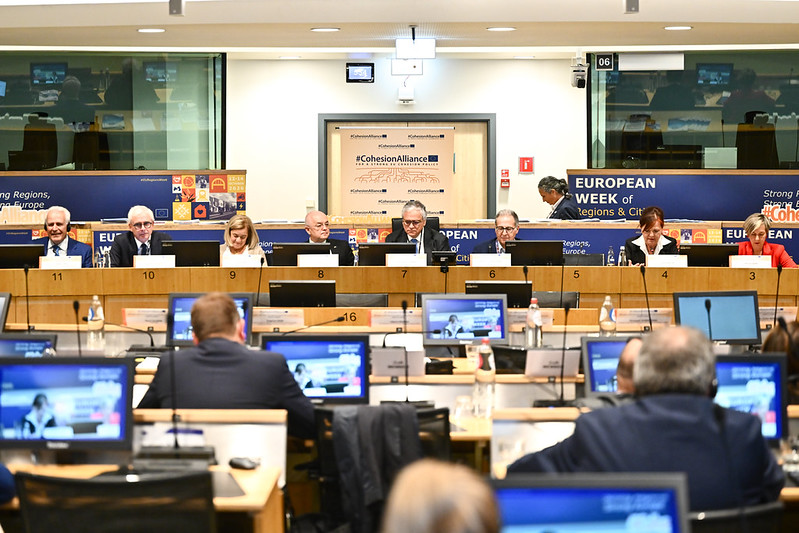


Lilijana Madjar, Vice-President of the Assembly of European Regions (AER), took part in the Cohesion Alliance event “National and Regional Partnership Plans with Local and Regional Authorities at the Centre: Myth or Reality?” on 14 October 2026 at the European Committee of the Regions in Brussels. The discussion focused on the involvement of local and regional authorities in the preparation of National and Regional Partnership Plans for the 2028–2034 period.
The #CohesionAlliance is a joint movement bringing together more than 12,000 like-minded representatives of cities and regions, their associations, social partners and civil society. Together, its members advocate for cohesion as a fundamental value of the European Union and call for a strong Cohesion Policy beyond 2027.
The event brought together representatives of European regional and local authorities to examine whether the proposed National and Regional Partnership Plans will ensure the meaningful involvement of local and regional authorities in shaping future EU investments. Against the backdrop of ongoing negotiations on the post-2027 Multiannual Financial Framework and the proposed National and Regional Partnership Plans Fund Regulation, participants discussed the implications for the future of Cohesion Policy.
Ensuring regions have a meaningful role
For the AER, the recognition of regional participation in European policy discussions must translate into concrete guarantees. While recent institutional positions have increasingly acknowledged the importance of involving local and regional authorities, their role must be secured through clear legislative provisions.
Regional involvement is essential to ensuring that European investment reflects the diverse needs and priorities of territories. Regions need to be genuine partners in decisions affecting their communities, with a meaningful role in shaping investment priorities and implementing policies on the ground.
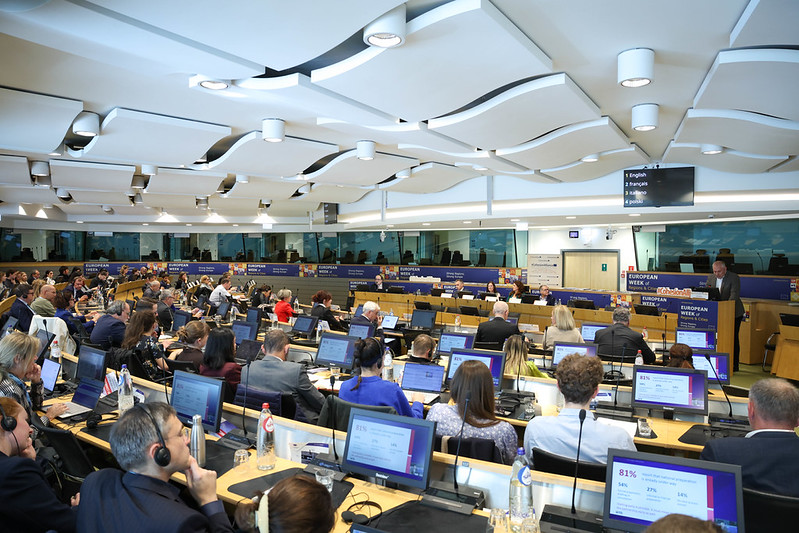


Cohesion Policy needs both strong governance and predictable funding
The discussions also highlighted the importance of connecting governance arrangements with adequate and predictable funding. Regional chapters and partnership rights must be accompanied by resources that support long-term territorial investment and respond to the specific needs of regions.
The AER supports the simplification and modernisation of EU funding, provided these reforms do not lead to greater centralisation or weaken Cohesion Policy. Simplification should make funding more accessible and effective, without undermining the role of regions in decision-making.
As negotiations on the post-2027 EU budget and the National and Regional Partnership Plans continue, ensuring a strong place-based approach and meaningful multilevel governance remains essential to the future of European territorial cohesion.
The AER will continue to advocate for a Cohesion Policy that empowers regions, safeguards their role in shaping investment decisions and ensures that European policies respond to the needs of all territories.


