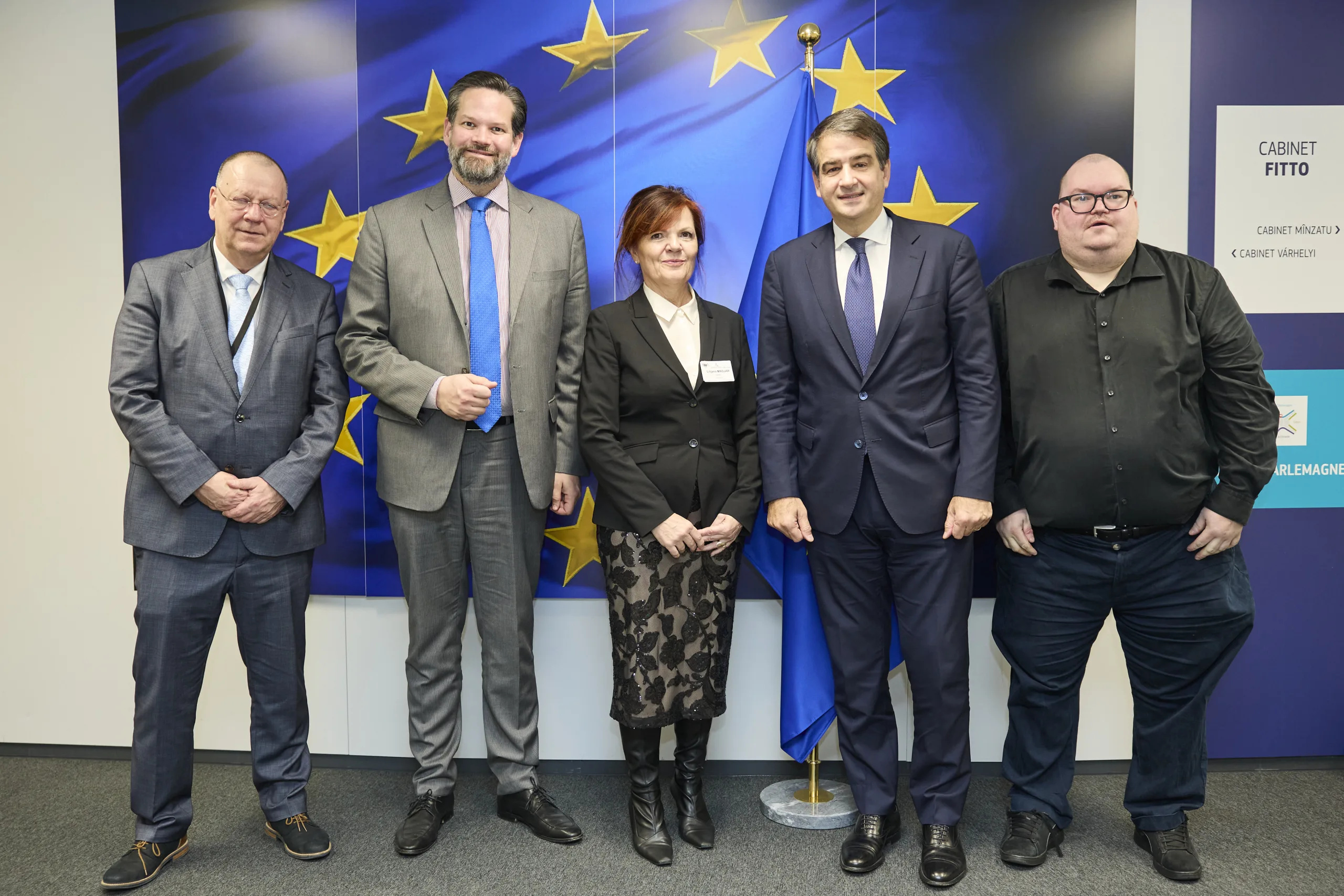


Brussels, 10 December — Representatives of the Assembly of European Regions (AER) met with European Commission Executive Vice-President for Cohesion and Reforms, Raffaele Fitto, in Brussels to discuss the future of EU cohesion policy within the upcoming Multiannual Financial Framework (MFF) and the role of regions.
The AER delegation included President Lukas Mandl, Vice-President for Cohesion Policy Lilijana Madjar, Vice-President Johannes Sundelin, and AER Bureau Rapporteur on the MFF negotiations Jan Klopman. The meeting provided an opportunity for regional leaders to share their concerns and expectations regarding the European Commission’s proposals and to reaffirm the importance of regional involvement in shaping and implementing EU policies.
Concerns Over Nationalisation of Cohesion Policy
During the discussion, AER representatives expressed concern that the Commission’s proposal for the next MFF could lead to a greater nationalisation of cohesion policy. According to the AER delegation, such a shift could risk sidelining regional authorities, despite their long-standing experience in managing and implementing cohesion funds across Europe.
AER stressed that regions play a critical role in translating EU priorities into concrete local actions. For this reason, the organisation highlighted the need to maintain a strong regional dimension in future funding frameworks.
In addition to the nationalisation issue, AER raised several other concerns regarding the Commission’s proposal:
- Potential increased competition between policy areas and actors, which could complicate implementation and dilute the impact of funding.
- Lack of clarity around the specific objectives of cohesion policy in the next programming period.
- Uncertainty about the proposed flexibility in fund allocation, which could affect long-term regional planning.
- The suggested “n+10 months” implementation rule, which AER considers less flexible than the current two-year framework used in cohesion policy.
AER representatives emphasised that these elements require further clarification to ensure that the next budget cycle continues to support balanced territorial development across the European Union.
AER Calls for Stronger Regional Role
To address these concerns, the AER delegation advocated for several key improvements in the proposed framework.
First, AER called for the inclusion of dedicated regional chapters within National and Regional Partnership Plans (NRPPs). Such chapters would ensure that regional priorities and investments are clearly reflected in national planning processes.
Second, AER underlined the importance of maintaining strong and clearly defined provisions for the partnership principle. This principle ensures that regional and local authorities, along with other stakeholders, are actively involved in designing, implementing, and monitoring EU-funded programmes.
According to AER leaders, safeguarding the partnership principle is essential to guarantee that cohesion policy remains place-based, inclusive, and effective.
Continued Dialogue with European Regions
The meeting concluded on a positive note, with Executive Vice-President Fitto expressing his willingness to continue engaging with AER members on the future of cohesion policy.
For AER, the discussion marked an important step in ensuring that the voice of Europe’s regions remains central in shaping the next EU budget and policy framework. As negotiations on the MFF progress, we reiterated our commitment to advocating for strong regional involvement, effective partnership, and a cohesive Europe where all regions can thrive.
Read the AER revised position paper on cohesion policy:


